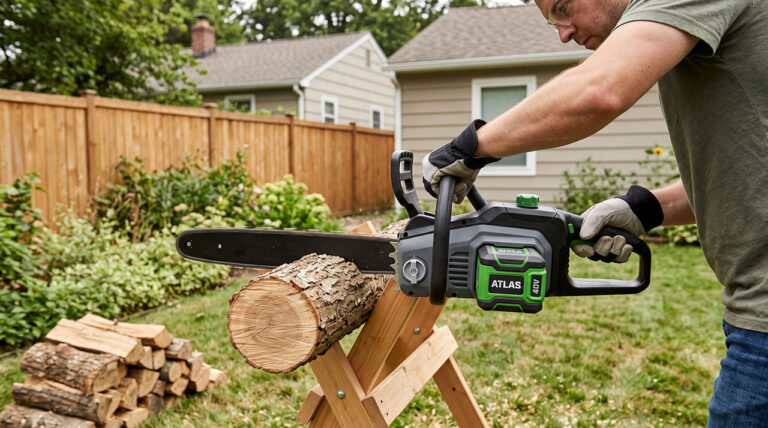
Can I Use Motor Oil for Chainsaw? My Honest Experience

I remember being knee-deep in a huge pile of firewood when I heard that dreaded dry grinding sound. My bar oil reservoir was entirely empty, and the only thing sitting in my dusty garage was a leftover quart of 10W-30. I sat there looking at the bottle and wondered, can I use motor oil for chainsaw lubrication just this once to finish the job?
I poured it in, fired up my saw, and quickly realized why chainsaw manuals explicitly tell you not to do this. Today, I want to share exactly what happens when you substitute standard engine oil for proper bar and chain oil. I will share the messy mistakes I made, the damage you risk, and what you should actually do when you are in a pinch.
The Difference Between Motor Oil and Bar Oil
Motor oil and chainsaw bar oil look very similar when sitting in the bottle. However, they are engineered to do completely different jobs. Engine oil is built to handle internal heat and high pressure inside a closed metal engine block. It is designed to wash away dirt and flow smoothly.
Bar oil has one very specific job. It must stick to a piece of metal that is moving at over sixty miles per hour. It is not designed to handle internal combustion heat. It is designed purely for external friction reduction.
| Feature | Standard Motor Oil | Proper Bar Oil |
| Primary Goal | Withstand high internal heat | Cling to fast-moving metal parts |
| Texture | Smooth and slippery | Stringy and highly sticky |
| Friction Handling | Excellent in closed spaces | Excellent in open air |
Why Bar Oil is So Sticky
If you take proper bar oil and rub it between your thumb and pointer finger, you will notice something unique. When you pull your fingers apart, the oil feels stringy. It creates tiny webs of oil. That stringiness comes from a special chemical additive called a tackifier.
This tackifier is the magic ingredient. It gives the oil the grip it needs to ride along the drive links of your chain. Without that sticky grip, any liquid you pour into the reservoir will just fly right off the tip of your guide bar.
How Standard Motor Oil Behaves on a Fast Chain
Because standard motor oil completely lacks these sticky additives, it acts like water on a fast-moving chain. The centrifugal force from the spinning chain throws the fluid outward instantly.
Your oil reservoir might empty out twice as fast, but your chain will remain dangerously dry. The friction ramps up quickly. The metal gets incredibly hot, and your cutting power drops fast. I learned this the hard way when my boots ended up covered in tiny oil droplets instead of the oil staying on the bar.
What Happened When I Tried Used Motor Oil
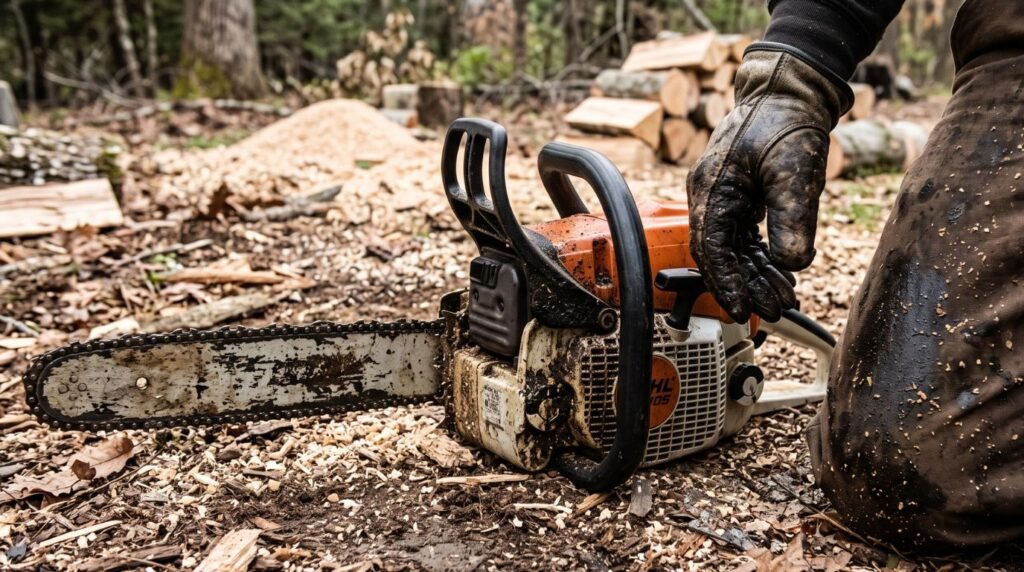
I know a lot of old-timers who swear by using drained, used motor oil to lubricate their chainsaws. Since I had a drain pan sitting on the garage floor, I figured it was a great way to recycle and save a few dollars.
I was completely wrong. It was a terrible idea that cost me a lot of cleanup time. Used oil is entirely different from fresh oil, and it brings a whole new set of problems to your equipment.
| Myth | The Messy Reality |
| Used oil saves money | It ruins your guide bar and costs you more in replacements |
| It lubricates just fine | It is completely broken down and acts like dirty water |
| It is good for the environment | It slings toxic engine heavy metals directly into the soil |
The Mess Nobody Warns You About
Used motor oil is incredibly thin because the heat of a car engine breaks down its viscosity over time. When I put it in my saw, it practically poured right out of the oiler hole. It offered zero resistance.
Within five minutes of cutting, my pants, my leather boots, and the firewood were coated in a fine, black mist of dirty oil. It completely ruined a good pair of work jeans. Even worse, it made the chainsaw handles dangerously slippery in my hands.
The Danger to Your Guide Bar
The biggest hidden danger of used oil is the microscopic metal shavings trapped inside the fluid. Your car engine naturally sheds tiny flakes of metal over thousands of miles. The oil suspends these flakes to protect the car engine.
When you pump that dirty fluid into your chainsaw, you are essentially feeding liquid sandpaper into the groove of your guide bar. My chain started binding up immediately. The bar rails showed deep, shiny wear marks much sooner than they ever should have.
Can I Use Motor Oil for Chainsaw Fuel Mixing?
This is where mixing up your fluids can actually destroy your equipment in minutes. We need to clearly separate the gas tank from the oil reservoir. They are not the same.
You must never, under any circumstances, put regular motor oil into your gas tank to mix with your gasoline. This is a very common beginner mistake, and it is a fast way to ruin a perfectly good tool.
| Common Mistake | Why It Fails |
| Using 10W-30 in the gas mix | Leaves heavy ash that fouls the spark plug |
| Guessing the fuel ratio | Causes the engine to run too hot or stall out |
| Using old boat motor oil | Lacks the specific additives air-cooled saws need |
Two-Stroke Engine Basics Simplified
Most gas chainsaws feature two-stroke engines. This means they do not have an oil pan sitting at the bottom like your car does. They rely entirely on special 2-cycle oil mixed directly into the gasoline to lubricate the moving piston.
Standard motor oil contains specific additives that turn into a heavy, thick ash when they are burned in a combustion chamber. If you mix 10W-30 into your gas, it will clog the spark arrestor screen. It will foul the spark plug. Eventually, it will cause the piston to seize inside the cylinder, destroying the engine entirely.
Summer vs. Winter: How Temperature Changes Everything
One thing I completely misunderstood when I first started cutting wood was how outdoor temperature affects fluid flow. Your chainsaw oiler is just a tiny mechanical pump. That pump cares heavily about how thick or thin the liquid is.
More info How Long to Charge Mini Chainsaw Battery
If you are using a substitute fluid, the outdoor temperature will dramatically change how your saw performs. What barely works in the summer will fail completely in the winter.
| Weather Condition | Fluid Behavior | Practical Result |
| Freezing Winter | Gets thick like heavy syrup | Pump fails to push oil to the chain |
| Mild Spring | Flows normally | Moderate lubrication but high sling-off |
| Blistering Summer | Turns incredibly thin and watery | Empties the tank too fast and makes a mess |
Cold Weather Cutting Frustrations
In the dead of winter, regular bar oil naturally gets thick. If you try to use a heavy-weight motor oil as a substitute during cold months, the tiny oil pump simply cannot push it out of the tank.
Your saw will run dry, and the chain will start to smoke against the wood. Winter-grade bar oil is specially formulated with thinners to stay fluid when the temperature drops below freezing. Regular engine oil just turns to sludge.
The Heat of Summer Logging
Conversely, during a ninety-degree summer afternoon, regular oil gets way too thin. I once tried using a very lightweight 5W-20 motor oil in July just to finish bucking a fallen oak tree in my yard.
The high heat of the day, combined with the intense heat of the chain friction, turned that thin oil into an absolute watery mess. It dumped out of the reservoir in minutes and left the bar smoking dry halfway through the log.
Better Emergency Alternatives to Motor Oil
So, what do you actually do if you are miles out in the woods, your bar oil runs dry, and you only have three logs left to cut? Engine oil should not be your first emergency substitute.
I have actually found that basic cooking oils work surprisingly well in an emergency. They require a bit of extra cleanup later, but they protect the metal much better than engine lubricants do.
| Emergency Lube | Biggest Advantage | Hidden Drawback |
| Canola Oil | Highly accessible and eco-friendly | Can get gummy if left in the saw for months |
| Vegetable Oil | Cheap and flows smoothly | Slings off faster than tacky bar oil |
| Hydraulic Fluid | Very clean and provides good glide | Terrible for soil and plant health |
Vegetable and Canola Oil Options
Canola oil is highly recommended by many professional arborists as a temporary alternative to petroleum-based bar oil. It naturally flows very well and has a surprisingly high heat tolerance before it starts to smoke.
It does not have the sticky tackifier, so it will still sling off the tip of the bar faster than real bar oil. However, it is completely safe for the environment. This is fantastic if you are cutting branches near a creek, a vegetable garden, or livestock.
The Catch With Cooking Oils
While canola oil works great on the day you cut, you cannot leave it in the reservoir long-term. Organic oils oxidize over time. They interact with the air and turn into a sticky, gummy varnish.
If you leave vegetable oil in your chainsaw for six months sitting in the shed, it will completely glue the internal oil pump shut. Always drain emergency cooking oil out of the tank when you finish the job, and flush the system with real bar oil.
How to Tell if Your Chainsaw Needs Proper Lube
Sometimes it is hard to tell if your oil is actually doing its job. This is especially true if you are testing out a temporary substitute. Over the years, I have learned to read the early warning signs my saw gives me.
You should never wait until the chain completely snaps to realize your lubrication failed. By paying attention to the sounds and visuals, you can save your guide bar from permanent heat damage.
| Chainsaw Symptom | What It Means |
| White smoke from the bar | Extreme friction. Stop cutting immediately. |
| Chain suddenly hangs loose | Heat has expanded and stretched the metal links. |
| Sawdust looks like fine powder | Your cutting teeth are dull from running dry. |
Reading the Smoke and Heat Signs
The absolute easiest test is the cardboard trick. Simply rev your chainsaw over a piece of clean cardboard or a light-colored stump. If you do not see a clear line of oil spray leaving the tip of the bar, your chain is running dry.
If you see thin white smoke coming directly from the guide bar groove, stop cutting immediately. Smoke means bare metal is violently grinding on bare metal. The chain will stretch out rapidly, become dangerously loose, and the cutting teeth will dull in a matter of seconds.
Listening to the Chain Pitch
A well-lubricated saw has a smooth, consistent hum as it slices through wood. When the bar runs dry, the tone of the saw actually changes. It starts to sound harsh, raspy, and loud.
I learned to listen for this raspy grinding noise. The moment the pitch changes, I pull the saw out of the wood and check the oil levels. A dry chain also grabs and kicks back much easier, making the saw harder to control safely.
Will Motor Oil Void My Chainsaw Warranty?
This is a detail that catches many new chainsaw owners completely off guard. Power equipment warranties are very strict about the fluids you use. They clearly mandate the use of approved bar and chain lubricants.
If you burn up an expensive oil pump and take the saw to an authorized dealer for a warranty claim, they will inspect the reservoir. Mechanics can tell instantly if you used motor oil instead of bar oil.
Reading the Fine Print
Dealership mechanics simply rub the remaining fluid from the tank between their fingers. If it lacks that distinct, stringy tackifier feel, they know you used an unapproved substitute.
Using motor oil is considered improper maintenance by nearly every major manufacturer. They will confidently deny your warranty claim. You will end up paying out of pocket for a new oil pump, a new guide bar, and a new chain.
How to Clean Your Saw If You Already Used Motor Oil
If you read this far and realized you already made the mistake of filling your saw with dirty engine oil, do not panic. You can fix the situation before you cause permanent damage to the machine.
You just need to remove the improper fluid and flush the system completely. The process is straightforward, but it can be a little messy.
Flushing the Reservoir
First, safely dump the remaining motor oil out of the reservoir into a proper waste container. Wipe away as much of the black sludge around the cap as possible. Next, fill the tank halfway with standard winter-grade bar oil. Winter oil is thinner and flows faster.
Start the saw and let it idle without cutting any wood. Rev the engine gently for a few minutes while pointing the bar at a piece of cardboard. The fresh, sticky oil will slowly push the remaining dirty motor oil out of the lines. Once the spray on the cardboard runs clear and stringy, your saw is safe to use again.
Final Thoughts
Looking back, trying to save a quick trip to the hardware store by using motor oil ended up costing me a lot of time. The massive mess it made on my clothes, and the extra wear it put on my guide bar, was simply not worth it. While you might get away with using it for five minutes in an absolute emergency, it is never a smart long-term strategy.
My absolute best advice is to simply buy an extra gallon of real, tacky bar and chain oil and keep it permanently in your garage or truck. Your chainsaw will cut much faster, the chain will stay sharp much longer, and your work boots will not end up covered in greasy black stains. Treat your tools right, and they will easily last a lifetime.