How to Use a Chainsaw to Cut Wood? My Honest Guide
The first time I held a running chainsaw, my heart pounded against my ribs. I had a yard full of downed oak branches after a massive summer storm, and I desperately needed to know how to use a chainsaw to cut wood without putting myself in danger.
I quickly realized that running a saw is not like using a cordless drill or a palm sander. It demands complete respect, tight focus, and a bit of practical know-how. Over the years, I made plenty of rookie mistakes, pinched my guide bar in heavy logs, and learned some lessons the hard way. Here is exactly what I wish someone had told me on day one.
The Respect Factor: Why Chainsaws Are Different
A chainsaw is an incredible time-saver, but it does not forgive careless mistakes. You are holding a motor that spins a razor-sharp steel chain at roughly fifty miles per hour.
You have to change your mindset before you even pull the starter cord. I used to think I could just muscle my way through a log. I learned quickly that you let the saw do the work. If you have to push hard, your chain is dull, or you are doing something wrong. Fatigue is your biggest enemy out in the yard. When I get tired, I make sloppy cuts. Now, I force myself to take a break the second my arms feel heavy.
| Common Mistake | Better Approach |
| Pushing the saw into the wood | Let the weight of the saw pull it down |
| Cutting when you are tired | Stop, drink water, and rest your arms |
| Working alone in the woods | Always have a buddy nearby when cutting |
| Rushing to finish the job | Take your time and plan every single cut |
Understanding the Kickback Zone
Kickback is the scariest thing a chainsaw can do, and you need to understand it before you cut. It happens violently and without warning.
Kickback occurs when the upper half of the guide bar tip touches something solid. When those fast-moving cutting teeth hit wood at that specific angle, they dig in, stop, and throw the entire saw up and back toward your face. I experienced a mild kickback once while cutting brush. It scared me enough to permanently change how I hold the saw. Always keep your left arm locked straight. If the saw kicks back, that stiff left arm will force the chain brake to hit your wrist, instantly stopping the chain.
Gearing Up Before You Pull the Cord
I used to think a pair of safety glasses was enough. I was wrong, and I was lucky I never got hurt during those early days.
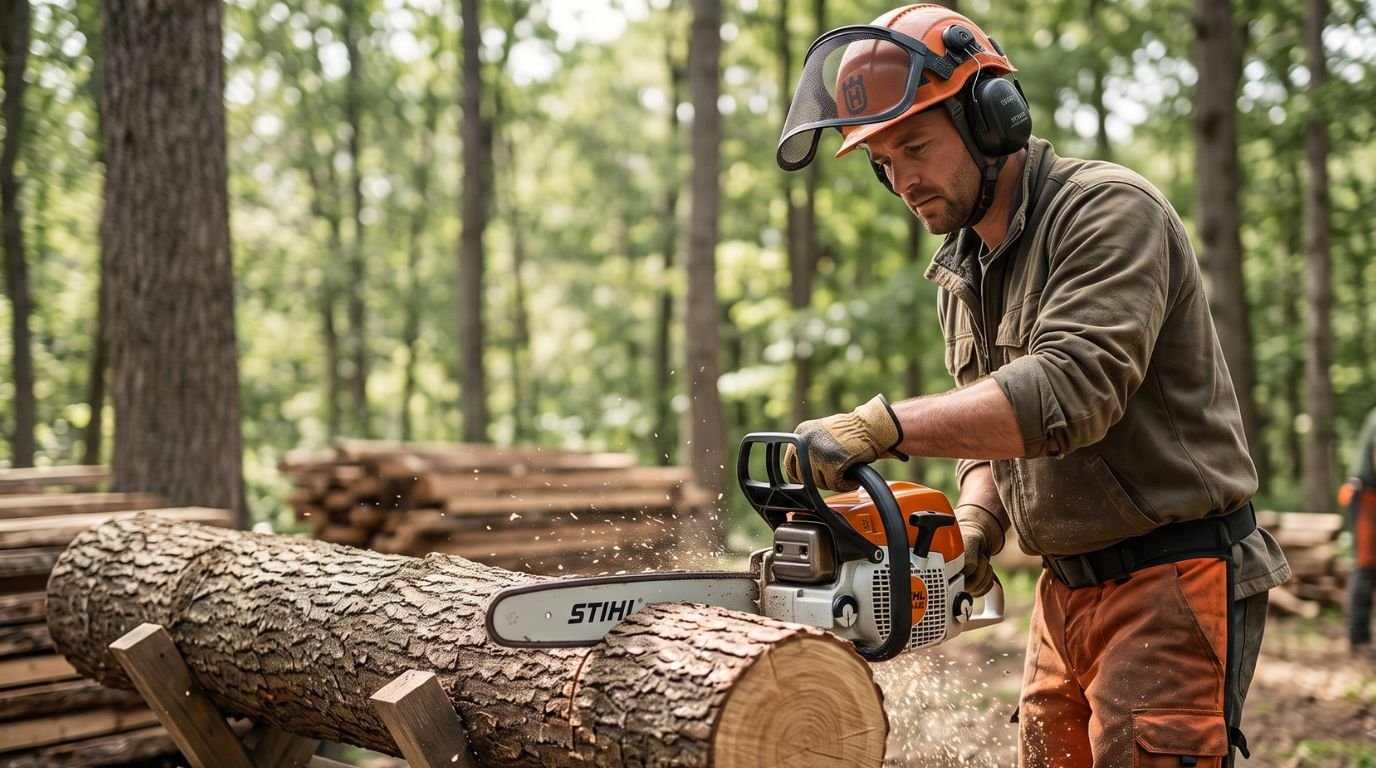
Cutting wood is loud, dirty, and unpredictable. Wood chips fly everywhere. Heavy branches snap and roll. You absolutely need the right personal protective equipment (PPE) every single time you cut. I never skip my gear anymore, even for a quick five-minute job.
| Safety Gear Item | Why I Never Skip It |
| Chainsaw Chaps | They contain fibers that clog and stop a running chain instantly |
| Helmet with Face Shield | Protects your head from falling branches and flying wood chips |
| Steel-Toe Boots | Heavy logs roll easily, and your toes are right in the drop zone |
| Leather Work Gloves | Prevents nasty blisters and gives you a firm grip on the handles |
The Truth About Chainsaw Chaps
Chaps are not just thick pants. They are a literal lifesaver.
Inside the chaps are layers of loosely woven Kevlar fibers. If the chain hits your leg, it pulls those fibers into the drive sprocket. The saw jams and stops in a fraction of a second. I spent about seventy dollars on my first pair of chaps. It felt like a lot of money at the time. But when you compare that to a trip to the emergency room, it is the best money I ever spent.
Pre-Flight Check: Inspecting Your Saw
You cannot just grab a saw from the shed and start cutting wood. You have to check a few critical things first.
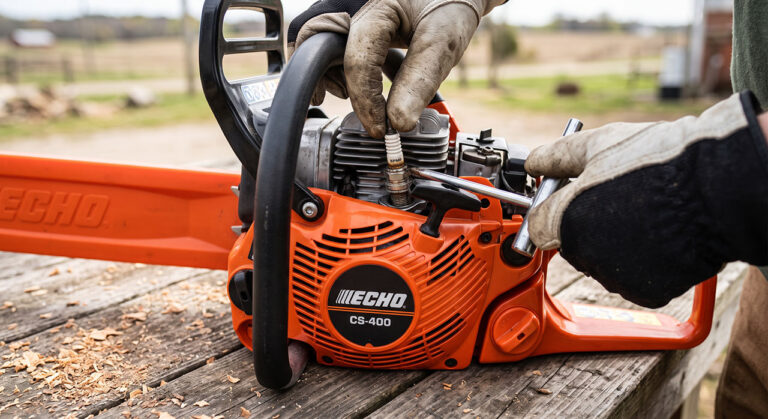
I learned to treat my chainsaw like an airplane. It needs a pre-flight inspection. Gas saws require a specific mix of oil and gasoline. If you run straight gas in a two-stroke engine, you will destroy the motor in less than five minutes. Electric saws are easier, but you still need to check the bar oil and chain tension.
Checking the Chain Tension
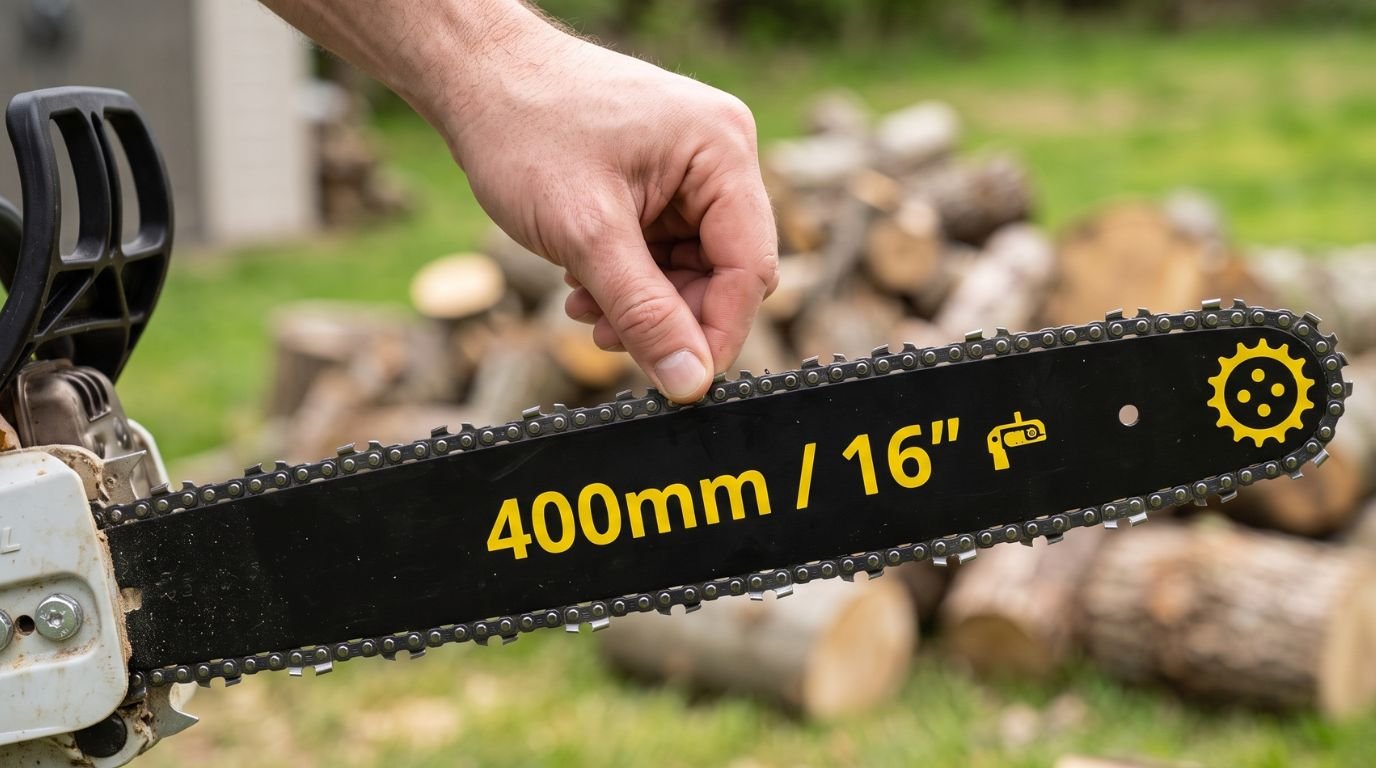
A loose chain will jump right off the guide bar. A tight chain will burn up your engine.
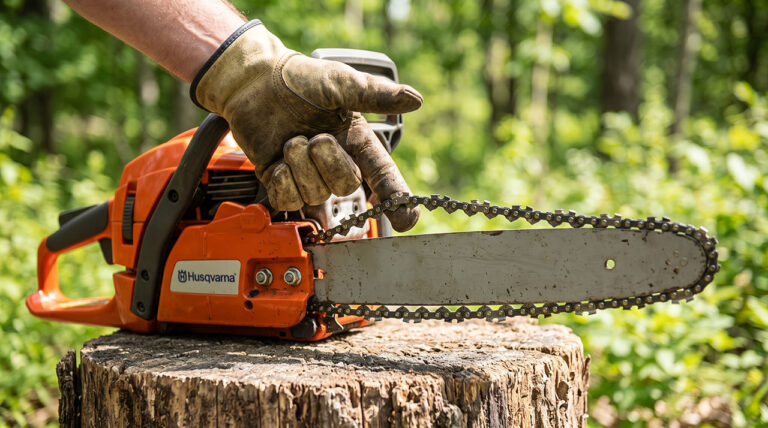
You want the tension to be just right. I check this by grabbing the chain at the bottom middle of the bar. I pull it down gently. It should pull away slightly, showing a bit of the drive links, but it should snap right back into place when I let go. If it sags like a loose hammock, I tighten it. You should always check your tension when the saw is cool, never right after cutting when the metal is hot and expanded.
| Pre-Cut Checklist Step | Why It Genuinely Matters |
| Check bar and chain oil level | A dry bar will overheat, warp, and ruin your chain |
| Test the chain brake | Ensures the safety mechanism works if you get kickback |
| Check fuel level | Running out of gas mid-cut can trap your saw in the log |
| Inspect cutting teeth | A dull chain makes you work harder and causes bad cuts |
How to Start Your Chainsaw Safely
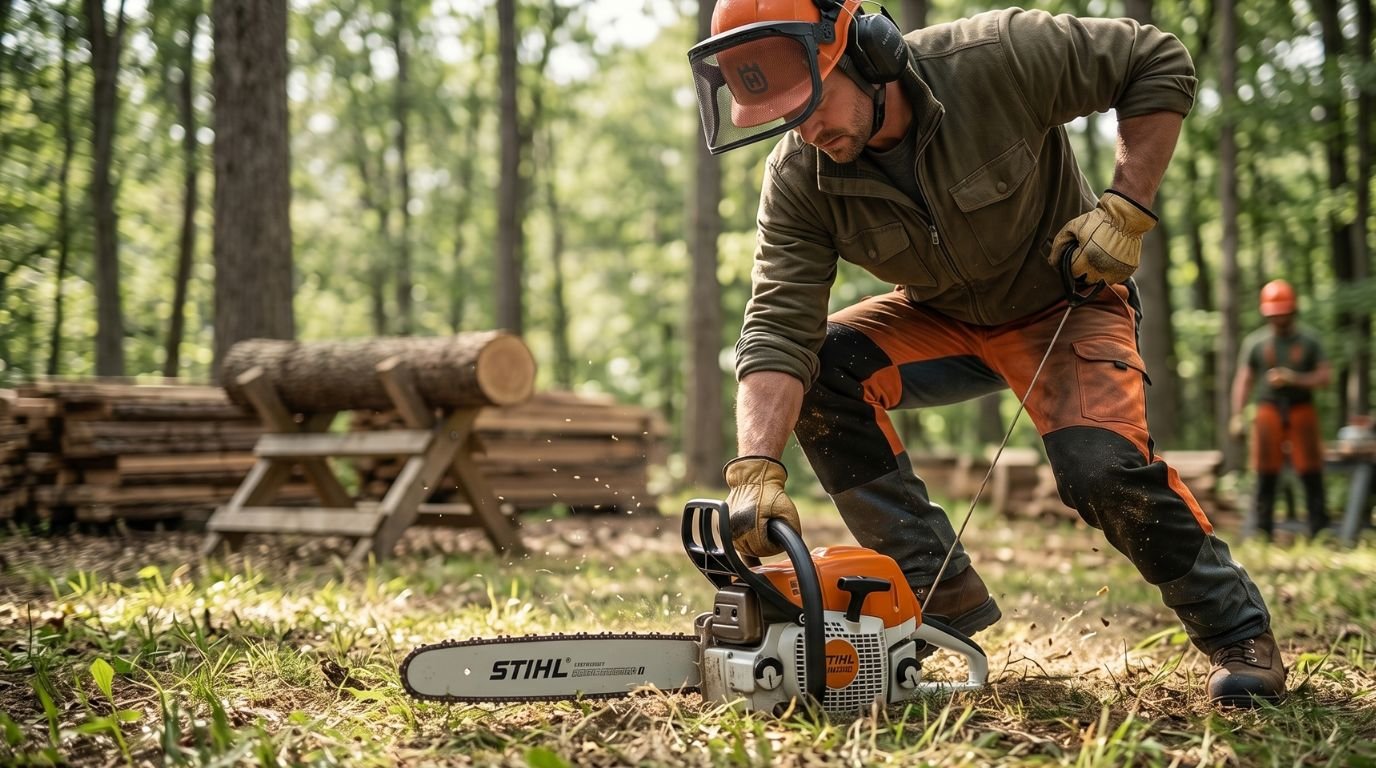
Starting a gas chainsaw was really frustrating for me at first. I flooded the engine constantly because I did not understand the choke.
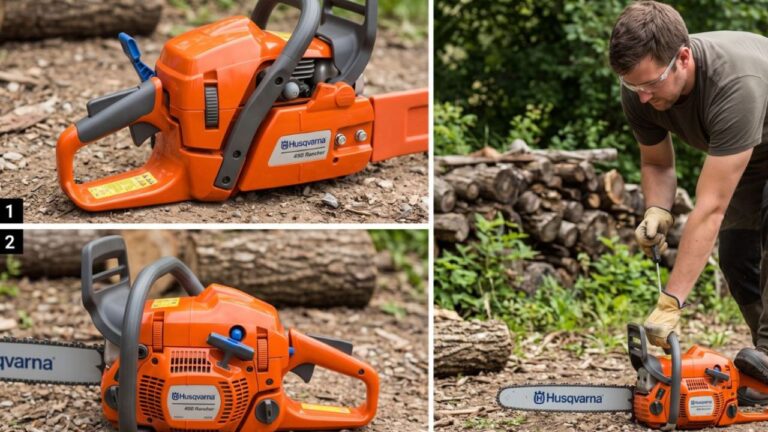
There are two safe ways to start a saw: the ground start and the leg lock start. I prefer the ground start. You place the saw flat on the ground. Put your right foot firmly through the rear handle. Grab the front handle with your left hand. Pull the starter cord with your right hand. Never, ever use the “drop start” method where you throw the saw down while pulling the cord. It looks cool in movies, but it is incredibly dangerous.
The Cold Start Dance
Every gas saw has a specific starting rhythm when the engine is cold.
First, I push the primer bulb five or six times until I see fuel inside it. Then, I pull the choke lever all the way out. I pull the starter cord one, two, or maybe three times until I hear a brief “pop” or burp from the engine. As soon as I hear that sound, I push the choke back in. If you keep pulling with the choke out, you will flood the engine. Once the choke is in, one more pull usually starts the saw right up.
The Core Techniques for Cutting Wood
When you are finally ready to cut, your stance is everything. You need a solid base.
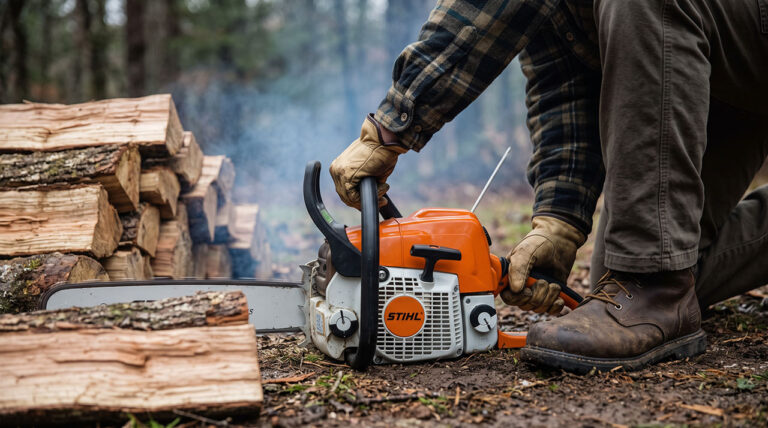
I keep my feet shoulder-width apart. I always stagger my stance slightly, keeping my left foot forward. I wrap the thumb of my left hand completely around the front handle. This “thumb wrap” grip is non-negotiable. If you just rest your thumb on top of the handle, a kickback will rip the saw right out of your hands. Always bring the engine up to full throttle before the chain touches the wood.
Bucking Logs on the Ground
Bucking is the process of cutting a downed tree into smaller, manageable pieces for firewood.
This sounds easy, but logs carry massive amounts of hidden tension. The wood is heavy. When you cut through it, gravity takes over. The log will sag, bend, or snap. I ruined a perfectly good chain on my second day of cutting because I cut straight down through a log lying on the dirt. The log pinched my saw, and when it finally broke free, I plunged the chain straight into the rocks. Dirt and rocks will dull a sharp chain in three seconds flat.
| Bind Type | What Happens | Where to Cut First |
| Top Bind | Log is supported on both ends. Middle sags down. | Cut top first (1/3), then cut from bottom up. |
| Bottom Bind | Log is supported in the middle. Ends hang down. | Cut bottom first (1/3), then cut from top down. |
Dealing with Wood Binds
Understanding binds changed everything for me. It stopped me from getting my saw stuck.
If a log is supported on both ends, the pressure is pushing down on the top center. This is a top bind. If you cut straight down from the top, the wood will collapse inward and pinch your saw bar tight. I had to learn to cut the top third of the log first to relieve the pressure. Then, I finish the cut by coming up from the bottom. It takes practice, but it saves you hours of frustration.
More info What Size Chainsaw Do I Need to Cut Trees
Real-World Frustrations Nobody Tells You
Reading the manual is helpful, but the manual does not prepare you for the annoying realities of cutting wood in the backyard.
Things go wrong. Saws get stuck. Chains get dull faster than you expect. I used to get so angry when things did not go perfectly. I learned that troubleshooting is just a normal part of the logging process. You have to stay calm, turn off the saw, and figure out the problem without forcing it.
| Annoying Problem | Likely Cause | Quick Solution |
| Saw is producing fine sawdust | The chain is completely dull | Stop and sharpen or replace the chain |
| Saw cuts in a curved line | Teeth are sharper on one side | Sharpen evenly or check bar rails |
| Bar oil is leaking everywhere | This is actually perfectly normal | Store the saw on an old piece of cardboard |
| Saw won’t start when warm | Engine is flooded or vapor locked | Hold throttle wide open and pull cord |
When Your Saw Gets Pinched
Getting your guide bar pinched in a heavy log is embarrassing, but it happens to everyone.
When it happened to me, my first instinct was to yank the saw as hard as I could. Do not do that. You will bend the guide bar and ruin it. Instead, I immediately turn off the engine. Then, I look around for a sturdy branch to use as a lever to lift the log. If that fails, I drive a plastic felling wedge into the cut behind the saw. The wedge opens up the cut just enough to pull the saw free safely.
Cleaning Up and Storing the Saw
The job is not done just because the wood is cut. A chainsaw requires a little love before you put it away.
I used to just throw my saw in the garage corner. The next time I needed it, it was covered in oily sawdust gunk, and the carburetor was clogged with old, stale gas. Taking five minutes to clean the saw saves you fifty dollars at the small engine repair shop next spring.
| Maintenance Task | Why I Do It Every Time |
| Brush off oily sawdust | Prevents the cooling fins on the engine from overheating |
| Loosen the chain slightly | A cooling chain shrinks and can damage the drive sprocket |
| Wipe down the guide bar | Keeps the oil holes clear so the chain stays lubricated |
| Drain fuel for long storage | Prevents ethanol gas from gumming up the tiny carburetor |
Dealing with Leftover Fuel
Gasoline goes bad much faster than people realize. Modern gas has ethanol in it, which attracts water.
If I know I am not going to use my saw for a month or two, I drain the gas tank completely. Then, I start the saw and let it run on idle until it completely dies. This burns away every tiny drop of fuel left inside the carburetor lines. Since I started doing this, my saw fires up on the second pull every single spring.
Final Thoughts
Learning how to use a chainsaw to cut wood changed how I handle property maintenance. It turned massive, overwhelming storm cleanups into manageable weekend projects. The biggest lesson I learned is that patience is just as important as a sharp chain. When you respect the tool, wear your safety gear, and take the time to read the tension in the wood, cutting becomes incredibly satisfying.
My best advice for anyone starting out is to take it slow. Do not try to drop big standing trees right away. Start by bucking small, flat logs on the ground. Get comfortable with the weight of the saw, the sound of the engine, and the feel of the throttle. Keep your chain sharp, keep your left arm locked, and never cut when you are tired.