How Long Does Battery Last on Chainsaw? My Honest Guide
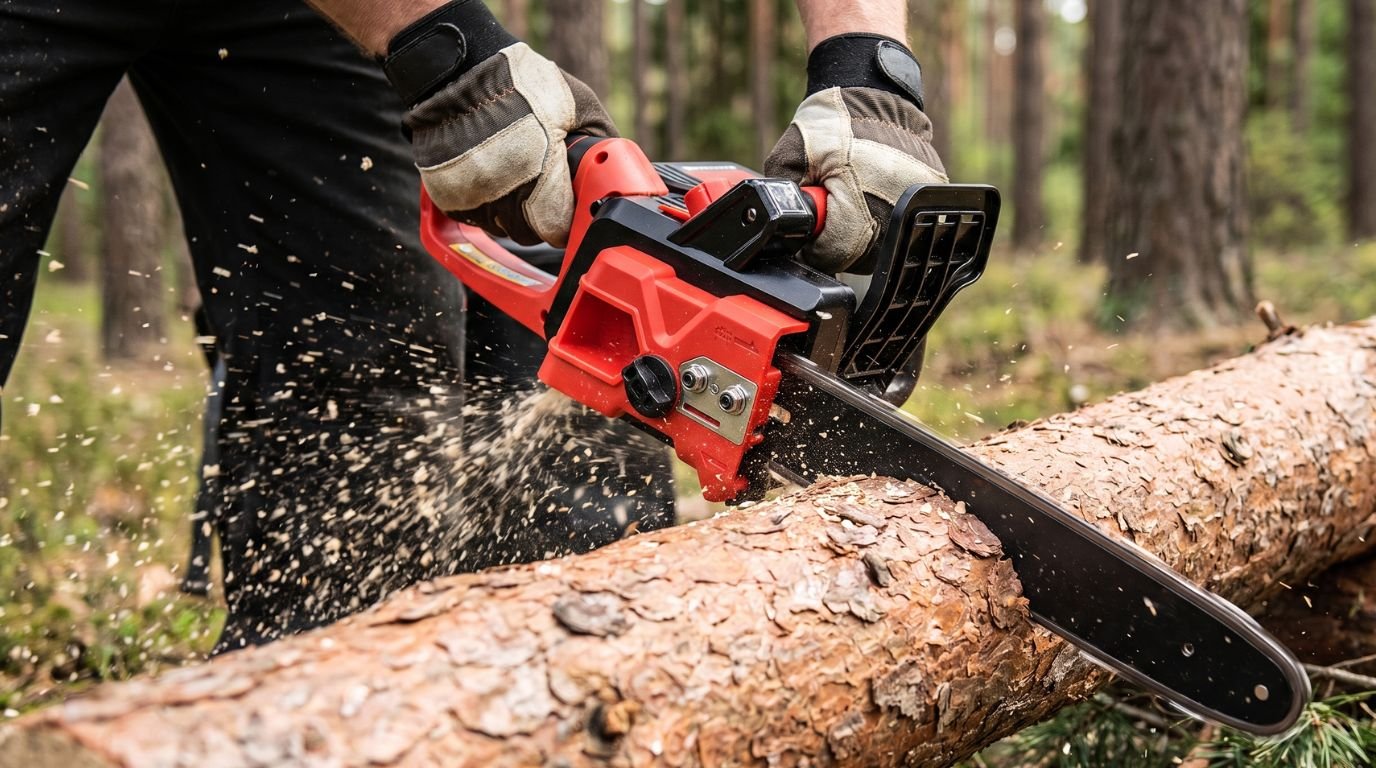
I remember staring at a massive pile of oak branches in my backyard, holding my brand new electric saw, and wondering exactly how long does battery last on chainsaw? I had just switched from my loud, heavy gas saw. I really hoped this quiet little machine could finish the cleanup job without dying on me halfway through.
You are probably asking the same question right now. I will share exactly what I learned after hours of cutting, recharging, and making plenty of rookie mistakes. It turns out that battery life depends on a few sneaky factors that nobody tells you at the hardware store.
The Short Answer: How Long Does Battery Last on Chainsaw?
When people ask this, they usually want a simple number to set their expectations. The truth is, a standard 4.0 Amp-hour (Ah) lithium-ion battery usually lasts between 30 to 45 minutes of continuous cutting.
But notice I said continuous cutting. We call this “trigger time” in the yard work world. This is very different from how long you are actually out in the yard working. I used to think a 40-minute battery meant I could only stay outside for 40 minutes before heading back to the charger.
Here is a quick breakdown based on the batteries I have personally tested.
| Battery Capacity (Ah) | Estimated Trigger Time | Best Real-World Use Case |
| 2.0 Ah | 15 to 20 minutes | Light pruning, small limbs |
| 4.0 Ah | 30 to 45 minutes | Firewood prep, medium trees |
| 6.0 Ah+ | 45 to 60+ minutes | Heavy clearing, large logs |
Trigger Time vs. Yard Time: The Big Misunderstanding
This was my biggest lightbulb moment. With a traditional gas chainsaw, the engine runs the whole time you hold it. It idles while you walk from branch to branch. It burns fuel while you kick a heavy log out of the way.
Battery saws are completely different. The motor stops completely the second you let go of the trigger.
If your battery gives you 30 minutes of actual trigger time, you can easily spend two or three hours out in the yard doing a cleanup job. You only pull the trigger for a few seconds per cut. Once I realized this, my battery anxiety completely disappeared.
Why Walking Time Matters
Most of your yard work involves moving stuff around. You cut a branch. You drag it to a pile. You plan your next cut. You take a drink of water.
During all those steps, your battery drains zero power. This makes a massive difference in real-world usage. You are not draining the battery just by holding the tool.
Factors That Actually Drain Your Battery Faster
Not all cuts are created equal. I learned this the hard way when I tried to cut up a fallen oak tree after a big storm.
My battery died twice as fast as it did the week before when I was cutting pine. I actually thought the battery was defective. It turns out, the type of wood you cut plays a massive role in your runtime.
Hardwood vs. Softwood
Pine is soft. Oak is hard. Pushing a metal chain through hard, dense wood requires much more torque from the motor.
More torque means the motor pulls more amps from the battery to keep the chain spinning. Here is how wood types usually affect my battery life.
| Wood Type | Battery Drain Speed |
| Pine, Cedar, Spruce (Soft) | Slow drain, maximum cuts |
| Maple, Oak, Hickory (Hard) | Fast drain, fewer cuts |
| Dead, Seasoned Wood | Very fast drain, high friction |
Dull Chains and User Error
This is a very common mistake I made early on. I hit the dirt with my chain by accident. I kept cutting anyway because I was in a hurry.
A dull chain forces the electric motor to work incredibly hard. The saw will bog down in the wood. You will naturally push harder on the saw to force it through. This drains your battery incredibly fast. Always keep that chain sharp.
Mistakes I Made When I First Switched from Gas
Switching to battery power requires a mindset shift. I treated my new saw like my old gas beast. That led to a lot of frustration and wasted time.
I had to learn how to manage my power supply. Here are a few things I messed up in my first few months.
| Common Mistake | Better Approach |
| Forcing the saw through wood | Let the weight of the saw do the work |
| Storing battery in a hot shed | Store batteries indoors at room temp |
| Cutting with a loose chain | Tighten chain to reduce motor strain |
How Amp Hours (Ah) and Voltage Affect Run Time
If you are shopping for a new electric saw, you will see a lot of numbers on the boxes. 40V, 60V, 2Ah, 5Ah. It looks confusing. I had to break it down into simple terms to understand what I was buying.
Think of Voltage (V) as the horsepower. It tells you how strong the saw is. Think of Amp-hours (Ah) as the gas tank. It tells you how long the battery will last.
Why Higher Ah is Usually Better
If you want to know how long does battery last on chainsaw, look straight at the Ah rating.
A 2Ah battery is a small gas tank. A 5Ah battery is a large gas tank. If you plan to cut anything thicker than your arm, you really need a 4Ah battery or bigger.
| Ah Rating | Cuts Per Charge (4×4 Pine) |
| 2.0 Ah | Roughly 50 to 70 cuts |
| 4.0 Ah | Roughly 110 to 150 cuts |
| 6.0 Ah | Roughly 200+ cuts |
The Brushless Motor Advantage
You might also see the word “brushless” on the box. I ignored this at first, thinking it was just a marketing gimmick. It is not.
Brushless motors are smarter. They adjust their power output based on how hard the wood is. This saves a ton of battery life. If you have the choice, always buy a saw with a brushless motor.
Cold Weather Drains Lithium-Ion Batteries
Nobody warned me about winter cutting. I left my battery in my unheated garage overnight in December. The next morning, I snapped it into the saw to cut some firewood.
It died in ten minutes. I was shocked.
Lithium-ion batteries absolutely hate the cold. The chemical reactions inside the battery pack slow down when freezing. This drastically reduces your run time.
| Temperature Condition | Battery Impact | My Advice |
| Freezing (Below 32 F) | Massive capacity loss | Keep battery inside until ready |
| Hot (Above 90 F) | Overheating risk | Let battery cool before charging |
| Room Temp (65 to 75 F) | Perfect performance | Best place to store your gear |
How to Make Your Chainsaw Battery Last Longer
After a lot of trial and error, I finally figured out how to maximize my cutting time. You do not always need to buy a second expensive battery.
Sometimes you just need to change how you work. I started paying close attention to bar oil and chain tension.
Simple Habits for Longer Runtime
Check your bar oil constantly. If the chain is dry, friction increases dramatically. Friction is the absolute enemy of battery life. Also, listen to the motor. If it sounds like it is struggling, stop and assess the situation.
| Problem | Troubleshooting Step |
| Saw bogs down often | Sharpen chain or reduce downward pressure |
| Battery gets too hot | Take a break, let it cool in the shade |
| Bar smokes while cutting | Add bar oil, clear sawdust from oil port |
The Two-Battery Strategy I Use Now
Eventually, I accepted a simple truth. One battery is rarely enough for a big weekend landscaping project.
I ended up buying a second battery. It completely changed my workflow and removed all my stress.
Charge While You Work
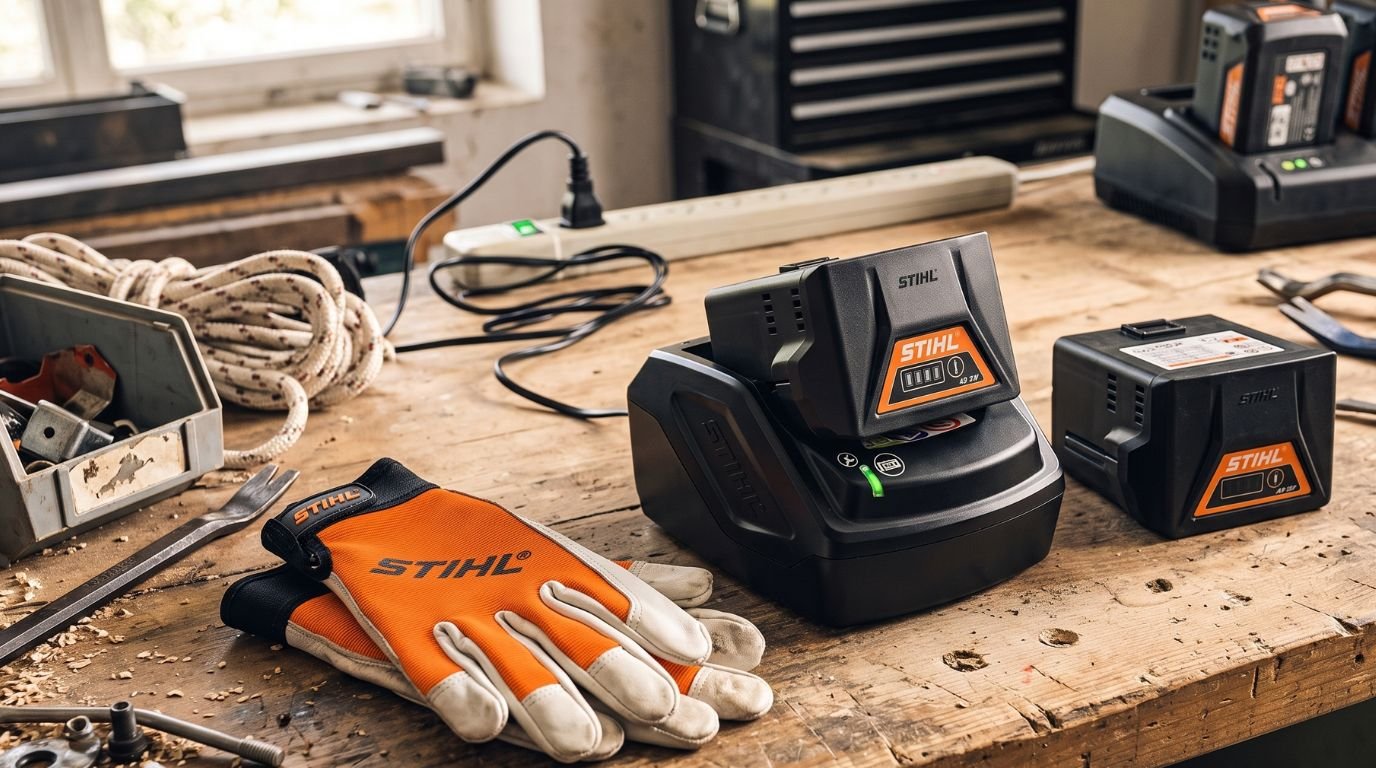
I keep one battery on the fast charger in my garage. I keep the other in the saw. When the first one dies, I swap them out. By the time the second one dies, the first one is usually charged again.
This entirely eliminates waiting time. It keeps me moving at a steady pace all afternoon.
Final Thoughts
Figuring out exactly how long does battery last on chainsaw really comes down to how you use it. For me, a 4Ah battery easily handles a normal weekend of pruning and breaking down small fallen trees. The biggest lesson I learned was to stop forcing the saw and to keep my chain incredibly sharp.
If you are on the fence about switching to battery power, I highly recommend doing it. The lack of noise, having no gas fumes, and the instant push-button start are worth every penny. Just buy the biggest battery you can afford, take care of your gear, and let the tool do the heavy lifting for you.