How Long to Charge Mini Chainsaw Battery: What I Learned
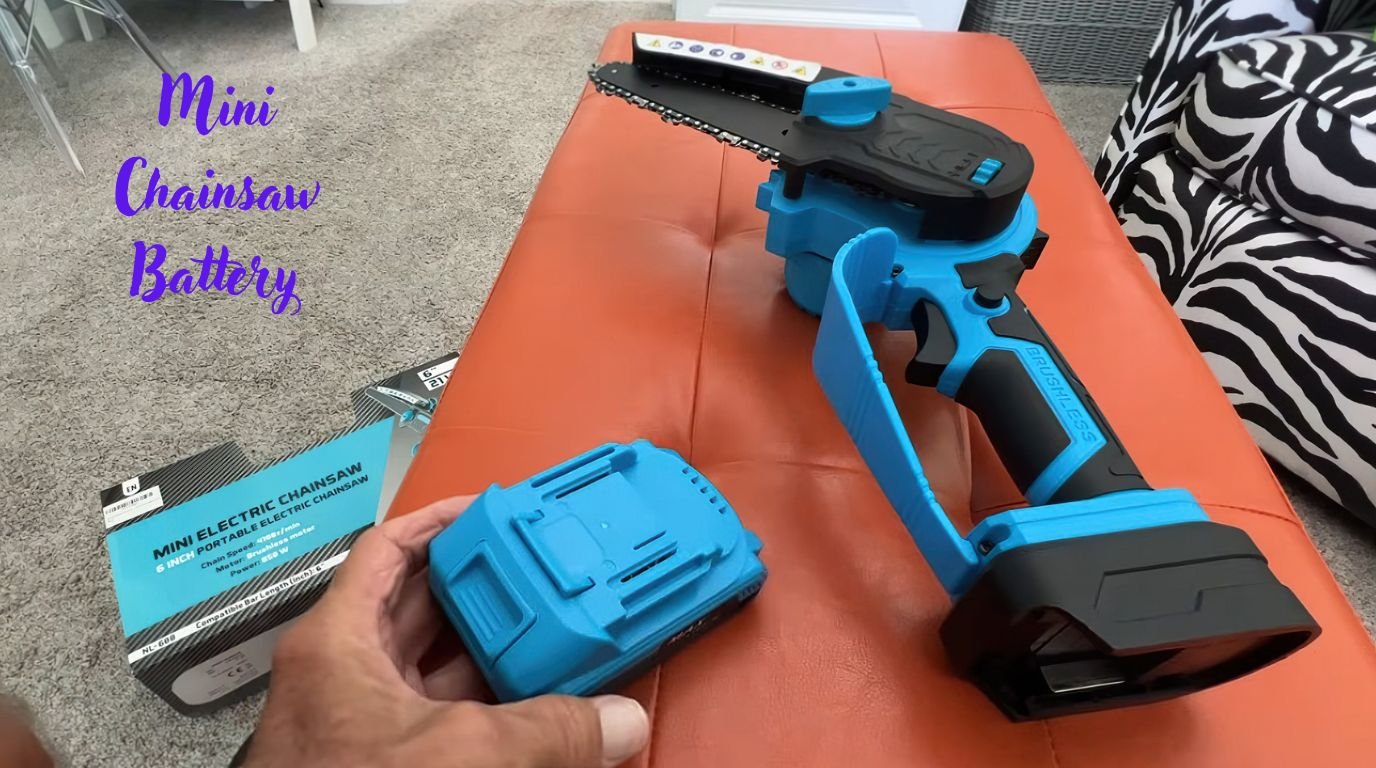
When I bought my first 6-inch pruning saw, I had a pile of branches waiting in the yard. I took the tool out of the box and immediately wondered how long to charge mini chainsaw battery packs before I could start cutting. I was eager to get to work, but I also did not want to ruin my brand-new tool on the first day.
I quickly found out that understanding your battery is just as important as keeping the chain sharp. Over the last two years, I have used several different small saws for yard cleanup. I have ruined one battery by treating it poorly, and I have kept others running perfectly by learning a few simple rules. Here is everything I learned about charging, timing, and protecting these handy little power tools.
The Short Answer for Charging Times
Knowing exactly how long to wait can save you a lot of frustration. The time it takes depends heavily on the size of the battery and the type of charger you have.
Most standard mini chainsaws use lithium-ion batteries. For a typical 20V or 21V battery, you can expect the charging process to take anywhere from 1.5 to 3 hours. If you have a smaller 12V model, it might take a little less time. If you have an upgraded battery with a higher capacity, you will be waiting longer.
| Battery Capacity | Standard Charger Time | Fast Charger Time |
| 1.5 Ah to 2.0 Ah | 2 to 3 hours | 1 to 1.5 hours |
| 3.0 Ah to 4.0 Ah | 3 to 5 hours | 2 to 2.5 hours |
Why Amp Hours Change the Game
Amp hours, or Ah, measure how much fuel your battery can hold. This directly impacts your wait time.
Think of the battery like a gas tank. A 2.0 Ah battery is a small tank. It fills up fast, but it also empties fast when you cut thick wood. A 4.0 Ah battery is a large tank. It takes twice as long to charge, but you get twice the cutting time. When I upgraded to a larger battery for clearing thick oak branches, I was shocked when it took nearly four hours on the wall charger.
My Early Mistakes with Lithium-Ion Batteries
I made a lot of silly errors when I first started using my saw. I treated my new tool like an old piece of technology, and it cost me money.
I grew up using older power tools with nickel-cadmium batteries. Those old batteries had a memory effect. You had to drain them completely and then charge them all the way up. Lithium-ion batteries do not work like that at all. In fact, treating them the old way will actually destroy them.
Leaving It on the Charger Too Long
This was my biggest mistake. I used to plug the battery in and leave it in the garage for days.
I thought the charger would just shut off and keep the battery topped up. While modern chargers do stop pushing heavy current, leaving the battery on the dock generates slight heat. Over time, this constant connection degraded my battery cells. After a few months of doing this, my battery would only hold a charge for ten minutes.
| My Mistake | The Better Approach |
| Charging overnight | Unplugging as soon as it is full |
| Leaving battery on the dock | Storing battery on a shelf |
| Waiting for it to die completely | Charging when it drops to 20% |
Charging While the Battery Was Hot
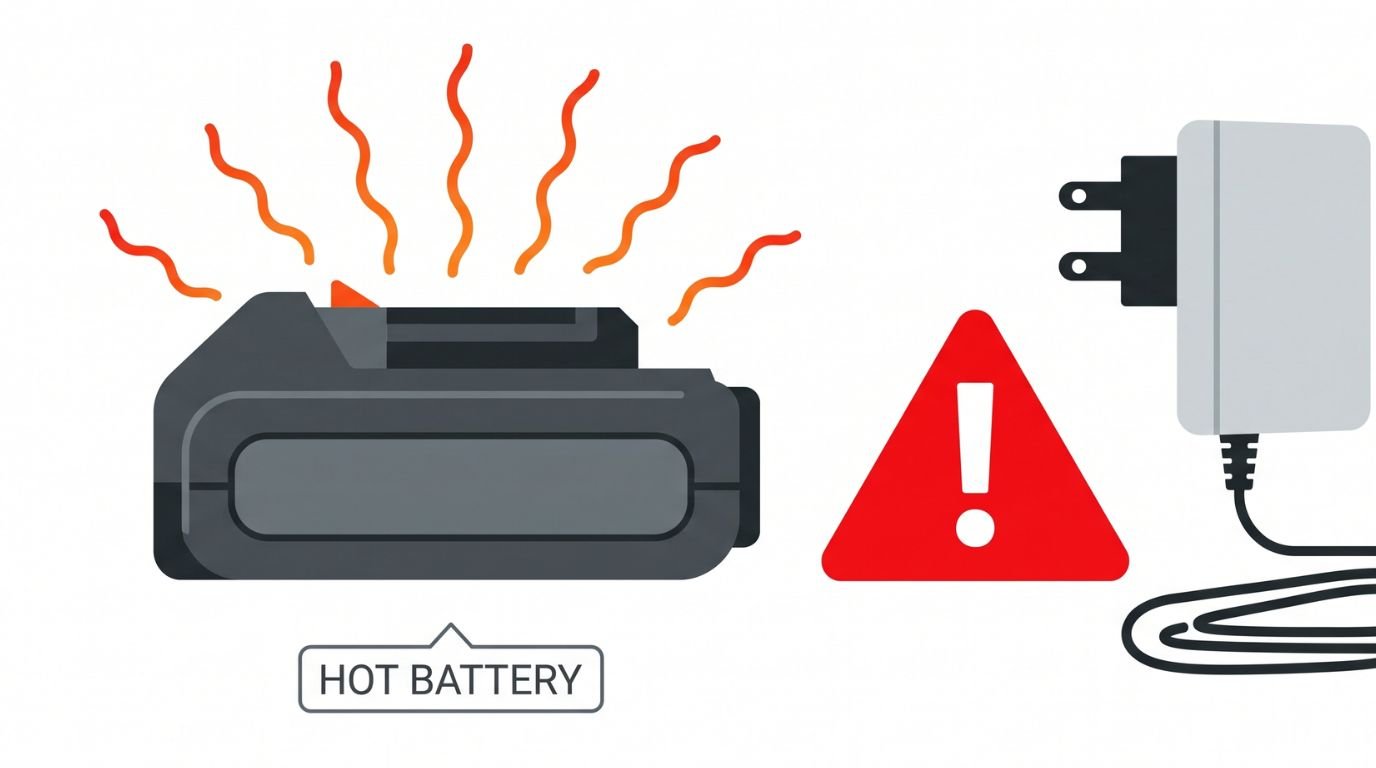
You finish cutting a thick log, the saw stops, and the battery feels warm to the touch. You immediately throw it on the charger.
This is a terrible idea. Lithium-ion cells hate extreme heat. When you use the saw, the internal temperature of the battery spikes. If you plug it in right away, the charger pushes energy into already hot cells. I learned to let my battery sit on my workbench for about twenty minutes to cool down before plugging it in.
How to Tell When It Is Actually Done
You do not need to guess when your battery is ready for action. Almost every brand gives you a clear visual clue.
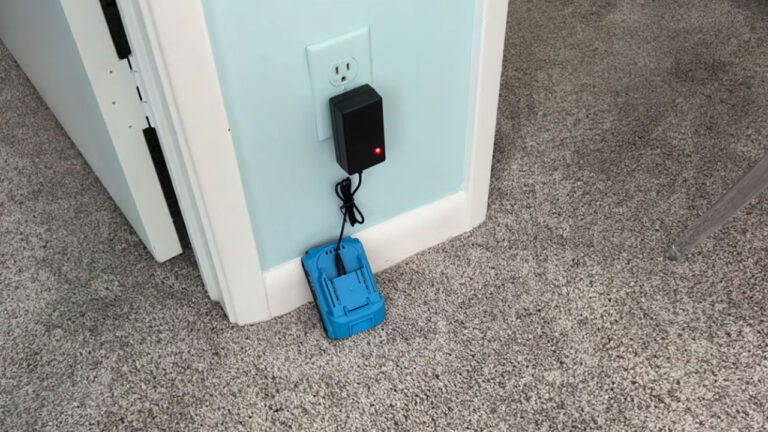
Most cheap and mid-range saws come with a simple wall-plug charger. It usually has a small LED light on the plastic brick. More expensive models come with a sliding dock station. Both systems use a very simple color code to tell you what is happening.
Reading the Charger Lights
Learning to read the lights saved me a lot of time. At first, I ignored them and just left the tool plugged in for a set number of hours.
Usually, a solid red light means the battery is actively receiving power. A solid green light means the job is done. Some chargers flash red when charging and turn solid green when finished. If you see flashing red and green lights, or a rapid flashing red light, something is wrong. That usually means the battery is too hot or completely broken.
| Light Color | What It Means | What I Do |
| Solid Red | Charging normally | Leave it alone |
| Solid Green | Fully charged | Unplug it immediately |
| Flashing Red/Green | Error or extreme heat | Unplug and let it cool |
Does the First Charge Take Longer?
This is a very common question, and I wondered the same thing when I opened my first saw. The instruction manual was not very clear.
You might read old forum posts saying you need to charge a new power tool for 24 hours. That is outdated advice. When figuring out how long to charge mini chainsaw battery packs out of the box, the answer is just standard time. New batteries often ship at about a 30% charge for safety reasons. You only need to leave it plugged in until the light turns green. It will not take any longer than a normal charge.
Getting the Best Lifespan Out of Your Battery
Your charging habits directly dictate how many years your battery will survive. I had to learn this the hard way after ruining my first one.
If you take care of the battery, it should last for hundreds of charging cycles. This means you can get three to five years of solid yard work out of it. If you abuse it, you will be buying a replacement by next spring.
The Storage Rule I Swear By
How you store the battery is just as important as how you charge it. Do not store it empty, and do not store it full.
If I know I am not going to use my saw for a few months during the winter, I never charge it to 100%. I charge it until it is about half full. Lithium-ion cells are most stable when they sit at a 50% charge. Storing a battery completely dead can cause it to fall into a deep sleep that ruins the cells forever.
Temperature Matters More Than You Think
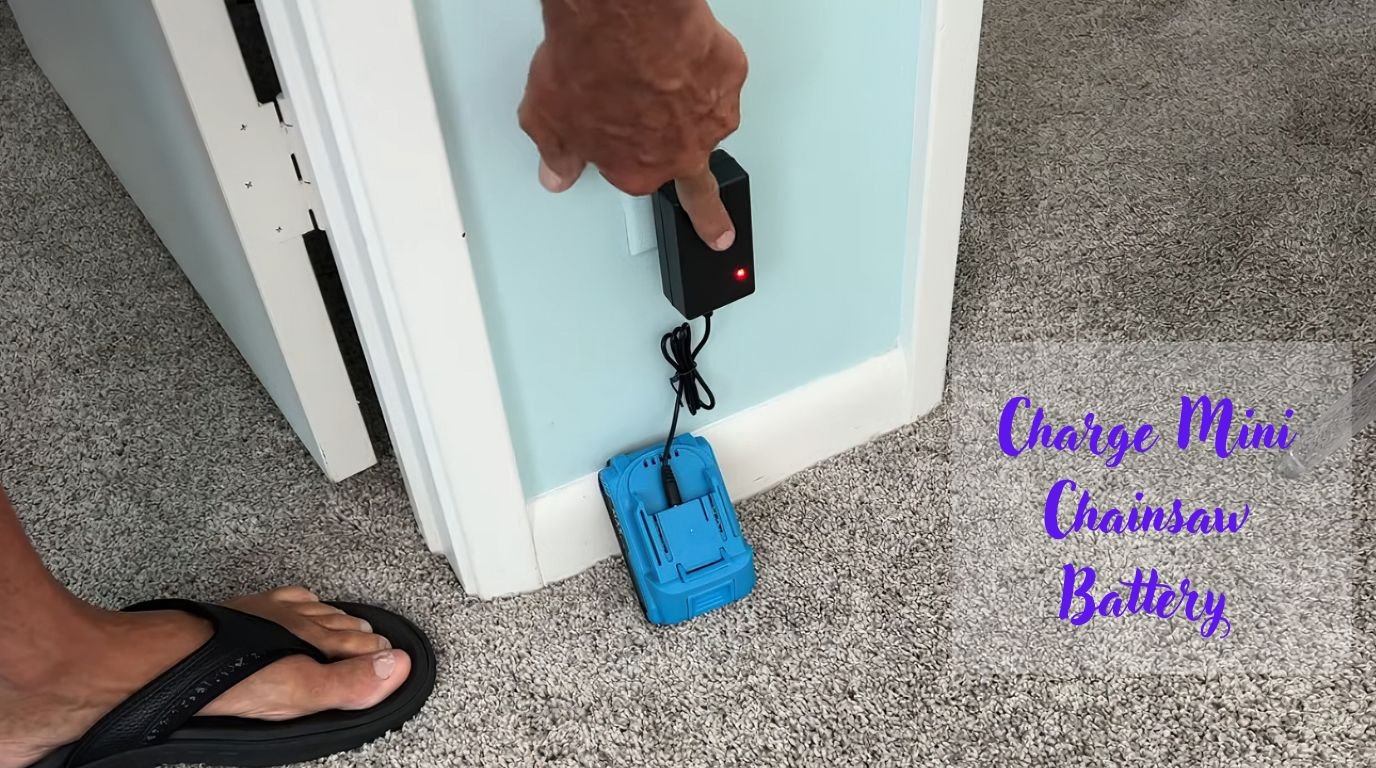
Where you charge and store your battery makes a huge difference. I used to keep mine in a metal shed in the backyard.
During the summer, that shed felt like an oven. During the winter, it was freezing cold. Extreme cold slows down the chemical reactions inside the battery. If you try to charge a freezing cold battery, it will take much longer than two hours, and it might not charge fully. Now, I keep my batteries and charger inside the house in a hall closet.
| Environment | Impact on Battery |
| Hot Garage (Over 90°F) | Damages cells, shortens total lifespan |
| Freezing Shed (Under 32°F) | Slows charging, prevents full charge |
| Room Temperature (Around 70°F) | Perfect for fast charging and long life |
Troubleshooting Slow Charge Times
Sometimes, two hours turn into five hours, and the light still has not turned green. When this happens, do not panic.
I have faced this issue a few times. Most of the time, the battery is not actually dead. There is usually a simple physical reason why the power is not flowing properly. Before you throw the battery in the trash, check a few basic things.
Dirty Contacts Are the Enemy
Yard work is dirty. Sawdust, sap, and chain oil get everywhere, including inside the battery slot.
If you look at the top of your battery, you will see metal prongs or slots. These are the contacts. If sap or oil covers these metal pieces, the charger cannot push electricity into the battery. I use a dry cotton swab to wipe down the metal contacts on both the battery and the charger once a month. It fixes the slow charging problem almost every time.
Bad Wall Outlets or Extension Cords
Sometimes the problem is not the saw at all. I once thought my charger was broken because the battery took all day to fill up.
I was using a very old, cheap extension cord plugged into an outdoor outlet. The cord was so thin that it could not carry enough power to the charger. The charger was starving for electricity. As soon as I plugged the charging base directly into a wall outlet inside the house, the charge time went right back down to two hours.
| The Problem | Likely Cause | Quick Solution |
| Takes 5+ hours to charge | Dirty metal contacts | Wipe contacts with dry cloth |
| Light turns green instantly | Battery is too hot | Let it sit for 20 minutes |
| Charger feels very hot | Cheap extension cord | Plug directly into the wall |
Real-World Cutting Time vs. Charge Time
It is important to manage your expectations. You spend a couple of hours charging, but how long do you actually get to cut?
A mini chainsaw uses a lot of power very quickly. Spinning a metal chain through solid wood takes massive torque. While you wait two hours for a full charge, you should only expect about 20 to 40 minutes of actual trigger-pulling time.
This used to frustrate me. I would charge the battery all morning, go outside, and the saw would die in half an hour. But I realized that 30 minutes of continuous cutting is actually a lot of wood. I usually finish my pruning long before the battery dies. If you cut thick, wet wood, the battery will drain faster. If you cut dry, thin branches, it will last longer.
| Wood Type and Task | Estimated Battery Life |
| Thin, dry twigs (1 inch thick) | 35 to 45 minutes |
| Green, wet branches (3 inches) | 20 to 30 minutes |
| Hard thick oak (4+ inches) | 15 to 20 minutes |
Why Having Two Batteries is the Best Move
If you have a lot of trees, you will eventually hate waiting for the charger. This is a simple reality of yard work.
I finally broke down and bought a second battery online. It was the best money I ever spent on my yard. Now, I keep one on the tool and one resting near the charger. When the first one dies, I let it cool down, swap it out for the fresh one, and keep working. By the time the second battery dies, the first one is already cooled off and charging again.
Read more to learn about the chainsaw.
My Final Thoughts
Figuring out exactly how long to charge mini chainsaw battery packs does not have to be a guessing game. For most of us, a simple two-hour wait is all it takes to get back to cutting branches. The biggest lesson I learned is that patience pays off. Let the battery cool down before charging, unplug it when the light turns green, and keep it out of extreme heat.
These little saws are amazing tools for backyard chores, but the battery is the heart of the machine. Treat the battery with respect, keep the metal contacts clean, and store it indoors when winter comes. If you follow these simple steps, your tool will be ready to slice through wood whenever you need it.