Cleaning Chainsaw Carburetor Without Removing: Fast Fix
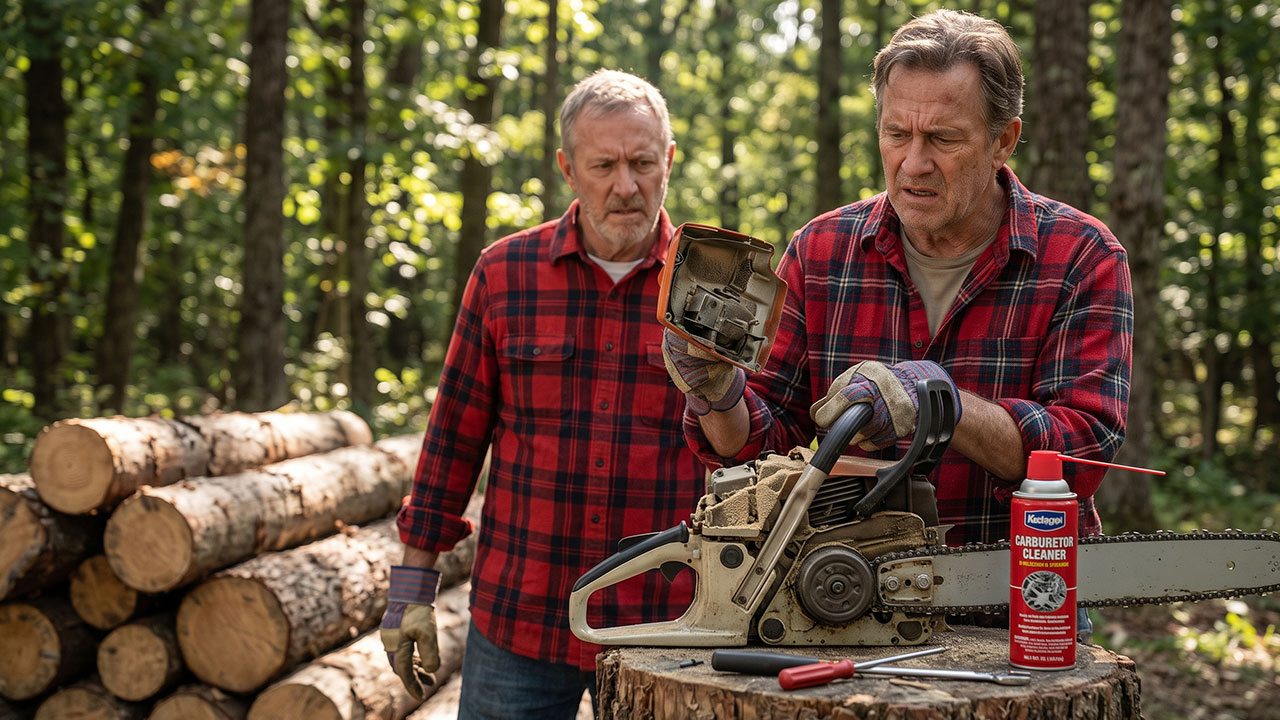
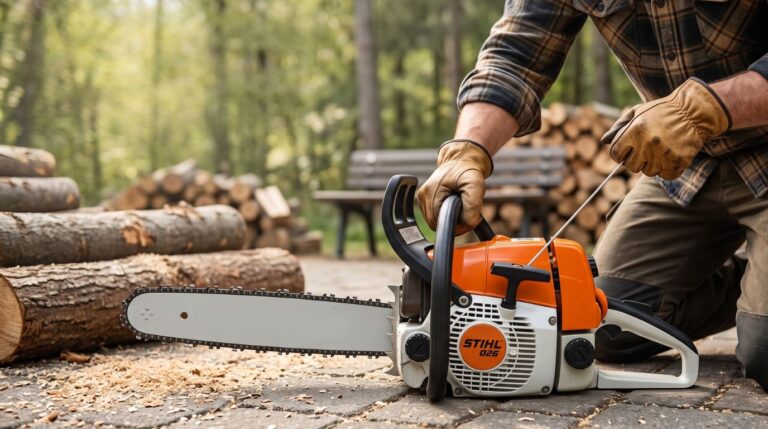
I remember standing in the woods with a truck full of uncut logs. My chainsaw sputtered, bogged down, and died. I pulled the starter cord until my arm ached. The saw simply refused to run. I knew the carburetor was gunked up, but taking it completely apart in the dirt was a terrible idea. I was terrified of dropping a tiny spring into the leaves, never to be found again.
That day, I learned a valuable lesson about equipment maintenance. You do not always need a complete teardown to get back to work. Cleaning chainsaw carburetor without removing the whole assembly is entirely possible. It is a practical, fast trick that has saved me hours of frustration. In this guide, I will show you exactly how to clear out the grime, restore your engine’s power, and get back to cutting wood without taking your saw to pieces.
Why Cleaning Chainsaw Carburetor Without Removing It Makes Sense
Taking a carburetor off a chainsaw is intimidating for many people. It was for me, too. Carburetors are full of tiny screws, fragile gaskets, and little springs that love to bounce across the garage floor.
When you clean it right on the saw, you avoid all that stress. You save time. You also avoid messing up the delicate fuel lines. Over time, rubber fuel lines get brittle. If you pull them off the carburetor nipples, they might crack. Then you have a bigger repair job on your hands. A quick clean on the saw is usually all you need to clear out minor varnish and dust.
| Approach | Time Required | Risk Level | Best For |
| Quick On-Saw Clean | 10 to 15 minutes | Low | Stalling, rough idle, minor dirt |
| Full Teardown | 1 to 2 hours | High | Torn gaskets, complete failure |
Signs Your Chainsaw Needs a Quick Carburetor Cleaning
Your chainsaw will usually tell you when it is sick. You just have to listen to it. Over the years, I have learned to recognize the warning signs of a dirty fuel system.
The most common sign is the “bog.” You pull the throttle trigger, and instead of screaming to life, the saw goes bwaaaah and dies. It sounds like it is gasping for air or starving for fuel. Another sign is an erratic idle. The saw might run fast, then slow, then shut off entirely when you set it down. If the saw is hard to start when warm, a dirty carburetor throat is often the culprit.
| Symptom | What It Sounds Like | Likely Cause |
| Bogging down | Deep, hollow stalling noise | Blocked main jet or dirty throat |
| Erratic idle | Engine speed goes up and down | Sticky throttle plate |
| Hard warm starts | Sputtering but not catching | Varnish buildup near choke |
Gathering the Right Supplies
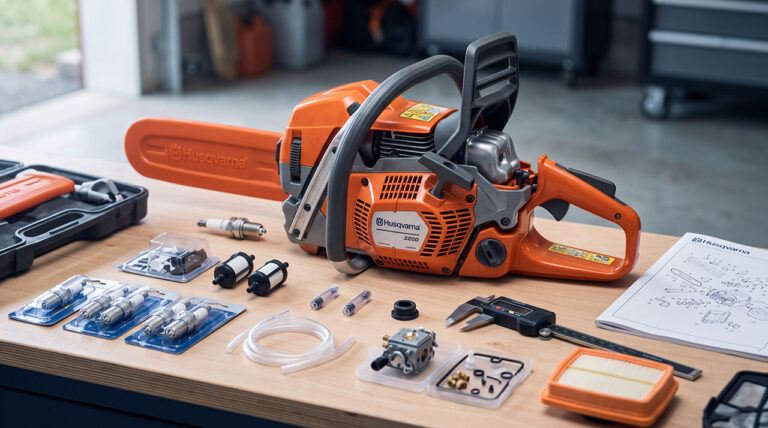
You do not need a fancy mechanic’s tool chest for this job. A few simple items from your local auto parts store will do the trick.
I keep these supplies in my chainsaw case now. You will need a can of good quality carburetor cleaner spray. Make sure it has the little red plastic straw. You cannot do this job properly without the straw. You also need a clean rag, a soft old toothbrush, and safety glasses. Carb cleaner burns terribly if it gets in your eyes. Do not skip the glasses.
Preparing Your Work Area
Set up your saw on a flat, stable surface. I like to use a workbench with a piece of cardboard underneath.
The cardboard catches any greasy runoff. Make sure you are in a well-ventilated area. Carburetor cleaner fumes are very strong and can give you a headache quickly. I prefer to do this outside in the driveway. Ensure the saw is completely cooled down before you spray flammable liquids near the engine.
Step-by-Step: Cleaning Chainsaw Carburetor Without Removing
This is the exact process I use when my saw starts acting up. Follow these steps slowly. Do not rush the process.
You want to be careful not to push any exterior dirt inside the engine. The goal is to dissolve the sticky varnish left behind by old gas. Old fuel turns into a sticky, gummy resin. That resin stops the moving parts from opening and closing smoothly. We are going to wash that resin away.
Best Circular Saw for Woodworking
Step 1: Getting to the Carburetor
First, you need to take off the top plastic engine cover. This usually requires a simple flathead screwdriver or the scrench tool that came with your saw.
Once the cover is off, you will see the air filter. The air filter sits right on top of or directly behind the carburetor. Remove the air filter gently. Pay close attention to how dirty the area is. If you see chunks of sawdust sitting around the carburetor opening, stop right there. You need to handle that dirt first.
Step 2: Clearing the Outer Grime
This is where many people make a massive mistake. They grab the spray and blast the whole area immediately.
If you do that, you will wash all the loose sawdust straight down into the carburetor throat. That dirt will go right into your engine cylinder and scratch the piston. Instead, take your clean rag and carefully wipe away the loose dirt. I like to use an old toothbrush to gently sweep sawdust away from the intake hole. You can also use gentle compressed air, but aim it away from the open hole.
Step 3: Spraying the Throttle and Choke Plates
Now comes the actual cleaning. Look inside the round hole of the carburetor. You will see a small metal flap. This is the choke plate.
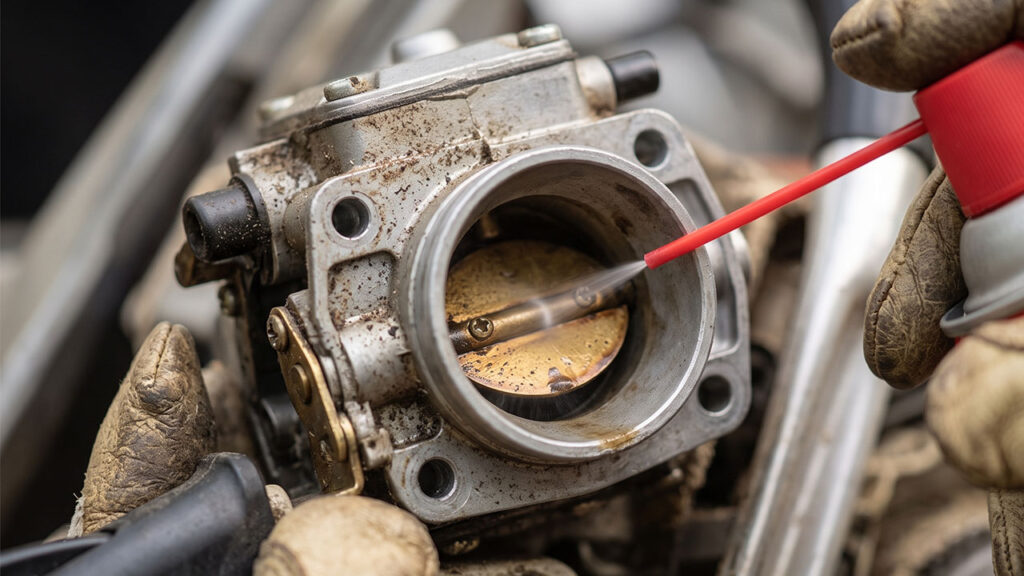
Put the little red straw onto your spray can. Put on your safety glasses. Gently spray the metal plate. Now, pull the throttle trigger on your chainsaw handle. You will see another metal flap move deeper inside. That is the throttle plate. Hold the trigger wide open and give a quick, one-second burst of cleaner inside. Do not flood it. Work the throttle trigger back and forth a few times with your finger to loosen the pivot joints.
| Common Mistake | Why It Is Bad | Better Approach |
| Spraying without the straw | Wastes cleaner, misses tight spots | Always use the precision straw |
| Flooding the engine | Fills the cylinder with liquid | Use short, quick bursts |
| Ignoring the pivot points | Linkages stay sticky | Spray where the metal parts hinge |
Using Fuel Additives for Internal Cleaning
Sometimes the external spray is not enough. The tiny internal fuel jets might be slightly clogged with varnish.
When I want to clean the inside of the carburetor without taking it apart, I use a liquid fuel additive. Products like Seafoam or B-12 Chemtool work wonders. You pour a small, measured amount directly into your mixed chainsaw gas. As the saw runs, the chemical slowly breaks down the gum inside the microscopic fuel passages. It takes a little patience, but it is a great trick.
| Myth | Reality |
| Additives fix a completely dead saw | They only work if the saw can actually run |
| More additive is always better | Too much can damage rubber fuel lines |
| It works instantly | It takes a tank or two of running to see results |
The Danger of Old Fuel
I cannot stress this enough. Most chainsaw carburetor problems are caused by bad gasoline. I learned this the hard way after leaving gas in my saw all winter.
Gasoline with ethanol goes bad quickly. The ethanol absorbs water from the air. Over a few months, the fuel separates and turns into a corrosive, sticky mess. This green slime coats everything inside your carburetor. If you only clean the carburetor but put the same old, bad gas back into the tank, you will be back to square one in five minutes. Always dump out old fuel before cleaning the system.
Switching to Ethanol-Free Gas
Making the switch to ethanol-free fuel was the best thing I ever did for my small engines. It costs a little more, but it saves so much headache.
Pre-mixed, ethanol-free canned fuel is sold at most hardware stores. Because it has no ethanol, it can sit in your saw for a year without turning into varnish. Since I started using it, I rarely have to clean my carburetors anymore. It is the cheapest insurance policy against engine trouble.
When the Quick Cleaning Method Fails
I want to be completely honest with you. Cleaning chainsaw carburetor without removing it is a great maintenance trick, but it is not magic.
Sometimes, a quick spray simply will not fix the problem. Carburetors have delicate internal rubber diaphragms. These diaphragms pump the fuel. After a few years, they dry out, get stiff, and crack. Carb cleaner spray cannot fix cracked rubber. If you clean the throat, use fresh gas, and the saw still bogs down, you probably need a completely new carburetor kit.
| Issue | Quick Fix Try | Next Step If It Fails |
| Saw stalls when cutting | Clean throat, check air filter | Rebuild or replace carburetor |
| Leaking fuel from carb | Wipe down, check fuel lines | Replace dry-rotted fuel lines |
| Won’t idle at all | Spray throttle linkage joints | Adjust idle screws carefully |
Adjusting the Tuning Screws
After you clean the carburetor, you might need to adjust the idle. Sometimes the dirt was acting like a seal, and now that it is gone, the saw runs a little differently.
Look on the side of your chainsaw. You will usually see three small holes marked L, H, and T (or LA). The T or LA screw controls the physical idle speed. If your saw chain spins while the saw is just sitting there idling, turn the T screw counter-clockwise slightly until the chain stops. If the saw dies at idle, turn it clockwise a tiny bit. I strongly advise leaving the L and H screws alone unless you have a tachometer and know exactly what you are doing.
The Importance of a Clean Air Filter
You just spent time cleaning your carburetor. Do not put a filthy air filter back on top of it.
The air filter is the only thing protecting your engine from breathing in sawdust. A clogged air filter restricts airflow. This forces the carburetor to pull more fuel, making the saw run rich and sluggish. I wash my reusable foam filters in warm soapy water, let them dry, and put them back. If you have a paper filter that is caked solid, throw it in the trash and buy a new one.
| Bad Habit | Why It Ruins Your Saw | Good Habit |
| Tapping filter on a hard surface | Can tear the delicate filter material | Gently brush or wash the filter |
| Running with a ripped filter | Lets hard woodchips into the engine | Replace damaged filters instantly |
| Ignoring the spark plug | Causes weak ignition and unburnt fuel | Wipe the plug when cleaning the carb |
Final Thoughts
Learning how to handle a dirty fuel system on your own is incredibly rewarding. Cleaning chainsaw carburetor without removing it is a skill that saves money, prevents downtime, and gives you confidence in your tools. I went from feeling helpless when my saw died to knowing exactly how to troubleshoot it in the field.
The biggest lesson I have learned is that prevention is always easier than the cure. Use high-quality fuel, keep your air filter clean, and empty your tank before storing the saw for the winter. Treat your chainsaw well, do these quick maintenance cleanings when it sounds a little rough, and it will keep cutting firewood for years to come.