Stihl 2 in 1 Chainsaw Sharpener Sizes Explained Simply
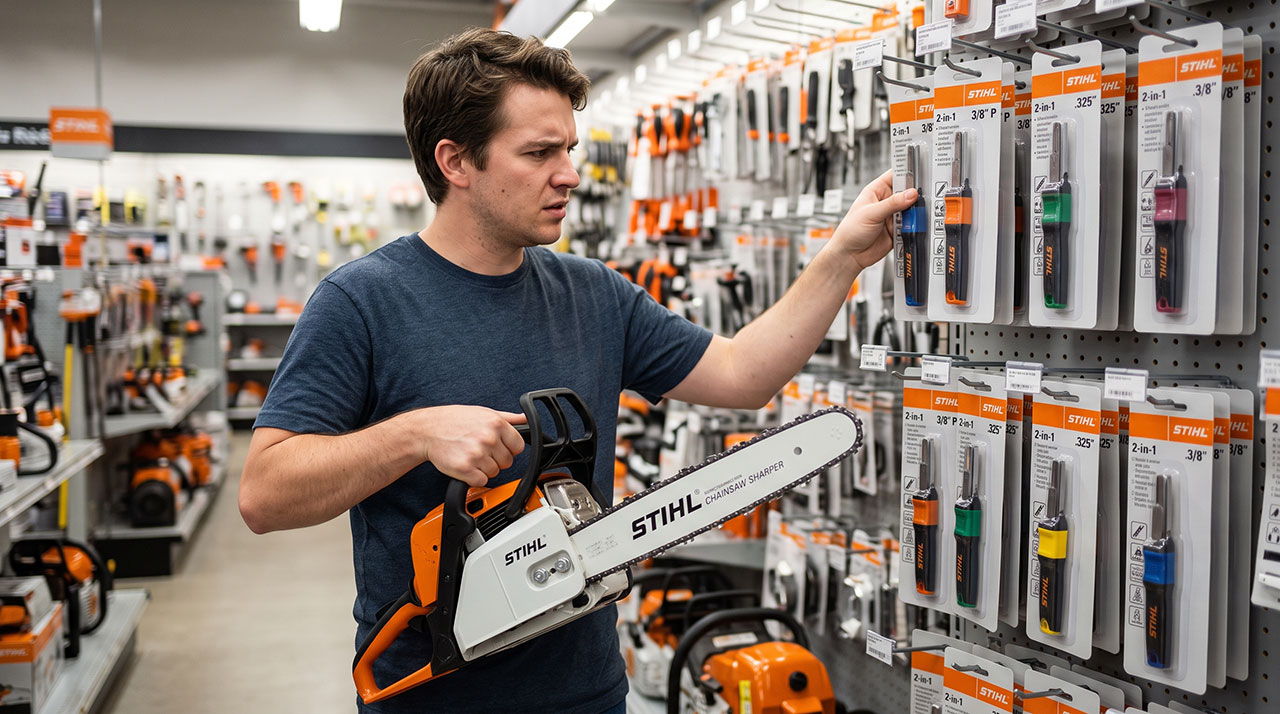
I remember staring at the wall of chainsaw accessories in my local hardware store, completely stuck. I just wanted to sharpen my dull chainsaw. But looking at the Stihl 2 in 1 chainsaw sharpener sizes hanging on the rack, I realized I had no idea which one I actually needed. They all looked almost exactly the same, but the packaging had different numbers like 3/8″, .325″, and 3/8″ Picco.
Getting the right size is entirely about matching the tool to your specific chain. If you pick the wrong one, you will quickly ruin your chain, waste your money, and end up with a saw that cuts worse than before. In this guide, I will share exactly how to understand Stihl 2 in 1 chainsaw sharpener sizes, how to find the right one for your saw, and the common mistakes I made so you can avoid them.
Why Stihl 2 in 1 Chainsaw Sharpener Sizes Matter
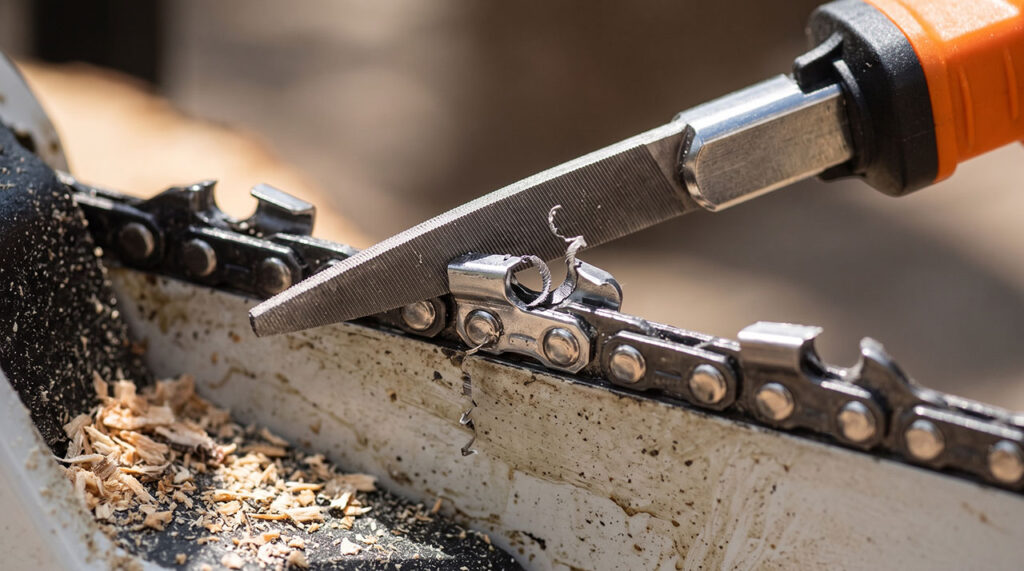
The magic of this tool is that it sharpens the cutting tooth and lowers the depth gauge (the raker) at the exact same time. It saves a massive amount of time.
But this design means the tool is built to exact tolerances. The round files inside the plastic guide are spaced perfectly for a specific chain pitch. If you use a sharpener meant for a large logging saw on a small backyard saw, the files simply will not fit into the teeth.
The Cost of Getting It Wrong
I learned this lesson the hard way. I once used a file that was just one size too big for my chain. I thought I could force it to work.
Instead of putting a razor edge on the tooth, the oversized file grinded away the top plate of the cutter. It destroyed the hook angle. When I tried to cut a simple oak log, the saw just produced fine dust and burned the wood. I had to throw the chain away.
| Problem | Cause | Solution |
| Chain produces fine dust | Dull teeth or wrong file angle | Use the exact matching sharpener size |
| File won’t fit into the tooth | Sharpener size is too large | Check chain pitch and downsize tool |
| Saw grabs and kicks back | Rakers filed too low | Use the 2-in-1 tool to keep rakers even |
Breaking Down the Five Core Sizes
To make sense of Stihl 2 in 1 chainsaw sharpener sizes, you need to look at the chain pitch. The pitch is simply the distance between the drive links on the chain.
Stihl makes five specific versions of this sharpener to match the five most common chain pitches. Let’s look at each one so you know exactly what they do.
| Chain Pitch | File Diameter (Inch) | File Diameter (mm) |
| 1/4″ Picco | 1/8″ | 3.2 mm |
| 3/8″ Picco (LP) | 5/32″ | 4.0 mm |
| .325″ Standard | 3/16″ | 4.8 mm |
| 3/8″ Standard | 13/64″ | 5.2 mm |
| .404″ Heavy Duty | 7/32″ | 5.5 mm |
1/4″ Picco (File Size: 1/8″)
This is the smallest sharpener in the lineup. You will mostly use this for pole pruners, carving chainsaws, and the tiny battery-powered garden saws like the Stihl GTA 26.
Because the teeth are so tiny, the 1/8-inch files are very delicate. When I use this size, I have to be careful not to push down too hard. A light, smooth stroke is all it takes.
3/8″ Picco / Low Profile (File Size: 5/32″)
If you bought a standard homeowner chainsaw, you probably need this one. Stihl calls it “Picco,” but other brands call it “Low Profile” or “LP.”
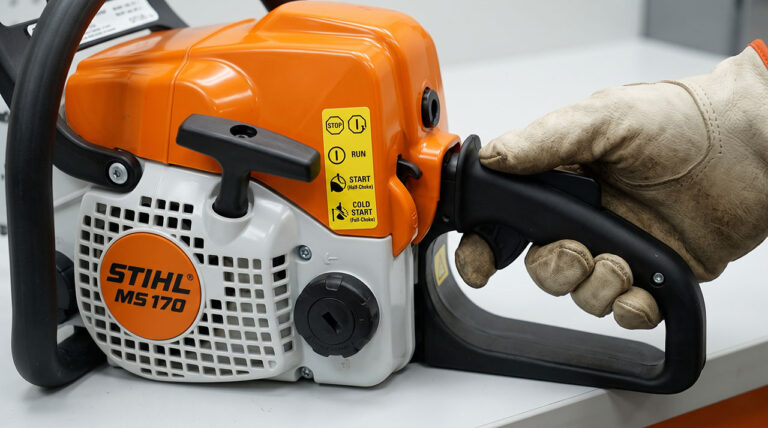
This fits wildly popular saws like the MS 170, MS 180, and MS 211. The 5/32-inch file fits perfectly into these low-profile teeth. This is the sharpener I grab the most often for weekend yard work.
.325″ Standard (File Size: 3/16″)
This size sits right in the middle. It is usually found on mid-range, “farm boss” style chainsaws. If you have an MS 250 or an MS 271, this is likely your size.
The 3/16-inch file takes off a good amount of metal. I find that chains with a .325″ pitch hold an edge well, and this sharpener makes touching them up incredibly fast.
3/8″ Standard (File Size: 13/64″)
This is where things get serious. The 3/8″ standard pitch is for professional-grade logging and forestry saws like the MS 362 or MS 462.
Stihl uses a 13/64-inch file for this sharpener. Interestingly, some other brands use a slightly larger 7/32-inch file for 3/8″ chains. But if you are using the Stihl tool on a Stihl chain, stick with the 13/64-inch size for the best factory edge.
.404″ Heavy Duty (File Size: 7/32″)
You will rarely see this size in a normal hardware store. It is meant for massive chainsaws used in heavy timber felling or chainsaw milling.
The cutters on a .404″ chain are huge, and the 7/32-inch file is thick enough to handle them. Unless you are running a giant saw with a 36-inch bar, you can usually ignore this size.
How to Find Your Chainsaw’s Chain Size
Guessing your chain size is a terrible idea. Thankfully, you do not have to measure anything yourself. The information is already printed right on your chainsaw.
You just need to know where to look. Once you find the pitch, picking between the Stihl 2 in 1 chainsaw sharpener sizes becomes completely foolproof.
Reading the Bar Stamping
The easiest place to look is the guide bar. Look near the base of the bar, right where it attaches to the engine block.
You will see a bunch of numbers stamped into the metal. Look for a fraction or a decimal. You will usually see things like 3/8, .325, or 1/4. Next to it, you will also see the gauge (like .043 or .050) and the drive link count. You only need that first number—the pitch—to pick your sharpener.
Checking the Chain Drive Link
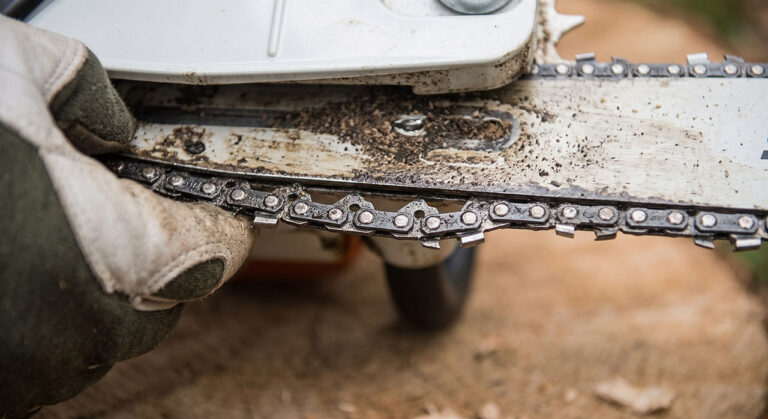
If your bar is old and the numbers have rubbed off, you can look at the chain itself. Stihl stamps a single number on the side of every single drive link (the pointy parts of the chain that ride inside the bar groove).
This single number corresponds directly to the pitch of the chain.
| Stihl Drive Link Stamp | Corresponding Chain Pitch |
| 1 or 7 | 1/4″ or 1/4″ Picco |
| 6 | 3/8″ Picco (Low Profile) |
| 2 | .325″ Standard |
| 3 | 3/8″ Standard |
| 4 | .404″ Heavy Duty |
The Big Confusion: 3/8″ Standard vs. 3/8″ Picco
This is the number one mistake people make with Stihl 2 in 1 chainsaw sharpener sizes. I made it myself.
You see “3/8” stamped on your bar, so you go to the store and buy the sharpener labeled “3/8”. But when you get home, the tool feels way too big for the chain. Why? Because you actually have a 3/8″ Picco (Low Profile) chain, but you bought the 3/8″ Standard sharpener.
| Feature | 3/8″ Picco (Low Profile) | 3/8″ Standard |
| Typical Saw Size | Under 40cc (e.g., MS 170) | Over 60cc (e.g., MS 362) |
| File Size Needed | 5/32″ (4.0 mm) | 13/64″ (5.2 mm) |
| Sharpener Body Color | Usually white/gray | Usually black |
Even though the distance between the drive links is technically the same (which is why they share the 3/8 name), the physical size of the cutting tooth is totally different. The Picco tooth is small and shallow. The Standard tooth is tall and deep. Always double-check if your 3/8 chain is standard or low profile before buying.
Milwaukee Mini Chainsaw M18: My Honest Field Review
Tips for Using the Sharpener Once You Have the Right Size
Finding the right size is only half the battle. Using the tool correctly is just as important.
When I first got my sharpener, I thought it would do all the work for me. It is a brilliant tool, but you still need good technique to get a sharp edge. Here are a few things I learned the hard way.
Keeping the File Level
The 2-in-1 tool has metal guide bars that rest squarely on top of the cutter teeth. You must keep these bars flat.
Do not drop your wrist. Do not tilt the handle up or down. Just let the tool rest naturally on the chain and push straight forward. If you tilt it, you will change the cutting angle, and the chain will cut crooked.
Watch the Direction Arrows
There are arrows engraved on the plastic casing of the sharpener. These arrows must point toward the nose of the chainsaw bar.
Files only cut in one direction—when you push them. Never drag the file backward across the tooth. Pushing cuts the metal. Dragging ruins the file. Lift the tool up slightly when pulling it back for the next stroke.
| Mistake | Better Approach |
| Dragging the file backward | Lift the tool up after every forward push |
| Pushing down hard on the tool | Let the sharpener glide with light pressure |
| Filing teeth unevenly | Count your strokes so every tooth matches |
Dealing with Depth Gauges (Rakers)
The flat file inside the tool files down the depth gauge—also called the raker—every time you sharpen a tooth.
The depth gauge controls how big of a wood chip the tooth can bite off. If the raker is too high, the saw just makes dust. If it is too low, the saw bites too deep, gets stuck, and kicks back at you.
| Raker Height | Cutting Result |
| Too High | Saw will not self-feed; produces fine dust |
| Perfect | Smooth cutting; produces large wood chips |
| Too Low | Saw grabs aggressively; high risk of kickback |
Because the 2-in-1 sharpens the tooth and lowers the raker in one motion, you never have to think about it. Just keep the tool level. The flat file will automatically take off exactly the right amount of metal. It is honestly my favorite feature of the tool.
Replacing the Files Inside
Eventually, files get dull. You will know they are dull when they stop biting into the metal easily. They will feel like they are slipping or sliding over the tooth.
You do not need to buy a whole new $40 tool. You can open the plastic casing and swap out the files. The tool uses two standard round files and one standard flat file. Just make sure you buy the exact replacement round files that match your specific sharpener size.
Final Thoughts
Figuring out Stihl 2 in 1 chainsaw sharpener sizes used to frustrate me, but it is actually very simple once you know what to look for. Just check your chainsaw bar for the pitch, match it to the right file diameter, and pay close attention to the difference between 3/8″ Picco and 3/8″ Standard.
This tool completely changed how I maintain my saws. I used to put off sharpening because it took too long. Now, I can touch up a chain in about five minutes right on the tailgate of my truck. If you match the size correctly and keep your strokes smooth and level, your chainsaw will cut like it is brand new every single time.