Echo CS-400 Chainsaw Spark Plug: My Fix for Hard Starts
I still remember the first time my saw completely refused to fire up. I stood in the yard pulling the starter cord until my shoulder ached. I blamed the carburetor, I blamed the weather, and I even blamed the fuel. It turns out, I just needed to check the echo cs-400 chainsaw spark plug.
It is incredibly frustrating how one tiny, inexpensive part can completely shut down a powerful tool. Since that day, I have learned a lot about keeping this specific saw running smoothly. If your CS-400 is sputtering, dying on idle, or just plain stubborn, the spark plug is the absolute first place you should look. I am going to share exactly what I do to diagnose, gap, and replace this plug so you can get back to cutting wood.
Signs Your Saw Needs a New Plug
How do you know when it is time to toss the old plug out? Your saw will usually try to tell you well before it dies.
Most people wait until the chainsaw completely stops working before they check the ignition system. I used to do this, too. Now, I watch out for early warning signs. The biggest clue I look for is a hard start. If my saw normally starts on the third pull, but suddenly takes seven or eight, I know something is wearing out.
Another clear sign is sputtering when I squeeze the throttle. The CS-400 should scream when you pull the trigger. If it bogs down, hesitates, or sounds like it is gargling, you probably have a weak spark. I also notice issues when I set the saw down. When the plug gets old and covered in carbon, the spark becomes very inconsistent at low speeds. The saw will just quietly die while idling on the ground.
| Symptom | What It Usually Means |
| Takes 10+ pulls to start | Weak spark or heavily fouled tip |
| Dies while idling | Inconsistent spark due to carbon buildup |
| Bogs down under heavy cuts | Plug is failing under high cylinder pressure |
The Exact Replacement Plug You Need
When I first needed a replacement, I stood in the hardware store staring at a massive wall of little boxes. I had no clue which one fit my saw.
I learned the hard way that you cannot just grab any plug that looks about the right size. The Echo CS-400 runs best on an NGK BPM8Y spark plug. You might find other cheaper brands that claim to cross-reference to this size. However, in my experience, small two-stroke engines are extremely picky. The NGK plug simply runs better and lasts much longer in this specific machine.
I once tried a cheap, no-name brand plug I found online to save three dollars. The saw started fine and ran okay for about ten minutes. But then it started losing power right in the middle of cutting a thick oak branch. I swapped the NGK BPM8Y back in, and the saw ran perfectly again. Always stick to the name brand.
Getting the Spark Plug Gap Right
Buying the right plug is only half the battle. You also have to make sure the gap is set correctly before you screw it into the engine.
The factory gap for the Echo CS-400 is 0.026 inches, which is roughly 0.65 millimeters. I used to just pull new plugs out of the cardboard box and screw them straight in. I assumed they were perfectly pre-gapped at the factory. That was a big mistake. Often, the boxes get dropped during shipping, and the soft metal tip gets smashed shut.
If the gap is too tight, the spark is weak. If the gap is too wide, the ignition coil cannot push the spark across the space. I highly recommend buying a cheap wire gap tool. A wire tool is better than a flat feeler gauge because it measures the exact curve of the metal electrode. It takes five seconds to check the gap, and it saves you hours of pulling the cord.
| Gap Condition | Engine Behavior |
| Gap Too Small | Weak spark, unburned fuel, very hard starting |
| Perfect Gap (0.026 in) | Crisp throttle response, easy starts, smooth idle |
| Gap Too Wide | Engine misfires under load, might not start at all |
How I Replace the Echo CS-400 Chainsaw Spark Plug
Changing the plug on this saw is actually really simple. You do not need to be a mechanic to do it right.
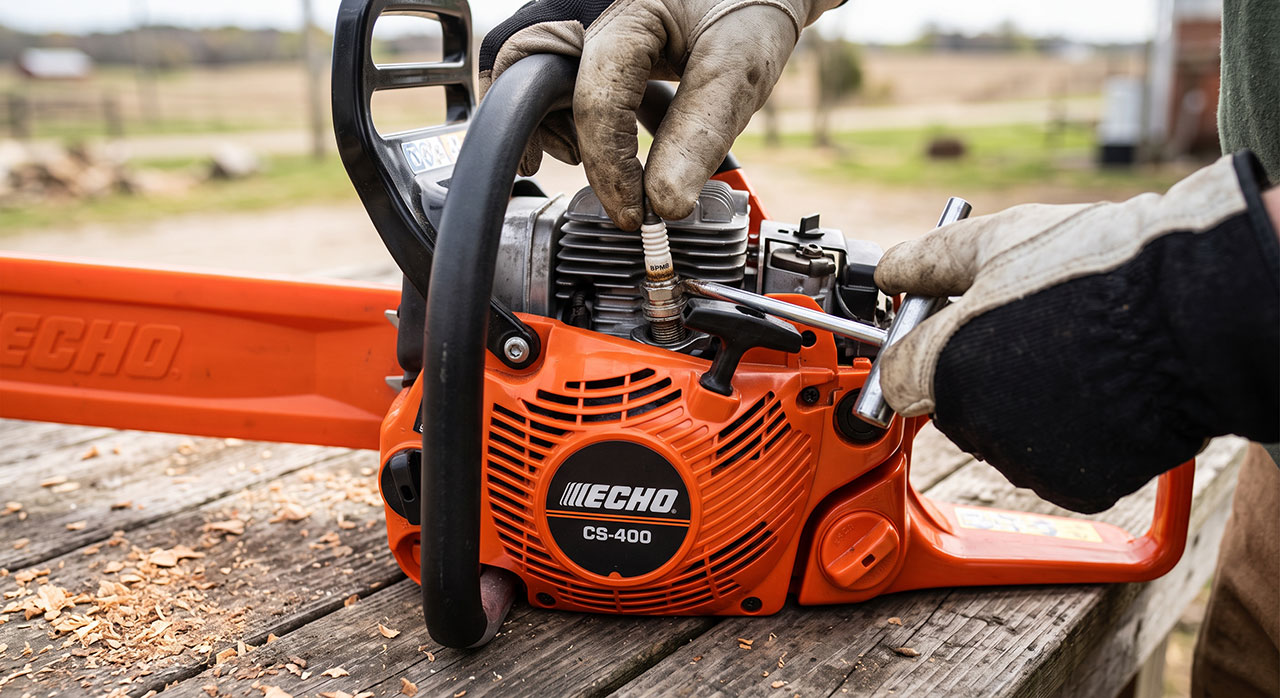
First, always make sure the saw is completely cool. I once tried to change a plug right after cutting firewood for an hour. I burned my knuckles terribly on the hot cylinder fins. Learn from my mistake and let the saw sit in the shade for a bit. You only need one tool to do this job: a scrench. This is the T-shaped metal tool that came in the box with your saw. It has a deep socket on one end and a flathead screwdriver on the other.
Start by pulling the thick black rubber boot off the top of the spark plug. Sometimes this boot is stuck tight from the heat. Never pull on the thin wire itself, or you might rip it right out of the boot. Grab the thick rubber base, twist it left and right a few times to break the seal, and then pull straight up. Once the boot is off, use your scrench to unscrew the old plug by turning it counterclockwise.
| Step | My Practical Tip |
| Removing the rubber boot | Twist it first to break the heat seal, then pull straight up |
| Loosening the old plug | Ensure the scrench is pushed down fully to avoid stripping the metal |
| Installing the new plug | Thread it in by hand for the first few turns so you do not cross-thread it |
Dealing with a Flooded Engine
Here is a highly frustrating mistake I have made. I pulled out a bad plug, put a brand new one in, and the saw still would not fire.
Why did this happen? The engine was flooded. When the old plug failed, I kept pulling the starter cord over and over. This pumped a massive amount of raw fuel into the tiny cylinder. If you screw a new plug into a cylinder full of liquid gas, the new plug instantly gets wet and cannot spark at all.
Now, if I pull out an old plug and it is dripping wet, I know I need to clear the cylinder first. I leave the plug completely out, turn the chainsaw upside down over a rag, and pull the starter cord five or six times. You will actually see a fine mist of raw gas shoot out of the open hole. After I clear out the liquid, I let the saw sit for ten minutes so the strong fumes can evaporate. Then, I install the new plug. It usually fires up on the very first pull.
Reading the Old Spark Plug
Before you throw your old plug in the trash can, take a really good look at it. It is basically a clear window into the health of your engine.
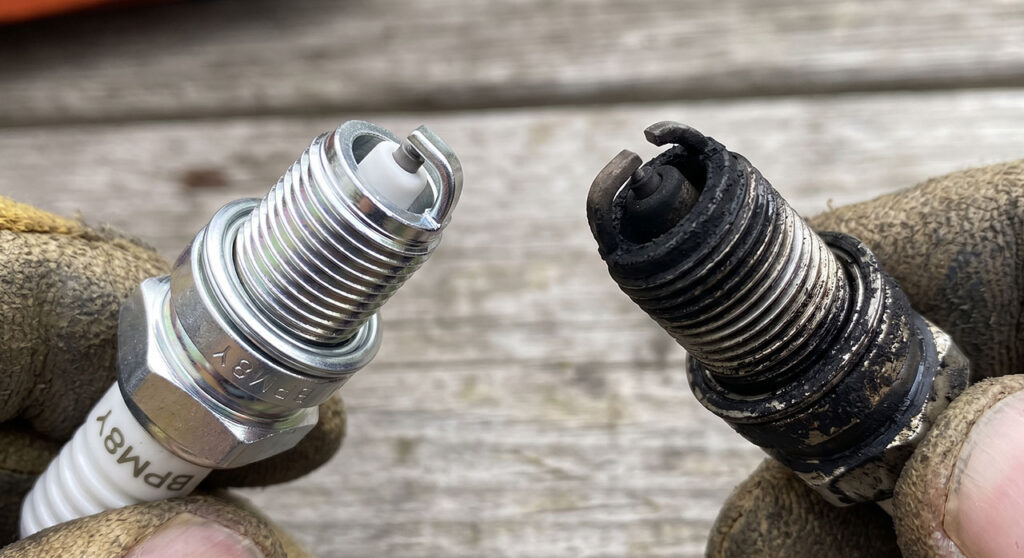
When I pull my plug out, I always inspect the ceramic tip. If the engine is running perfectly, the tip of the plug will be a light tan or grayish-brown color. This means the fuel mixture is exact and the plug is burning clean. But usually, when my saw is acting up, the plug tells a totally different story.
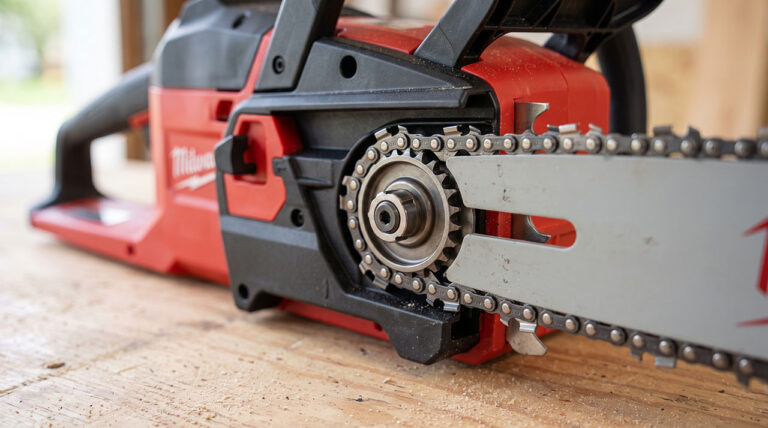
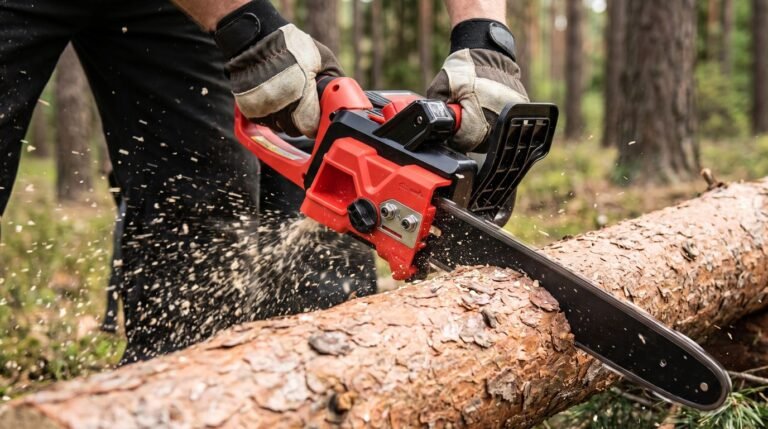
Milwaukee Mini Chainsaw M18: My Honest Field Review
I have pulled out plugs that were caked in thick, dry black soot. That tells me I mixed too much oil into my gas can, or my carburetor is running way too rich. Learning to read the colors on the plug has saved me from taking the saw to an expensive repair shop.
| Plug Color | What It Tells Me |
| Light Tan or Gray | Perfect fuel mix and totally normal wear |
| Wet and Black | Flooded engine or the plug stopped firing |
| Dry Black Soot | Fuel mix is too rich or too much oil in the gas |
Why Plugs Foul Fast on the CS-400
Sometimes, a spark plug goes bad just because it has seen a lot of hard hours. But if you find yourself replacing your plug constantly, something else is causing it.
I used to ruin plugs quickly because of how I mixed my two-stroke fuel. The Echo CS-400 requires a very strict 50:1 fuel-to-oil ratio. For a long time, I just eyeballed the oil when I poured it into my gas can. I wrongly figured a little extra oil would give the engine better lubrication. Extra oil actually creates excessive carbon. That black carbon coats the spark plug tip and grounds out the spark. Now, I use exact measuring cups every single time.
Another terrible habit I had was letting the saw idle too much. I would cut a big log, set the saw on the ground running, move the wood around for a few minutes, and then go back to cutting. Two-stroke engines absolutely hate idling. They are designed to run hot and wide open. If you let them idle for long periods, they do not get hot enough to burn off the oil deposits.
The Importance of Fresh Fuel
I really cannot talk about spark plugs without mentioning the gasoline you use. They are deeply connected.
Gasoline breaks down incredibly fast in small cans. If you leave mixed fuel sitting around for three months, it turns into sticky, useless varnish. When you try to run that old gas through your CS-400, it burns terribly and leaves a thick, gummy residue right on your new spark plug. I learned to only mix enough gas for the exact project I am doing.
I also highly recommend using ethanol-free gas if you can find it at a local pump. Ethanol naturally absorbs moisture directly from the humid air. Water in your fuel makes the saw run horribly, and it fouls plugs fast. If you only use your saw a few weekends a year, just buy the canned, pre-mixed fuel at the hardware store. It is more expensive up front, but it stays perfectly fresh for years and burns incredibly clean.
| Bad Habit | My Better Approach |
| Eyeballing the oil mixture | Use exact measuring cups for a true 50:1 ratio |
| Long idling times | Turn the saw off if you are not cutting within 30 seconds |
| Using months-old gas | Mix fresh gas every 30 days to ensure clean combustion |
How to Test the Spark Before Buying a Plug
Before I drive to the hardware store, I always verify that the plug is actually the problem. Sometimes, the issue is a dead ignition coil.
Testing the spark is a simple trick I learned years ago. First, I take the spark plug completely out of the engine block. Then, I push it back into the black rubber boot so it is connected to the wire. I hold the metal hex-nut part of the spark plug firmly against the bare metal cylinder head of the chainsaw. This grounds the plug. Then, I pull the starter cord sharply with my other hand.
You have to look closely at the gap while you pull. You should clearly see a bright blue spark jump across the gap. If the spark is weak, dull yellow, or completely missing, the plug is dead. If you put a brand new plug into the boot, test it the same way, and there is still no spark, your ignition coil has probably failed. Just be very careful not to touch the metal tip of the plug while pulling the cord, or you will get a nasty electrical shock.
Real-World Limitations and Common Myths
There is a massive amount of bad advice out there regarding chainsaw maintenance. I have honestly fallen for a few of these myths myself over the years.
One incredibly common myth is that you can just aggressively clean an old, fouled spark plug with a metal wire brush to make it new again. I have tried this exact trick. I scrubbed the black carbon off, wiped it down, and put it back in. Yes, the saw started. But it did not run at full power. Wire brushes actually leave microscopic metal scratches on the white ceramic insulator. These scratches cause the spark to jump to the wrong place. Plugs are cheap. Just buy a new one.
Another myth is that buying a “hotter” plug gives your saw more power. A guy at a store once told me to buy a hotter plug to stop carbon fouling. A hotter plug is designed to retain more heat in the tip to burn off oil. But the Echo CS-400 was heavily engineered for a specific factory heat range. If you put a hotter plug in, it can easily overheat the cylinder and literally melt a hole right through the top of your piston.
| Common Myth | The Real Truth |
| Brushing a plug makes it new | Wire bristles damage the ceramic and internal resistor wear remains |
| Hotter plugs add more power | Hotter plugs just retain heat and can easily melt your piston |
| Any matching size plug works | Two-strokes are highly sensitive; stick to the exact NGK BPM8Y |
Final Thoughts
Dealing with engine trouble is never fun, especially when you have a massive pile of wood waiting to be cut. But learning how to maintain your ignition system changes everything. Swapping out a bad plug is the fastest, cheapest, and easiest way to bring your tool back to life.
If you keep a spare NGK BPM8Y in your toolbox, mix your fuel precisely, and avoid letting your saw idle on the dirt for too long, you will rarely have starting issues. Treat your equipment right, and your saw will start easily every single time you need it.