Problems Starting A Stihl Chainsaw: Fixes That Work
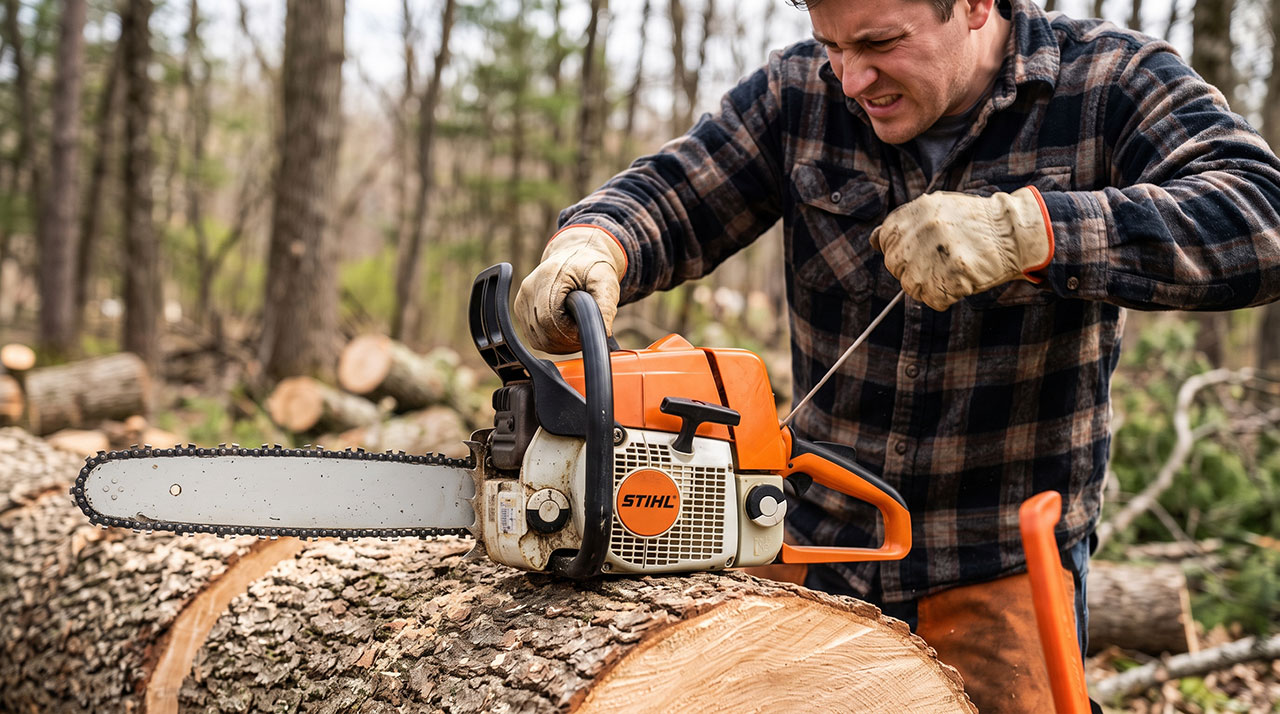
I remember standing in the woods, yanking the pull cord on my chainsaw until my shoulder literally ached. If you are having problems starting a Stihl chainsaw right now, I feel your exact pain. You just want to cut some wood, but instead, you are wrestling with a stubborn engine that refuses to pop. It is incredibly frustrating, especially when you have a long day of yard work planned.
Over the years, I have learned that these saws are actually very reliable once you understand their quirks. Most starting issues come down to just a few common mistakes, simple clogs, or bad habits we do not even realize we have. In this guide, I will share the exact steps I use to get my saw running again without taking a costly trip to the small engine mechanic.
Why Won’t My Chainsaw Start Today?
Every gas engine needs three basic things to run: fuel, air, and a spark. When you have problems starting a Stihl chainsaw, one of those three things is missing.
I always start my troubleshooting by looking at the easiest fixes first. There is no need to tear the engine apart if the issue is just an empty tank or a flipped switch.
| Symptom | Most Likely Cause | Quick Fix |
| Smells strongly of gas | Flooded engine | Clear the combustion chamber |
| No resistance on pull cord | Lost compression | Needs mechanic check |
| Saw dies when given gas | Clogged fuel filter | Replace filter in tank |
The Dreaded Flooded Engine
This is the number one mistake I used to make. A flooded engine happens when too much liquid fuel gets trapped inside the cylinder, soaking the spark plug so it cannot spark.
Usually, this happens because you left the choke on for too many pulls. You missed the engine’s initial “pop” sound. Once it pops, you must turn the choke off. If you keep pulling on full choke, you will flood it every single time.
| The Mistake | The Better Approach |
| Pulling 10 times on full choke | Pulling only until the engine “burps” |
| Yanking the cord out of anger | Using smooth, even pulls |
| Leaving a wet spark plug in | Drying the plug before trying again |
If you smell gas, your engine is probably flooded. To fix this, I set the master control lever to the normal “run” position. Then, I hold the throttle trigger wide open with my foot on the rear handle. Finally, I pull the starter rope a few times. This forces fresh air into the engine to dry out the excess fuel. It usually sputters to life after a few hard pulls.
Bad or Stale Fuel Mix
I used to think leaving gas in the tank over the winter was fine. I was completely wrong. Modern gas contains ethanol, which attracts moisture from the air.
After about thirty days, mixed two-stroke gas starts to break down. The ethanol separates and turns into a gummy mess inside your fuel system. If your saw sat in the shed all winter with fuel in it, you are almost certainly going to have problems starting a Stihl chainsaw today.
| Fuel Mix Myth | The Reality |
| Gas lasts forever in the can | Gas breaks down after 30 days |
| Eyeballing the oil mix is fine | You need an exact 50:1 ratio |
| Cheap pump gas is best | Ethanol-free premium is much safer |
Always dump out old fuel. I now buy high-octane, ethanol-free fuel for all my Stihl equipment. I mix it exactly at a 50:1 ratio with high-quality Stihl two-cycle oil. If you want to avoid fuel math completely, you can buy the pre-mixed cans of Stihl MotoMix. It is expensive, but it stays fresh for years and prevents a massive amount of starting headaches.
Checking the Spark and Air Flow
If you know your fuel is fresh and your engine is not flooded, it is time to check the spark and the air. These are easy visual inspections.
You only need a basic scrench (the screwdriver/wrench combo tool that came with your saw) to do this. I always keep one in my pocket when I am cutting.
Inspecting the Spark Plug
Taking out the spark plug tells you a story about what is happening inside your engine. I pop the top cover off my saw, pull off the rubber boot, and unscrew the plug.
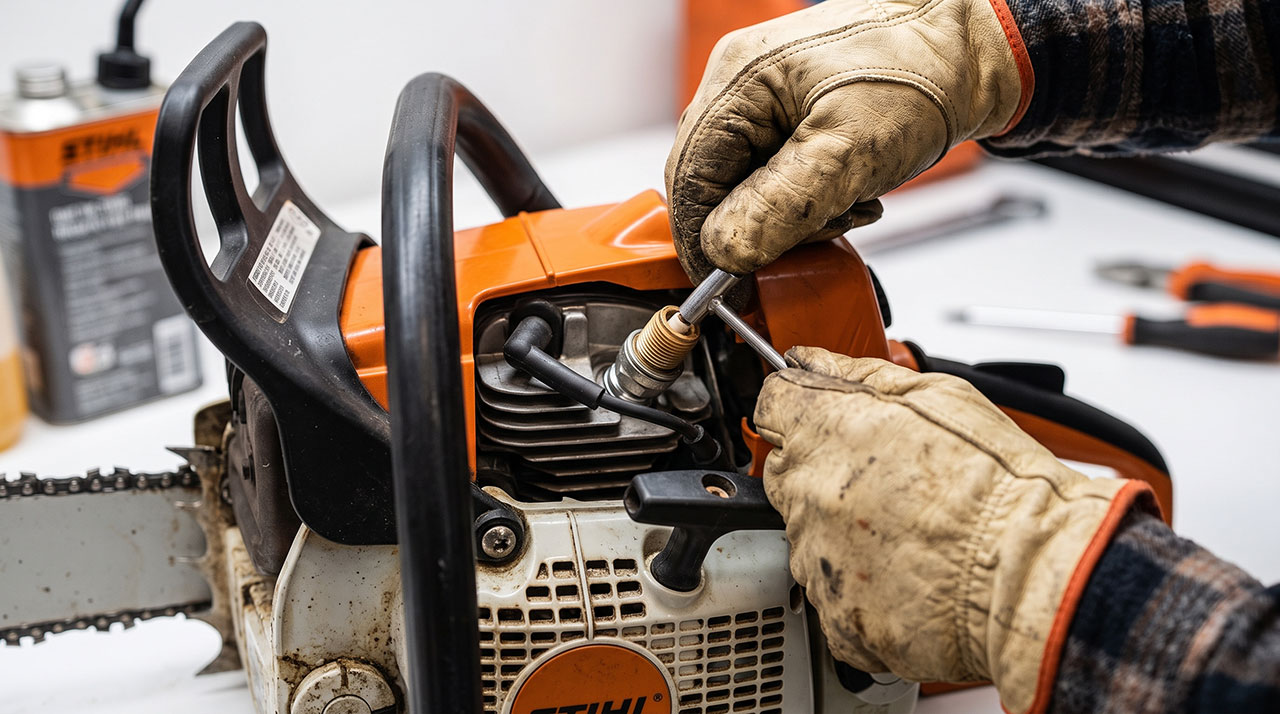
Look closely at the tip of the spark plug. It should be a light tan or gray color. If it is wet, you are flooded. If it is caked in thick, black carbon, it cannot create a strong spark.
| Spark Plug Condition | What It Means | Next Step |
| Light tan and dry | Normal operation | Put it back in |
| Dripping wet with fuel | Flooded cylinder | Dry it off completely |
| Black and crusty | Carbon buildup | Replace with a new plug |
I change my spark plug once a year. It costs less than five dollars. I have spent hours trying to diagnose complex problems starting a Stihl chainsaw, only to realize a cheap new spark plug was the instant cure. Do not overlook this simple fix.
Best Stihl Chainsaw for Firewood Cutting
A Clogged Air Filter
Cutting wood is a dirty job. Sawdust, bar oil, and dirt fly everywhere. Eventually, all that debris gets sucked right into the air filter.
If the engine cannot breathe, it cannot run. A clogged air filter acts like a permanent choke. It forces the engine to suck in too much fuel and not enough air. I check my air filter every time I fill the gas tank. If it looks like a fuzzy brown sweater, I take it out. I gently tap it against a hard surface to knock the dust loose. Do not use high-pressure air to blow it out, as you can tear the delicate filter material.
Fuel System Frustrations
When fresh gas and a new spark plug do not solve your problems starting a Stihl chainsaw, the issue is likely deeper in the fuel system.
This used to intimidate me. I did not want to mess with fuel lines or carburetors. But once you look closely, these parts are actually very simple to understand and replace.
| Quick Check | Difficulty Level | Time Needed |
| Replacing fuel filter | Very Easy | 5 minutes |
| Changing fuel lines | Medium | 20 minutes |
| Cleaning carburetor | Hard | 45 minutes |
The Fuel Filter and Lines
Inside your gas tank, there is a tiny weighted filter attached to a rubber hose. This filter drops to the bottom of the tank to suck up clean fuel.
Over time, that filter gets clogged with tiny wood chips and dirt. I use a piece of bent wire (a metal coat hanger works great) to fish the fuel line out of the tank opening. If the filter looks dark or feels hard, I pull it off and push a new one onto the line.
Next, inspect the rubber fuel lines. They get brittle over time. If they crack, the engine sucks in air instead of fuel. This ruins the vacuum pressure needed to pump gas to the engine. If your lines look cracked, brittle, or yellowed, they need to be replaced.
Carburetor Issues You Can Actually Fix
The carburetor mixes the air and fuel before sending it into the engine. When gas goes stale, it clogs the tiny microscopic ports inside the carburetor.
If your saw starts, idles for a second, and then dies when you pull the trigger, you probably have a dirty carburetor. Inside the carb, there are thin rubber parts called diaphragms. They pump the fuel. If they sit dry or get attacked by ethanol, they get stiff and stop pumping.
You can buy a cheap carburetor rebuild kit online. It just involves taking out four screws, swapping the rubber gaskets, and spraying carburetor cleaner through the tiny holes. If that sounds like too much work, you can actually buy a whole brand-new aftermarket carburetor for very little money and just swap the whole part.
My Go-To Starting Routine (That Prevents Headaches)
A lot of problems starting a Stihl chainsaw happen because the user does not understand the master control lever. Stihl saws have a very specific starting sequence.
I had to learn this the hard way. I used to just flip switches and pull cords hoping for the best. Now, I follow a strict routine that works almost every single time.
The Right Way to Use the Choke
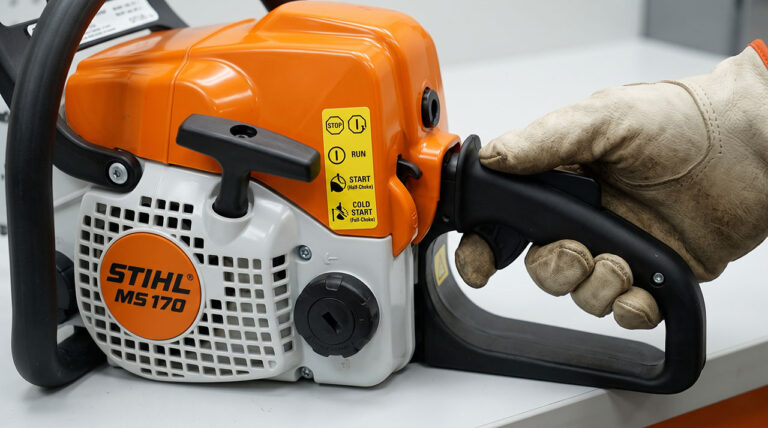
The master control lever usually has four positions. The bottom position is full choke. The next one up is half choke. The next is run. The top is off.
To start a cold saw, I squeeze the throttle trigger and push the lever all the way down to full choke. I pull the starter cord. I do not pull it fast and crazy. I pull until I feel tension, and then give it a smooth, sharp tug.
I listen closely. After two or three pulls, the engine will make a distinct “burp” or “pop” sound. It sounds like it wants to start, but dies immediately. Stop pulling right now. If you pull again on full choke, you will flood it.
Move the lever up one click to the half-choke position. Pull the cord again. It should start within one or two pulls. Once it is running fast, I quickly squeeze and release the throttle trigger. This automatically snaps the lever up into the normal run position, and the saw will idle nicely.
Dealing with Hot Starts vs. Cold Starts
You only need the choke when the engine is completely cold. If you just turned the saw off to move a log, the engine is still hot.
If you try to use the full choke on a hot engine, you will flood it instantly. This is a very common mistake. People take a quick break, come back, put the saw on full choke, and wonder why it will not start.
| Start Type | Choke Setting | Throttle Action |
| Cold Start (Has not run today) | Full Choke | Squeeze trigger to set lever |
| Warm Start (Sat for 10 mins) | Half Choke | Squeeze to release after start |
| Hot Start (Just turned off) | Normal Run | Do not touch throttle |
For a hot start, just leave the master control lever in the normal run position. Put your foot in the handle and give it a firm pull. It should fire right up. Recognizing the difference between a hot and cold engine will save you a lot of pulling.
When to Give Up and See a Mechanic
I like fixing things myself, but I also know my limits. Sometimes, the problems starting a Stihl chainsaw are beyond simple backyard fixes.
If you check the fuel, spark, and air, and the saw still refuses to start, you might have an internal engine problem.
The worst-case scenario is a scored piston. This happens if you run the saw without mixing oil into the gas, or if the saw overheats badly. The metal piston actually melts and scratches the cylinder wall. You can sometimes see this by taking off the muffler and looking inside with a flashlight. If the metal looks deeply scratched, the saw has lost compression.
Another issue is blown crankcase seals. This causes a massive air leak that you cannot fix without completely tearing the engine block apart. If the pull cord feels incredibly easy to pull, with almost no resistance, you have lost engine compression. At that point, it is time to take it to a professional dealer. They can pressure test the engine and tell you if it is worth fixing or if you just need a new saw.
Final Thoughts
Dealing with problems starting a Stihl chainsaw can ruin a good day of working outdoors. But in my experience, ninety percent of these issues come down to bad fuel, a flooded engine, or a dirty spark plug. If you use fresh, ethanol-free fuel mixed correctly, and you learn to listen for that first “pop” on the choke, your saw will treat you very well.
Take your time and do not let frustration win. Yanking the cord a hundred times in a row will only hurt your shoulder and damage the starter assembly. Walk away, let the engine clear out, change the plug, and try the simple steps again. A well-maintained Stihl is a tool you can rely on for decades.