How to Start a Stihl MS250 Chainsaw ? My Step-by-Step Guide
I still remember the first time I tried to fire up my new saw. I pulled the starter cord over and over until my shoulder physically ached. Figuring out how to start a Stihl MS250 chainsaw seemed like some sort of dark art, but the truth is, I was just making a few basic rookie mistakes. It turns out, this specific model requires a very exact sequence of clicks on the control lever to get going.
Once you understand what the engine actually needs, it starts on the third or fourth pull almost every single time. Today, I want to walk you through exactly what I do to start mine, how to avoid the nightmare of flooding the engine, and what to do if you already have. I will share the exact habits I rely on so you can spend less time pulling a rope and more time actually cutting wood.
The Master Control Lever Explained
Before you even touch the starter rope, you need to understand the master control lever. This little plastic switch on the left side of the handle controls the choke, the throttle lock, and the kill switch all in one place. When I first got my MS250, I was randomly clicking this lever up and down, hoping for the best. That is a guaranteed way to flood the engine.
Knowing what each position does is the real secret to getting your saw running quickly and smoothly. Here is a simple breakdown of the four positions on that lever, from top to bottom.
| Lever Position | What It Means | When to Use It |
| Top (0) | Stop / Off | To turn off the running chainsaw. |
| Second (I) | Run / Normal | Once the saw is warm and running smoothly. |
| Third (Half-Moon) | Half-Choke / Fast Idle | Right after the engine “burps” on a cold start. |
| Bottom (Full Choke) | Cold Start | When the saw has not been run at all today. |
Step-by-Step: How to Start a Stihl MS250 Chainsaw (Cold Start)
A cold start happens when the saw has been sitting out for a few hours, overnight, or for the whole season. This is exactly where most beginners get frustrated. If you miss the subtle sounds the engine makes during this process, you will flood it. Here is the exact routine I use to start my MS250 on a cold morning.
Setting the Chain Brake First
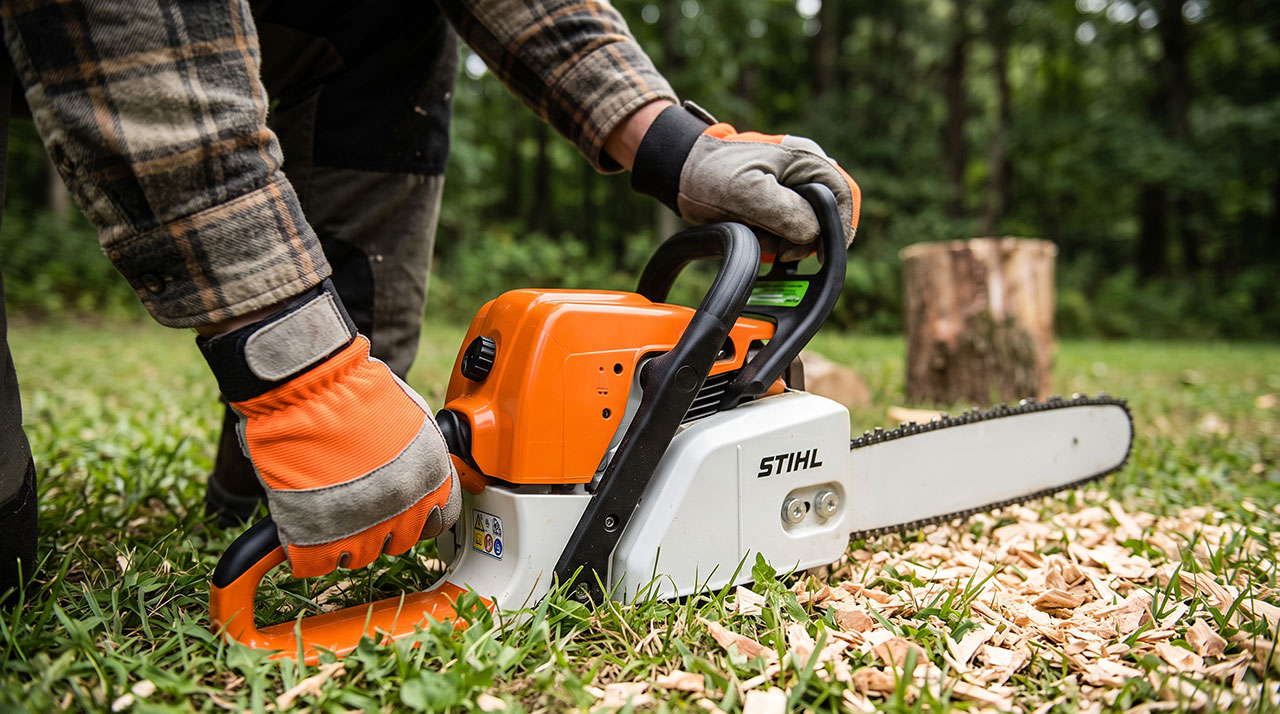
Safety absolutely comes first, every single time you start a power tool. Push the front plastic hand guard forward until you hear a loud click. This locks the chain in place. If the saw revs up unexpectedly during the starting process, the chain will not spin, which keeps your legs safe from an accidental cut.
Engaging the Full Choke
To put the saw in full choke, you cannot just push the master control lever down with your thumb. It will feel stuck. You have to squeeze the throttle trigger and the safety lockout on the top of the handle at the exact same time. While holding those two triggers down, push the master control lever all the way to the very bottom position. This action locks the throttle open slightly and chokes off the air supply, feeding the engine raw fuel.
The Initial Pulls (Listen for the “Burp”)
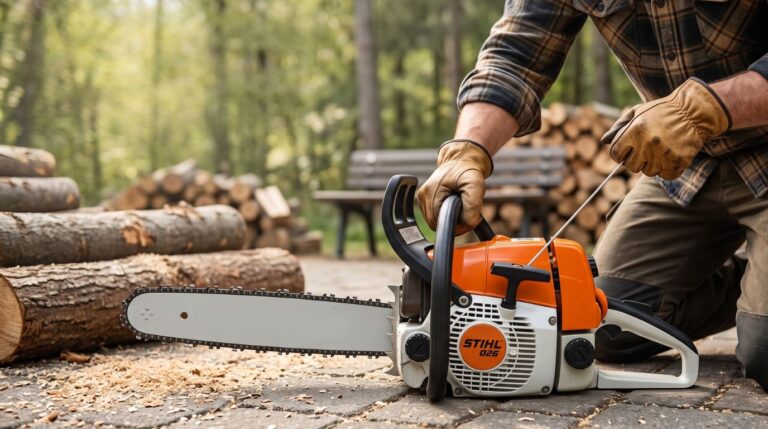
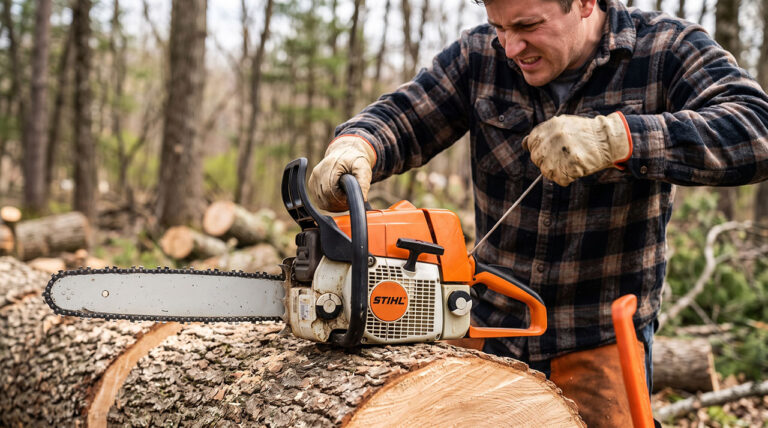
This is the most critical step in the entire process. Put the chainsaw flat on clear ground. Slide your right boot toe through the rear handle to pin it down. Hold the top front handle firmly with a straight left arm. Pull the starter rope up slowly until you feel a firm resistance. Then, give it a quick, strong, upward pull.
You are listening for a very specific sound. It is a quick “pop” or “burp” where the engine briefly fires, tries to start, but dies immediately. Do not pull the rope more than three or four times while in the bottom full-choke position. If you keep mindlessly pulling the cord after you hear that burp, you will flood the engine with gas.
Switching to Half-Choke and Starting
As soon as you hear that short pop, stop pulling immediately. Move the master control lever up one single notch to the half-choke position. You do not need to squeeze the throttle trigger to do this. Just use your thumb to click it up once. Now, pull the starter rope again.
Because the engine just got a prime of fuel, it should start running within one or two pulls. The saw will run at a very fast, loud idle. Immediately squeeze and release the throttle trigger. The lever will automatically pop up to the normal “I” run position, and the engine will drop to a quiet, steady idle.
| Sound You Hear | What It Means | Next Step |
| Normal pulling noise | Engine is pulling in fuel | Keep pulling (maximum 4 times) |
| A quick “pop” or “burp” | Engine fired but needs air | Move lever to half-choke immediately |
| Continuous loud sputtering | Engine is running fast | Tap throttle to drop saw to normal idle |
The Warm Start Process
If you just shut the saw off to take a quick water break, move some branches, or add bar oil, you do not need to use the choke again. Trying to cold-start a warm saw is a mistake I made often early on, and it left me stranded in the woods with a hopelessly flooded saw.
For a warm start, just move the master control lever to the normal “I” position. Leave the choke completely alone. Set your chain brake, put your foot firmly in the handle, and give the cord a strong pull. A warm Stihl MS250 usually fires right up on the very first try.
Fixing the Most Common Mistake: A Flooded Engine
We have all done it at least once. You miss hearing the initial “pop,” you keep pulling the rope on full choke, and suddenly the saw reeks of unburned gas. A flooded engine simply has way too much liquid fuel and not enough oxygen inside the cylinder to ignite.
Why Your Stihl MS250 Gets Flooded
The MS250 is an excellent saw, but it is notorious for being easy to flood if you are distracted. The main culprit is almost always user error. Pulling the cord five or six times on full choke will flood it almost instantly. Another common reason is using old, stale gas that refuses to ignite quickly, tricking you into pulling the cord more times than necessary.
Best Stihl Chainsaw for Firewood Cutting
How to Clear a Flooded Cylinder Quickly
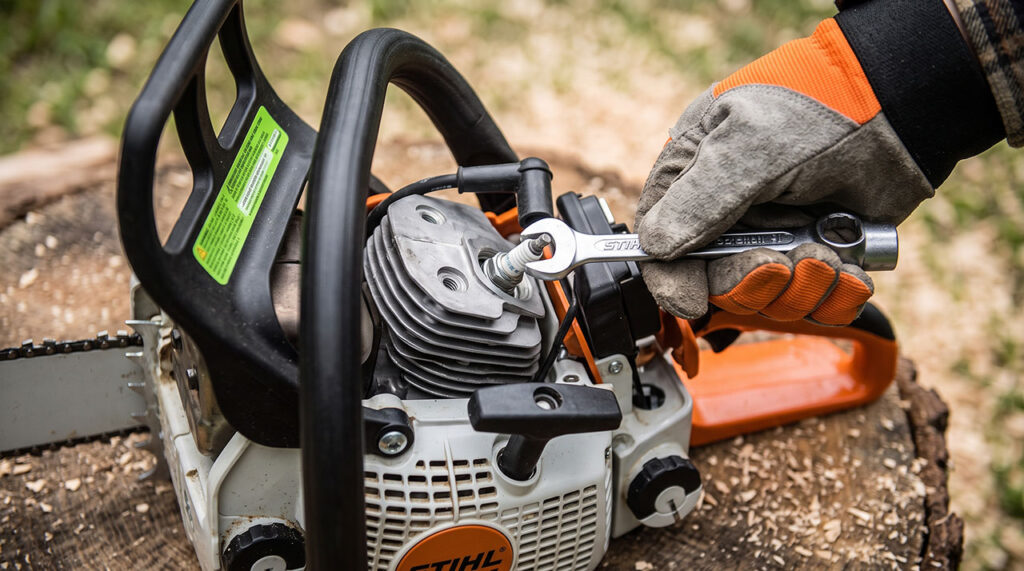
When my saw gets flooded, I use a specific clearing method that works every time. First, turn the master control lever to the top “0” stop position. Take your scrench tool, remove the top orange plastic cover, and unscrew the spark plug. Wipe the wet, shiny gas off the tip of the plug with a clean, dry rag.
While the spark plug is out, turn the saw entirely upside down and pull the starter rope briskly three or four times. This actually spits the excess liquid gas right out of the open cylinder hole. Put the dry plug back in, tighten it, put the cover on, set the lever to the “I” run position (no choke), and pull. It will take a few extra pulls to clear the fumes, but it will eventually roar to life.
| Starting Issue | Likely Cause | Solution |
| Saw smells strongly of raw gas | Flooded cylinder | Remove spark plug, dry it, clear cylinder |
| Cord is violently jerking your hand back | Hydro-locked (extreme flooding) | Stop pulling. Remove spark plug immediately |
| Won’t pop at all after 6 pulls | Bad fuel or no spark | Drain tank, add fresh fuel, check spark plug |
Adjusting for Winter vs. Summer Starts
One thing I completely misunderstood for the first year of owning this saw is that weather changes how it breathes. Stihl actually built a tiny feature into the MS250 to help it start and run better in freezing temperatures. It is called the winter/summer shutter.
The Summer Shutter Position
For most of the year, your saw should be in the summer setting. When you take the top air filter cover off, look at the plastic divider between the cylinder and the air filter. There is a small sliding plastic shutter. In the summer setting, this shutter blocks the hot air coming off the engine cylinder from reaching the carburetor. This prevents the carburetor from overheating on hot July afternoons.
The Winter Shutter Position
If you are cutting firewood in the dead of winter, cold air can actually cause the carburetor to ice up, making the saw stall out or refuse to start. When the temperature drops below 50 degrees Fahrenheit, I slide that little plastic shutter out, flip it upside down, and slide it back in. This opens a small window that lets hot engine air flow directly over the carburetor, keeping it warm and preventing stalling.
| Season | Shutter Position | Benefit for Starting |
| Summer (Above 50°F) | Sun icon facing up | Blocks engine heat, prevents overheating |
| Winter (Below 50°F) | Snowflake icon facing up | Warms the carburetor, prevents icing and stalling |
Safety Habits I Swear By When Starting
Chainsaws are incredibly useful tools, but they demand absolute respect. Early on, I used to drop-start my saw. That means holding it up in the air with one hand and dropping it toward the ground while pulling the cord with the other. It looks cool on television, but it is incredibly dangerous and gives you zero physical control over a moving blade.
I learned quickly that starting the saw flat on the ground is the only way to go. It keeps the heavy powerhead stable, keeps the blade away from your legs, and gives your arm the proper leverage needed for a fast, strong pull.
| Common Habit | Safer Alternative |
| Drop-starting the saw in the air | Ground starting with your boot inside the rear handle |
| Starting with the chain brake off | Always click the chain brake forward before pulling |
| Wrapping the starter cord around your hand | Use the plastic T-grip normally to avoid wrist injury |
Maintenance Checks for Easier Starts
If you know exactly how to start a Stihl MS250 chainsaw properly, but the machine still fights you every single weekend, the problem is likely your maintenance routine. A dirty, neglected saw will always be hard to start. I had to learn to keep a strict maintenance schedule to save my shoulder from endless pulling.
Using the Right Fuel Mix
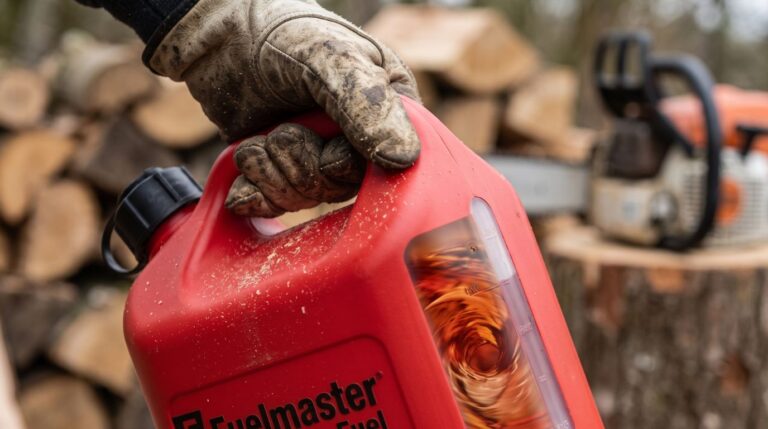
The MS250 is a 2-stroke engine. That means it takes a strict mix of gasoline and 2-stroke engine oil. Stihl requires a 50:1 ratio. I used to buy cheap pump gas from the corner station and mix it myself in a dirty gas can. After spending money rebuilding a gummed-up carburetor, I switched entirely to using ethanol-free gas or buying pre-mixed canned fuel from the hardware store. It makes a massive, noticeable difference in how easily the saw starts after sitting for a month.
Checking the Spark Plug and Air Filter
Your engine needs three basic things to start: fuel, oxygen, and a spark. If the air filter is packed tight with oily sawdust, the engine will literally choke itself out. I pop the orange cover off my MS250 after every big cutting session and gently brush the dirt off the air filter. I also change the spark plug once every spring. A brand-new plug provides a much hotter spark, which makes cold starts vastly faster and easier.
| Maintenance Task | Frequency | Impact on Starting |
| Clean or tap out the air filter | After every heavy day of use | Ensures proper air flow for clean combustion |
| Replace the spark plug | Once a year | Provides a strong, hot spark for faster cold starts |
| Empty the fuel tank completely | Before long winter storage | Prevents the carburetor jets from gumming up |
Troubleshooting Stubborn Starts
Sometimes, you follow all the rules, use fresh gas, set the choke perfectly, and the saw still flat-out refuses to cooperate. When this happens to my MS250, I have a quick mental checklist I run through before I give up and head to the local repair shop. Most starting issues are incredibly simple to fix right there in the field.
First, I check the master control lever. I cannot tell you how many times I have stood there sweating, pulling the cord, only to realize the lever was still in the “0” off position. Next, check the fuel level. It sounds obvious, but a saw will not start on empty fumes.
If the tank is full and the switch is definitely on, check the spark arrestor screen located inside the muffler. If this little metal screen gets clogged solid with black carbon buildup, the engine exhaust cannot escape. If the engine cannot breathe out, it will not pull fresh air in, and the saw will absolutely not start. You can remove it with a single screw and clean it with a wire brush.
Final Thoughts
Learning exactly how to start a Stihl MS250 chainsaw takes a little bit of patience at first, but it quickly becomes automatic muscle memory. The absolute biggest lesson I learned was to pay close attention to the sound of the engine. Listening carefully for that initial pop on full choke changed everything for me. It stopped me from flooding the saw and saved me hours of unnecessary frustration out in the woods.
If you are struggling right now, take a deep breath, clear out the cylinder, and try the sequence again. Treat the master control lever like a specific set of rules, rather than a random switch. Keep your fuel fresh, brush off your air filter, respect the machine, and your MS250 will give you years of reliable cutting power.