How Do You Measure Chainsaw Bar Size for a New Chain?
I remember the first time I tried to replace my chainsaw chain. I just grabbed a tape measure, laid it across the metal bar, and headed to the hardware store. That was a huge mistake. I came home with a chain that did not fit at all. I was left frustrated, covered in greasy bar oil, with half a fallen tree still sitting in my yard.
If you are asking how do you measure chainsaw bar length the right way, you are certainly not alone. Most beginners think it is just about measuring the metal end to end. But saws have a hidden sizing language. Today, I will show you exactly how to find your bar size, avoid the silly mistakes I made, and get the perfect replacement parts every single time.
The Big Mistake: Actual Length vs. Called Length
Measuring a saw is not like measuring a piece of lumber. This is the first trap I fell into.
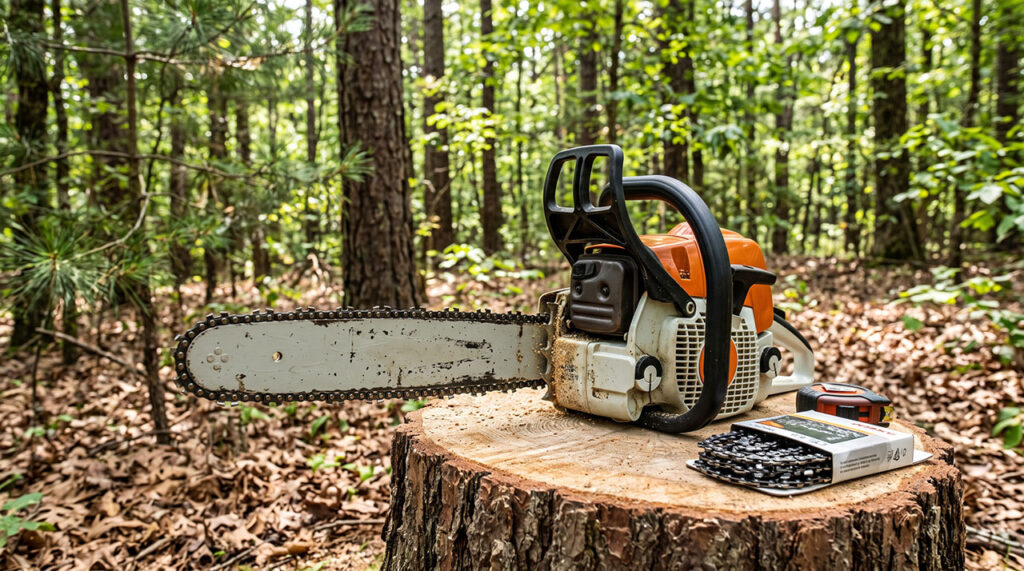
When you buy a saw, the box might say it has an 18-inch bar. But if you take that bar off the saw and measure it end to end, it will actually measure closer to 20 inches. This difference confuses almost everyone. The industry uses two different ways to talk about size, and knowing the difference saves you a lot of headaches.
Why Your Tape Measure Confuses Things
The length you care about is the cutting length, not the total length of the metal. A good portion of the metal bar is hidden inside the body of the saw. That hidden part holds the tension mechanism and the drive sprocket. If you measure the whole piece of metal, your number will be way off.
| Measurement Term | What It Actually Means |
| Called Length | The usable cutting length sticking out of the saw body. |
| Actual Length | The total end-to-end length of the unattached metal bar. |
Step-by-Step: How Do You Measure Chainsaw Bar Length?
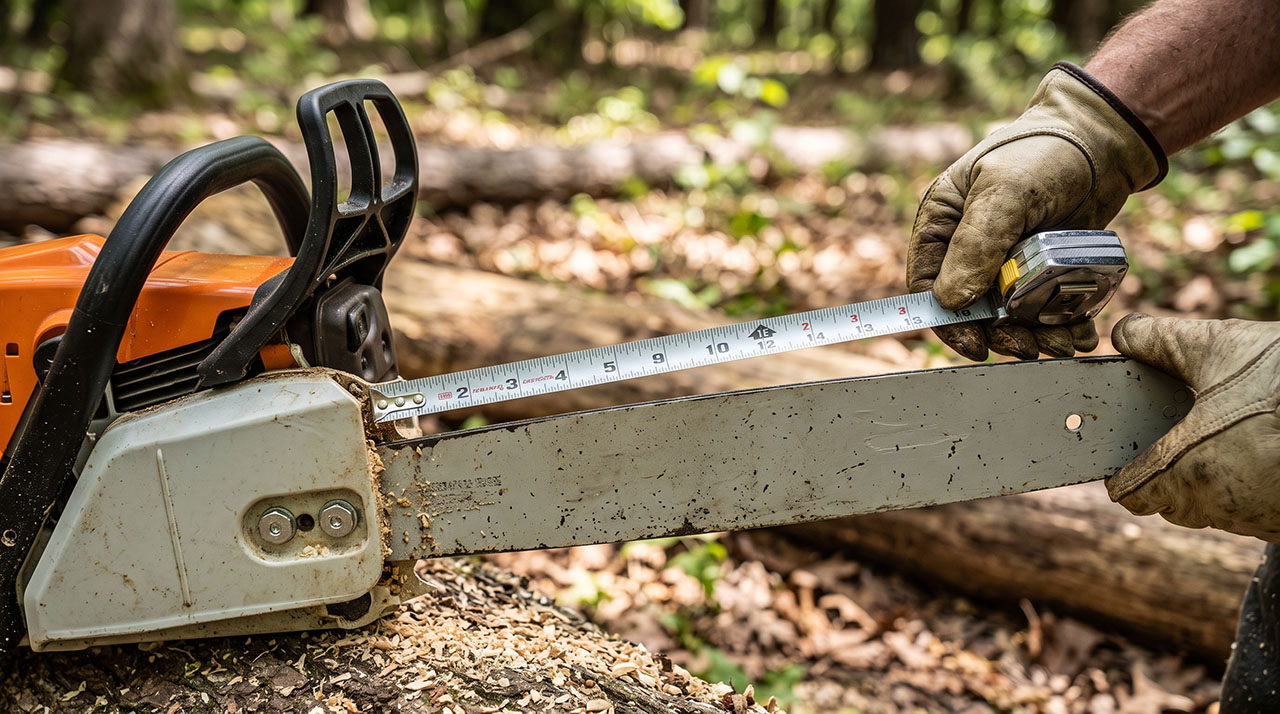
You do not need fancy tools for this. A simple retractable tape measure works perfectly.
The trick is to measure the saw while it is fully assembled. Do not take the bar off the powerhead. Leave everything put together just like you are about to cut a log.
Positioning Your Tape Measure
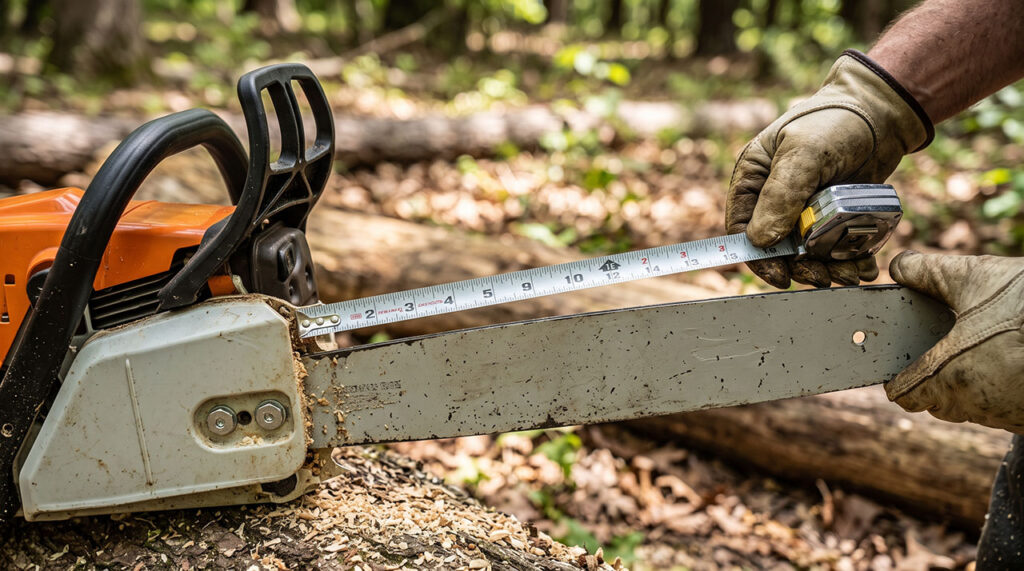
Place the tip of your tape measure right where the metal bar comes out of the plastic or metal saw casing. This spot is the base of the cut.
Pull the tape measure straight down the length of the bar. Stop at the very tip of the nose. Do not include the cutting teeth of the chain in your measurement. Just measure the solid metal bar itself.
Rounding Up to the Nearest Even Number
Here is a practical rule I learned the hard way. Chainsaw bars almost always come in even numbers. They are sized in two-inch jumps.
If your tape measure says 15 inches, you do not have a 15-inch bar. You have a 16-inch bar. You always round up to the nearest even number. The only common exception is small electric or battery saws, which sometimes use 14-inch or 10-inch bars. But even those are even numbers.
| Your Tape Measure Reading | The Bar Size You Actually Have |
| 13 to 13.5 inches | 14-inch bar |
| 15 to 15.5 inches | 16-inch bar |
| 17 to 17.5 inches | 18-inch bar |
| 19 to 19.5 inches | 20-inch bar |
Finding the Hidden Numbers on Your Bar
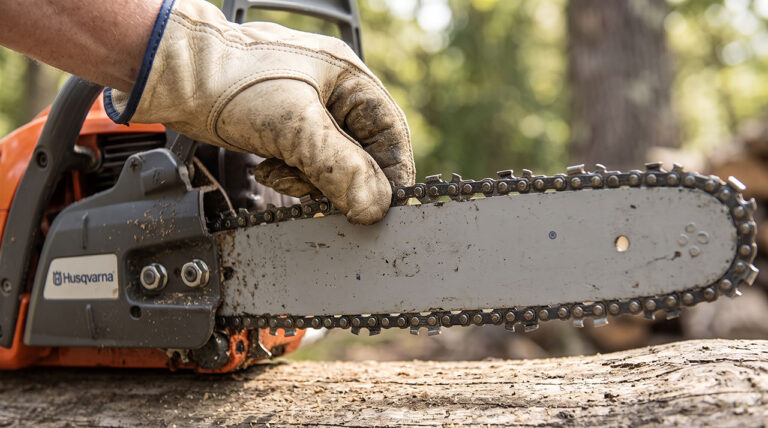
Before you even grab a tape measure, you should look for a cheat code. Most manufacturers stamp the exact measurements right onto the metal.
I felt pretty silly when an old timer showed me this. I had spent twenty minutes measuring and guessing. He just wiped a dirty rag across the base of my saw and pointed to the numbers hidden under the sawdust.
STIHL AP300S Battery Best Price
Where to Look for Stamped Measurements
Take a rag and some simple cleaner. Wipe down the flat side of the bar, right near where it connects to the engine block.
You are looking for a series of small, punched-in numbers. They are usually located near the mounting slots. These numbers tell you everything you need to know. If you find them, take a picture with your phone so you never forget them.
| Stamped Number Example | What It Tells You |
| 18 | The called length (18 inches). |
| 3/8 | The chain pitch (distance between links). |
| .050 | The chain gauge (thickness of the drive link). |
| 72 DL | The total number of drive links. |
Beyond the Bar: Finding Pitch and Gauge
Knowing how do you measure chainsaw bar length is only step one. If you only know the length, you still cannot buy a new chain.
A chain has to fit perfectly into the groove of the bar, and it has to wrap perfectly around the drive sprocket. If it does not, the saw will jam, break, or violently kick back at you. You also need to know the pitch and the gauge.
What is Chain Pitch?
Pitch is the distance between the drive links on the chain. It tells you the size of the chain.
If the pitch is wrong, the chain will not sit inside the star-shaped sprocket that spins it. Common sizes are 3/8 inch, .325 inch, and .404 inch. You cannot measure this accurately with a standard tape measure. You have to read the stamped numbers on the bar or check your user manual.
What is Chain Gauge?
Gauge is the thickness of the little metal shark fins (drive links) that ride inside the groove of the bar.
If you buy a gauge that is too thick, the chain will simply not fit into the slot. If you buy a gauge that is too thin, the chain will flop around dangerously while you cut. The most common sizes are .043, .050, .058, and .063. Again, look for the stamp on the bar.
| Common Chain Gauges | Where You Usually Find Them |
| .043 inch | Small battery or electric saws. |
| .050 inch | Medium homeowner gas saws. |
| .058 inch | Professional or heavy-duty saws. |
The Easiest Trick: Counting Drive Links
If your bar is old, the numbers might be scratched off entirely. This happened to an old Husqvarna I bought at a garage sale.
When the numbers are gone, you have to count the drive links manually. The drive links are the little triangular pieces of metal on the inside of the chain loop. They point inward toward the bar.
Why Drive Links Matter More Than Bar Length
A 16-inch bar from Stihl might use a different number of drive links than a 16-inch bar from Oregon.
To count them, take the chain completely off the saw. Lay it flat on a table. Take a piece of masking tape and wrap it around one single drive link. This is your starting point. Now, just count every single link around the loop until you get back to the tape. Write this number down. If you know the drive link count, the pitch, and the gauge, you can buy the exact right chain every time.
How Do You Measure Chainsaw Bar Wear and Tear?
Sometimes, measuring for a new chain reveals a bigger problem. Your bar might be ruined.
Metal wears down over time. The friction from the chain slowly eats away at the tracks. If your bar is worn out, putting a brand-new chain on it is a massive waste of money. The new chain will cut poorly and wear out prematurely.
Signs Your Bar is Completely Ruined
Look closely at the rails. The rails are the two metal edges that create the groove for the chain.
Run your finger gently along the outside edge of the rails. Do you feel a sharp metal burr catching your skin? If the edge feels like a sharp knife, the bar is wearing unevenly. You can sometimes file this flat, but deep wear means the bar is trash. Also, check how the chain sits in the groove. If you can wiggle the chain side-to-side easily, the groove has spread too wide.
| Wear Symptom | What You Should Do Next |
| Sharp metal burrs on edges. | File them flat with a flat file. |
| Blue burn marks on the metal. | Replace the bar (caused by running without oil). |
| Chain leans sideways in the groove. | Replace the bar immediately (groove is too wide). |
Real-World Frustrations I Learned the Hard Way
Nobody tells you the annoying realities of buying saw parts until you mess up.
I used to think buying parts was as simple as matching the brand names. I bought a Stihl chain for my Stihl saw, assuming it would just fit. I was totally wrong. Brands use many different pitches and gauges across their own product lines.
When Universal Chains Do Not Fit
Hardware stores sell “universal” chains. The packaging claims they fit all 18-inch saws. Do not trust this blindly.
There is no such thing as a truly universal chain. They might include adapters or just happen to use the most common pitch and gauge (.050 and 3/8). But if your saw requires a .058 gauge, that universal chain will slip and damage your equipment. Always trust your specific measurements over clever marketing text.
| Common Mistake | The Better Approach |
| Guessing the size at the store. | Taking a photo of the bar numbers before leaving. |
| Throwing away the old chain. | Bringing the old chain to the store to compare. |
| Trusting “universal” packaging. | Matching exact pitch, gauge, and drive links. |
Final Thoughts
Learning how do you measure chainsaw bar size might seem annoying at first, but it is a skill that pays off forever. Once you understand the difference between actual length and called length, you will never buy the wrong parts again. Always remember to check for the stamped numbers first, as they do the hard work for you.
My biggest piece of advice is to keep a little notebook in your tool shed. Write down the bar length, the pitch, the gauge, and the drive link count for your specific saw. Next time you hit a rock and ruin a chain on a Sunday afternoon, you will know exactly what to grab at the hardware store. Stay safe, keep your chain oiled, and happy cutting.