Who Owns Echo Chainsaws? The honest Story Behind the Brand
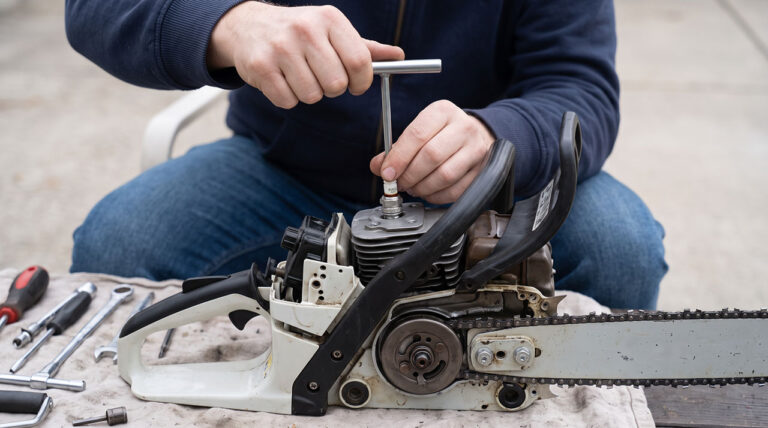
I still remember buying my first chainsaw. It was a used Echo CS-400. I bought it off a guy who swore it would outlast anything else in my garage. Over the years, that little orange saw took a beating. But as I started fixing it and buying parts, I noticed something strange on the labels. The name “Echo” was there, but so were other names I did not recognize. It made me wonder exactly who owns Echo chainsaws today.
If you are like me, you probably hate how tool brands get bought out by giant, faceless corporations. A brand makes great tools for a decade, gets bought by a massive umbrella company, and suddenly the quality drops. I wanted to know if this happened to Echo. I spent a lot of time digging into the company, tearing down their saws, and talking to local dealers. Here is exactly what I found out.
The Short Answer: Who Actually Owns Echo?
If you just want the quick facts, a company called Yamabiko Corporation owns Echo. Yamabiko is a massive Japanese manufacturer that focuses on outdoor power equipment.
But Echo was not always owned by Yamabiko. In fact, Yamabiko did not even exist before 2008. Echo started out under a different Japanese company called Kioritz. Kioritz built a huge reputation for making bulletproof two-stroke engines.
| Time Period | Owning Company | What Changed |
| Pre-2008 | Kioritz Corporation | Built the core Echo brand and two-stroke legacy. |
| 2008–Present | Yamabiko Corporation | Merged with Shindaiwa to survive a tough economy. |
Digging Into the Yamabiko Merger
You might be wondering why Kioritz gave up the Echo brand. They actually didn’t. Back in 2008, the global economy took a massive hit. Tool companies were struggling to survive.
Kioritz needed a way to stay afloat and keep fighting the big dogs like Stihl and Husqvarna. So, they looked at another legendary Japanese tool maker: Shindaiwa.
Greenworks 60V 18-Inch Chainsaw: My Honest Real-World Experience
Why Kioritz and Shindaiwa Teamed Up
Shindaiwa made incredible weed trimmers and brush cutters. Kioritz had the chainsaw market cornered with Echo. Instead of fighting each other, they decided to join forces.
They created a brand new parent company called Yamabiko. It was a pure merger of equals. This was a huge relief to me when I first learned about it. Echo was not bought out by some private equity firm looking to cut corners. They merged with another company that actually understood how to build great engines.
| Brand Name | Pre-Merger Reputation | Post-Merger Focus |
| Echo (Kioritz) | Reliable chainsaws and blowers | Remained the flagship brand for most global markets. |
| Shindaiwa | High-end trimmers and brush cutters | Kept alive as a premium, pro-tier brand for landscapers. |
Where Are Echo Chainsaws Actually Made?
Knowing who owns Echo chainsaws is only half the battle. I also wanted to know where my tools were being built. For a long time, I just assumed they were shipped over straight from Japan.
The truth is a lot more complicated, and honestly, a bit more impressive. Echo has a massive footprint in the United States.
The Japanese Engineering Connection
Yamabiko is headquartered in Japan. That means the core engineering, the engine design, and the research all happen overseas. Japanese engineering is famous for a reason. They focus on tight tolerances and long-term reliability.
When you pull the starter rope on an Echo, you are feeling Japanese engine design at work. They do not change their designs very often. Some folks think this makes Echo feel “old,” but I love it. If a design works for twenty years, why change it?
Assembled in the USA
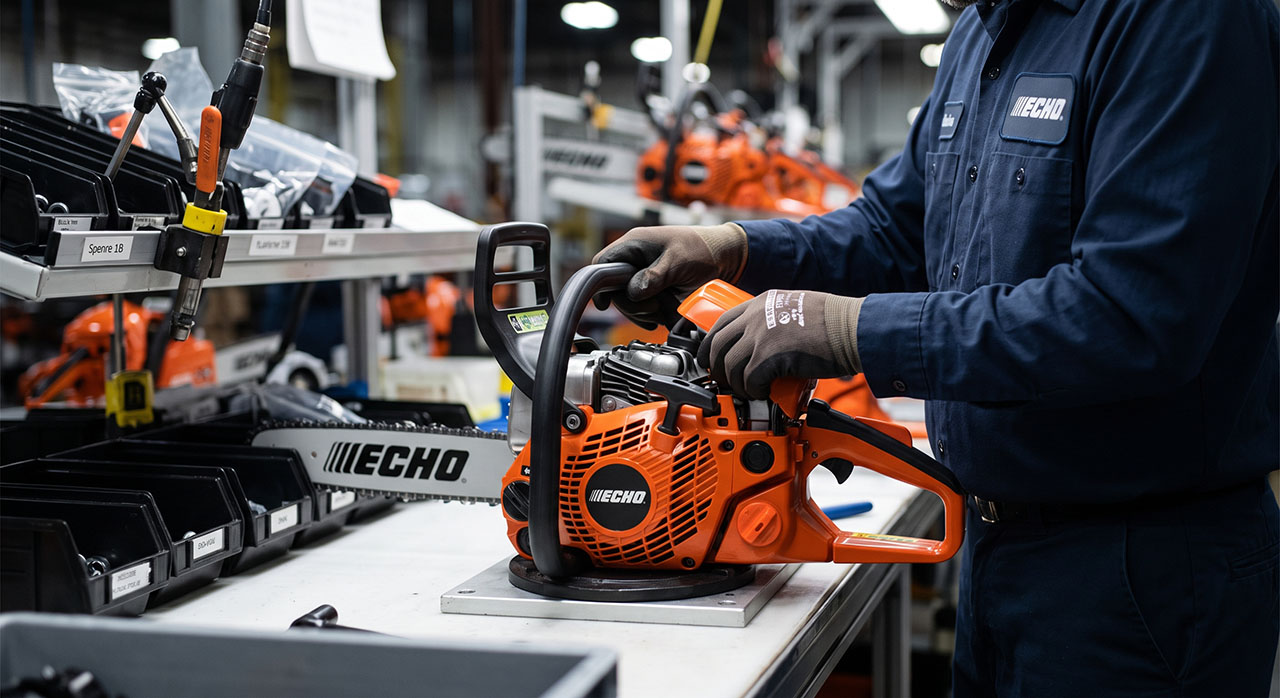
Here is the part that surprised me. A massive number of Echo chainsaws sold in America are actually built right here. Yamabiko owns a huge facility in Lake Zurich, Illinois.
They bring in parts from Japan and other global suppliers. Then, American workers assemble the saws, test them, and box them up. When you buy a popular model like the CS-590 Timber Wolf, it was likely put together in Illinois.
| Production Step | Location | Why It Matters |
| Engine Design | Japan | Ensures long-lasting, reliable two-stroke power. |
| Parts Manufacturing | Global (Japan, US, etc.) | Keeps production costs down while maintaining quality. |
| Final Assembly | Lake Zurich, Illinois | Supports US jobs and ensures strict quality control before shipping. |
My Experience: Are Echo Saws Still Good Today?
So, Yamabiko owns them, and they assemble a lot of them in the US. But does any of that translate to a good chainsaw?
I have run Echo, Stihl, and Husqvarna. I have made plenty of mistakes buying the wrong saws for the wrong jobs. When it comes to Echo, I had a few misunderstandings early on.
What I Got Wrong About Echo
For years, I thought Echo was just a “homeowner” brand. You can walk into Home Depot and buy one right off the shelf. Usually, tools sold in big box stores are watered down. I assumed Echo was cutting corners to hit a low price point.
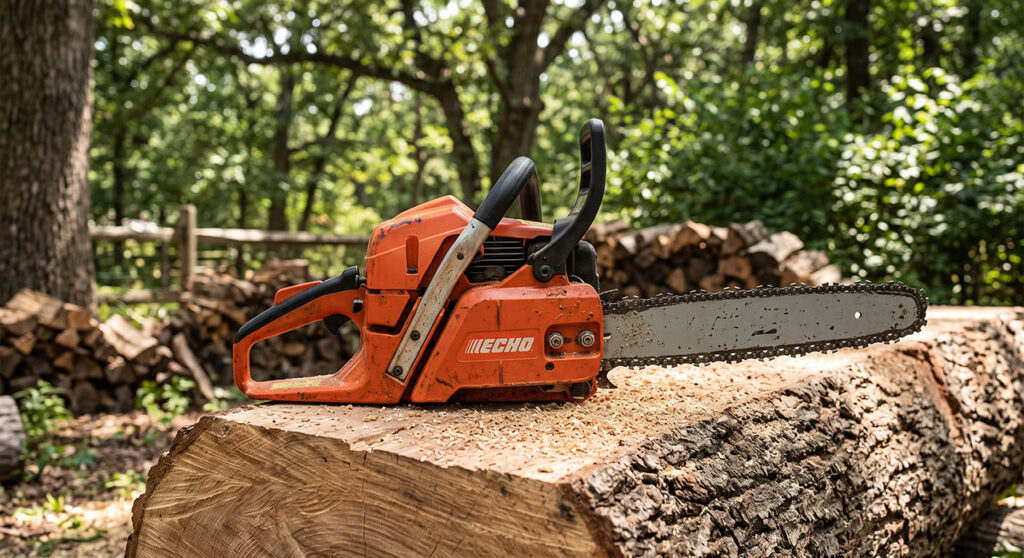
I was completely wrong. Echo uses professional-grade engine blocks even in their cheaper saws. The plastic casing might feel a little cheaper on a $200 saw, but the engine inside is built to run for a decade. I learned this the hard way after overpaying for a different brand, only to have the carburetor fail in year two.
Pro-Grade vs Consumer Saws
Echo does make a distinction between their casual saws and their pro saws. But the gap is not as wide as you think.
When I upgraded to an Echo CS-7310P for dropping larger oak trees, the difference in power was insane. But the core starting procedure and engine reliability felt exactly the same as my old, cheap CS-400. Yamabiko clearly forces a baseline level of quality across the entire board.
| The Myth | My Real World Experience |
| Echo is just for homeowners. | Their pro saws (like the 7310) easily keep up with commercial Stihls. |
| Big box store Echos are junk. | They use the exact same engines as the ones sold at local dealers. |
| They are hard to start. | They start perfectly if you follow the exact choke sequence. |
Echo vs The Big Two: Stihl and Husqvarna
You cannot talk about who owns Echo chainsaws without comparing them to the competition. Stihl and Husqvarna own the woods. Drive past any logging crew, and you will see orange and white, or orange and dark grey.
But Echo has slowly been stealing space in the back of landscaping trucks. I have talked to several tree service guys who made the switch.
Is Echo Finally Catching Up?
Historically, Echo lagged behind in the heavy-duty logging market. Their saws were slightly heavier and vibrated a bit more. But Yamabiko has poured money into fixing this.
The newer Echo models are incredibly light. They also use standard bar mounts, making it easy to find replacement chains anywhere. Stihl, on the other hand, makes you buy proprietary Stihl parts. I hate being locked into one brand’s ecosystem. Echo gives me the freedom to buy an Oregon bar and chain without fighting adapters.
| Brand | Typical Vibe | My Honest Takeaway |
| Echo | The Reliable Underdog | Best value for the money. Five-year consumer warranty is unbeatable. |
| Stihl | The Industry Standard | Amazing saws, but parts are expensive and you must go to a dealer. |
| Husqvarna | The High-RPM Cutter | Great for fast cutting, but lower-end models feel very cheap lately. |
Common Problems People Hide About Echo
I want to be completely honest here. Echo saws are great, but they are not perfect. Yamabiko builds a solid machine, but modern rules have created a few headaches for everyday users.
If you buy an Echo today, you need to know what you are walking into.
The Cold Start Shuffle
The biggest complaint I hear about Echo saws is that they are cold-blooded. It means they take a minute to warm up before they run right.
This is not really Echo’s fault. The EPA forces all small engine makers to run their carburetors very lean to reduce emissions. Because of this, an Echo saw will often bog down or die if you try to pull the trigger immediately after starting it.
How I Deal With It
I learned to just be patient. I fire up the saw, let it idle for about sixty seconds, and then give it a few light revs. After that, it runs like a dream.
Some guys pull the limiter caps off the carburetor to tune it richer. I have done this on older saws, and it wakes the engine right up. But if you do not know what you are doing, you can easily ruin the engine. I recommend just letting it warm up naturally.
| Common Echo Issue | Why It Happens | How I Fix It |
| Bogging when cold | Lean factory carb tuning for EPA rules. | Let it idle for 60 seconds before cutting. |
| Flooded engine | Pulling the rope too many times on full choke. | Move to half-choke immediately after the first “pop” sound. |
| Oiler leaking in storage | Normal pressure buildup in the oil tank. | Loosen the oil cap slightly before storing it. |
Final Thoughts
Finding out who owns Echo chainsaws actually gave me a lot of peace of mind. Knowing that Yamabiko Corporation is behind the brand proves that Echo is still rooted in serious, high-quality Japanese engineering. They were not swallowed up by a holding company that just wants to print a logo on cheap plastic.
If you are on the fence about buying an Echo, I can honestly say they are worth the money. Whether you grab a small saw for yard cleanup or a big timber saw, you are getting a machine built by people who genuinely care about engines. Treat it right, use good fuel, and it will easily last you a decade.