How to Drop a Tree With a Chainsaw? My Safe Guide
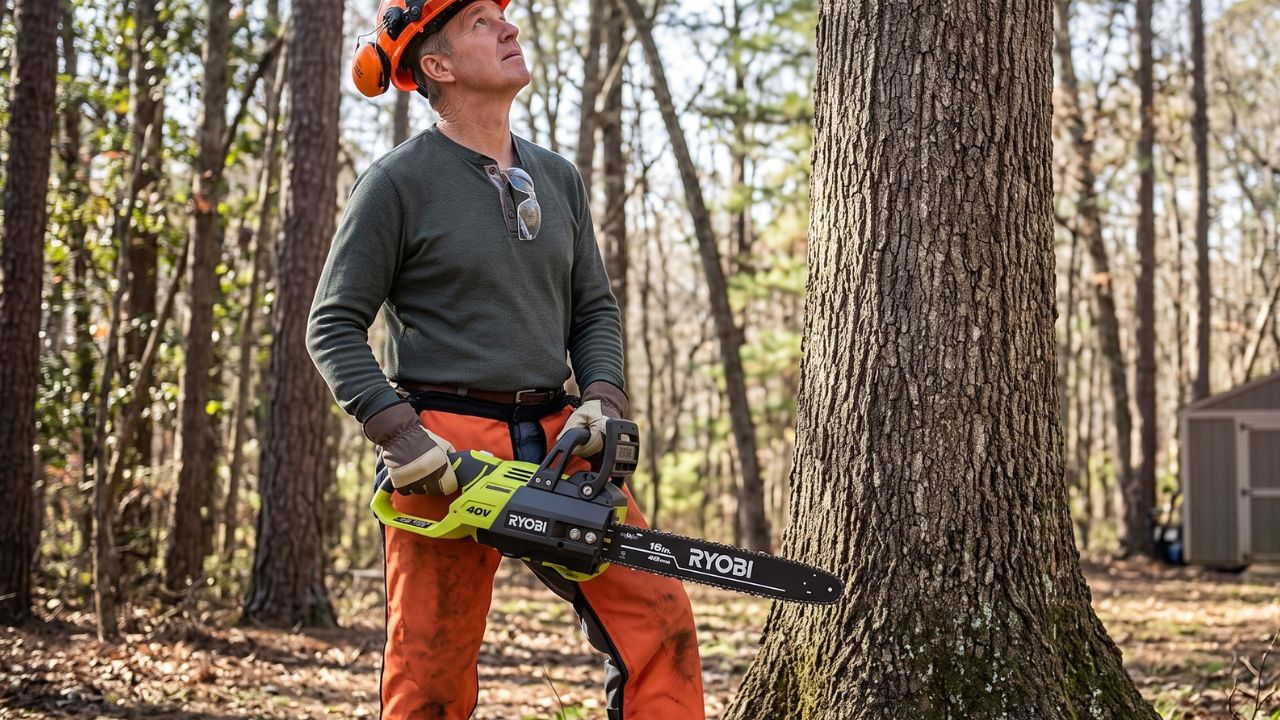
Figuring out how to drop a tree with a chainsaw used to terrify me. I remember standing in my backyard a few years ago, staring up at a dying oak tree. My palms were sweating inside my work gloves. I kept wondering if I was about to drop tons of heavy wood straight onto my tool shed. Cutting down a standing tree is absolutely nothing like bucking firewood on the ground. Gravity, wood tension, and basic physics are all actively working against you.
Over the years, I have learned that safe tree felling is entirely about preparation and respecting the mechanics of the cut. You cannot brute force a tree to fall where you want it. In this guide, I will share the exact steps I use, the scary mistakes I made early on, and how you can safely bring a tree down right where you need it to go.
Before You Start: Assessing the Tree and the Risks
You never just walk up to a tree, rev your saw, and start cutting. The first few minutes of this process are purely visual. You have to read the tree before you touch it.
Finding the Natural Lean
Every tree on earth wants to fall in a specific direction. You have to figure out where that is before you make a plan.
I always walk in a massive, slow circle around the entire tree. Sometimes a tree looks perfectly straight from your front porch, but it heavily leans to the right when you walk into the yard and look from the side. Look at the heavy branches in the canopy. Look at the trunk. If a tree naturally leans heavily toward your house, do not cut it. Work with the natural lean whenever possible.
| What to Look For | What It Actually Means |
| Dead branches up top | Called “widowmakers.” They can easily snap and fall on your head. |
| Heavy leaning to one side | The tree naturally wants to fall there. Let gravity help you. |
| Rot or hollow trunk sounds | The trunk is weak. Standard hinge cutting techniques might fail. |
Clearing the Drop Zone and Escape Route
Once you know where the tree will fall, you need a safe place to go when gravity takes over.
Never plan to just walk backward while staring up. You need two clear escape routes. These paths should be at a 45-degree angle away from the back of the tree. I learned the hard way that tripping over a hidden root while a tree is falling is a terrible, helpless feeling. I spend a solid ten minutes dragging away brush, moving rocks, and making sure my walking path is totally flat and clear.
The Gear You Actually Need (and What I Stopped Ignoring)
For a long time, I just wore regular denim jeans and cheap safety glasses. That was a massive mistake.
Chainsaws are incredibly unforgiving tools. I finally invested in proper safety gear, and it makes working much less stressful. You need heavy boots, sturdy gloves, chainsaw chaps, and a good helmet with a mesh face shield. If you are a homeowner looking for a reliable, easy-to-start saw for standard property maintenance, I recently read some excellent Ryobi 40-volt chainsaw reviews that show just how capable modern battery saws are for medium jobs. But no matter what saw you run, you must protect your body.
| Safety Gear Piece | Why You Actually Need It |
| Chainsaw Chaps | Kevlar fibers will jam the saw chain instantly if it hits your leg. |
| Helmet with Face Shield | Protects your head and eyes from falling branches and flying wood chips. |
| Ear Protection | Prevents permanent hearing damage from loud gas engines. |
Step-by-Step: How to Drop a Tree With a Chainsaw
This is the core of the entire process. If you want to know how to drop a tree with a chainsaw safely, it all comes down to planning and executing three main cuts.
Step 1: Making the Face Notch
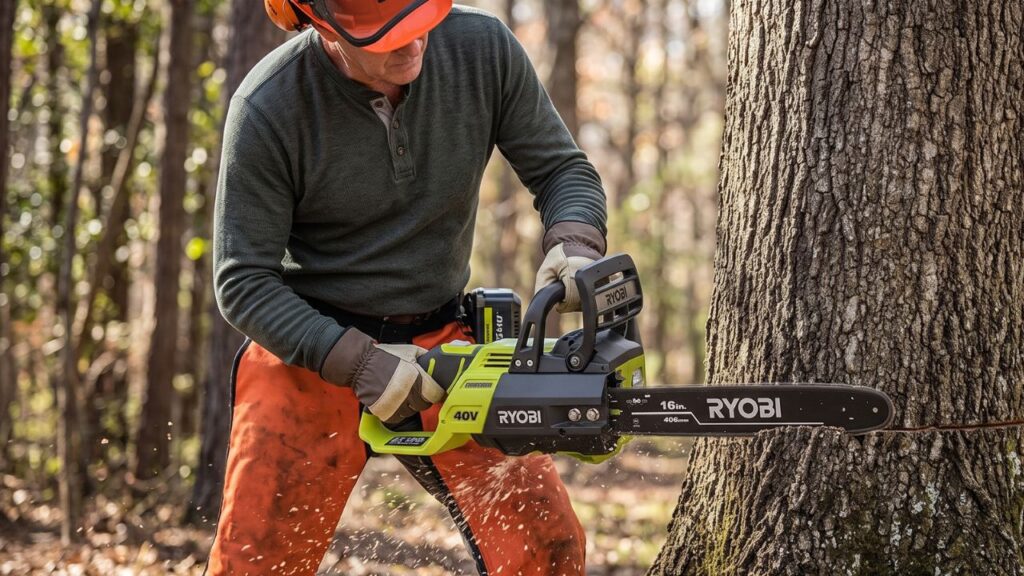
The notch acts just like a steering wheel for the falling tree. It tells the wood which way to fold.
You cut this notch on the exact side of the tree facing the direction you want it to fall. I prefer to use an open-faced notch. First, you cut downward into the trunk at a 70-degree angle. Then, you make a flat horizontal cut underneath to meet it. The notch should only go about 20 to 25 percent into the trunk. Take your time here. If your notch is crooked, the tree will fall crooked. Look into the notch to ensure the lines meet perfectly.
Step 2: Leaving the Critical Hinge Wood
This is the absolute most important concept in tree felling, and the one most beginners misunderstand.
You never cut all the way through a tree trunk. Instead, you leave a thick band of uncut wood right behind your front notch. This is called the hinge. Think of it exactly like the metal hinges on your bedroom door. The hinge wood controls the tree as it falls, keeping it securely attached to the stump just long enough to guide it safely to the ground. If you cut the hinge off, you lose all control.
Step 3: Executing the Back Cut
This is the cut that releases the tension and finally lets the tree drop.
You walk around to the back of the tree. Make a flat, horizontal cut slightly above the bottom line of your front notch. As you cut slowly inward toward the front notch, keep your eyes open. Do not rush. Stop cutting as soon as the tree begins to tip forward. The second you hear a loud cracking sound or see movement, pull your saw out, turn around, and walk briskly down your escape route. Never stare up at the tree while standing next to the stump.
| Cut Type | Common Mistake to Avoid |
| Top Notch Cut | Cutting way too deep past the center point of the tree trunk. |
| Bottom Notch Cut | Overcutting so it crosses the top cut. The cuts must meet perfectly. |
| The Back Cut | Slanting the cut upward or downward. Keep it perfectly level. |
Using Felling Wedges to Control the Fall
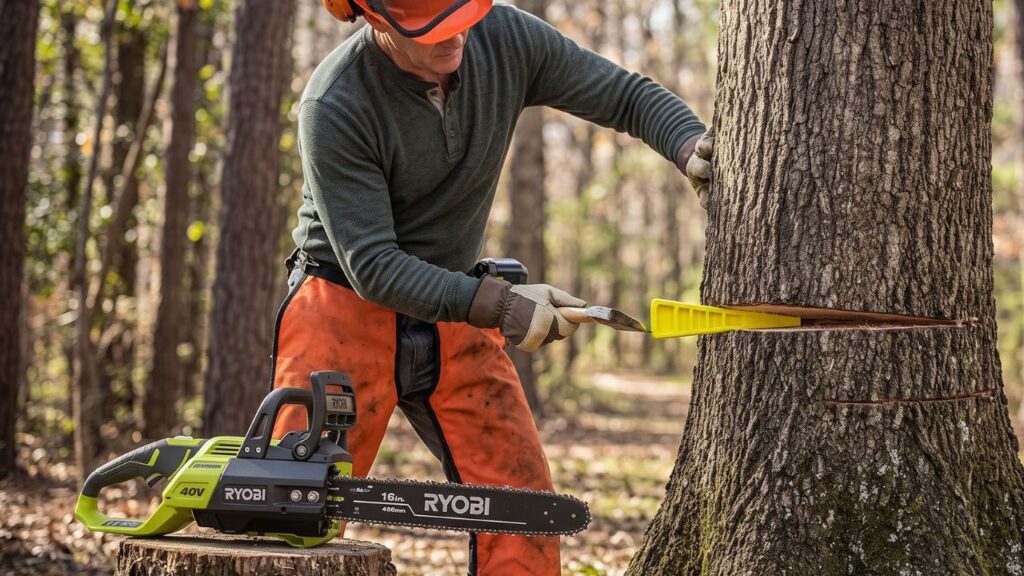
Wedges are your best friends when felling timber. I never go into the woods without them.
Sometimes, a perfectly balanced tree will just sit there on the stump, even after the back cut is completely finished. Or worse, a sudden gust of wind pushes the tree slightly backward. That is when your saw gets heavily pinched in the wood, and you are stuck. I always pause my back cut halfway through, tap a bright plastic wedge into the cut behind my saw bar, and then finish my cut.
If the tree is being stubborn and will not fall, I turn off my saw. I just tap the wedge deeper into the cut with a small axe. It physically lifts the back of the massive tree, forcing the weight to shift forward. It feels like magic the first time you do it. I highly recommend keeping a few in your pocket. I bought a great set recently (you can check them out here) and they have saved my saw from getting trapped more times than I can count.
Common Mistakes When Felling Trees (That I Have Made)
Experience is usually just a collection of old mistakes. I have certainly made my fair share in the backyard.
When I first learned how to drop a tree with a chainsaw, I was nervous and rushed the back cut. I ended up cutting right through my hinge wood on one side. The tree twisted, spun off the stump, and fell sideways into a fence. It was terrifying and completely my fault. I failed to watch the depth of my saw bar.
Another major mistake is ignoring the wind. Even a light, pleasant breeze at ground level translates to massive pushing leverage at the top of a sixty-foot tree. If the leaves are rustling heavily, I simply pack up my tools and wait for a calmer morning. It is never worth the risk.
| Beginner Habit | The Safer Approach |
| Rushing the final cut | Stop often. Look at the top of the tree. Watch for early movement. |
| Cutting without a plan | Mentally walk through the lean, the drop zone, and your escape path first. |
| Using a dull saw chain | Sharpen your chain before felling. A dull chain makes you push too hard. |
The Reality of Dealing with Kickback
Kickback is violent, fast, and extremely dangerous. You have to respect it.
It happens when the upper tip of your chainsaw bar touches solid wood. The spinning chain suddenly catches, and the engine throws the entire saw violently backward toward your face or chest. When felling a tree, you might accidentally tap a hidden bush or a nearby trunk with the tip of your saw while moving around the base.
I prevent this by keeping a firm, wrap-around grip on the saw. My left thumb is always locked under the front handle. Never just rest your thumb on top. Also, always ensure your chain brake is functioning perfectly before you start dropping trees.
| Kickback Trigger | How to Prevent It |
| Cutting with the bar tip | Only cut using the flat bottom or middle section of your chainsaw bar. |
| Hidden brush in the zone | Clear all small bushes and saplings around the trunk before you cut. |
| Loose grip on the handle | Always wrap your left thumb fully under the front metal handlebar. |
The Danger of the Barber Chair Effect
This is arguably the scariest thing that can happen while felling a tree.
A barber chair happens when the trunk suddenly splits vertically upward before you finish your back cut. The trunk kicks violently backward and upward off the stump, looking like an old-fashioned barber chair opening up. I have seen videos of this happening, and it is horrifying. It mostly happens on trees that are leaning heavily forward. The tension is so great that the wood splits before the saw finishes the job.
| Issue | How to Avoid Barber Chair |
| Heavy forward-leaning trees | Use an advanced bore cut method instead of a traditional back cut. |
| Cutting too slowly | Keep your saw RPMs high and make a smooth, confident back cut. |
| Poor hinge design | Ensure your front notch is deep enough to relieve the front tension. |
Knowing When to Call a Professional Arborist
There is zero shame in walking away from a scary tree. I have learned to quickly recognize my limits.
If a tree is leaning heavily toward a structure, near active power lines, or close to where cars park, I do not touch it. Period. If the trunk is severely rotted, it can easily collapse unpredictably during the initial notch cut. Felling dead, brittle trees is incredibly dangerous because the tops tend to break off and fall on you while you cut.
Dropping trees in tight suburban spaces is almost always a job for a professional arborist with a bucket truck and proper insurance. Save your DIY energy for clear, wide-open areas where a minor mistake just means a small dent in the grass.
Learning how to drop a tree with a chainsaw safely takes time, patience, and a very healthy dose of respect for physics. You cannot muscle a falling tree. You have to outsmart it with proper planning, clean and precise cuts, and reliable safety gear.
I highly suggest starting small. Practice your notching and hinging techniques on smaller trees before tackling anything massive. Respect the inherent danger, always clear your escape route thoroughly, and never cut when you feel tired or rushed. When you do it right, safely watching a tree fall exactly where you planned is an incredibly satisfying feeling.