Technical Apron Wrap Chainsaw Chaps: My Honest Review
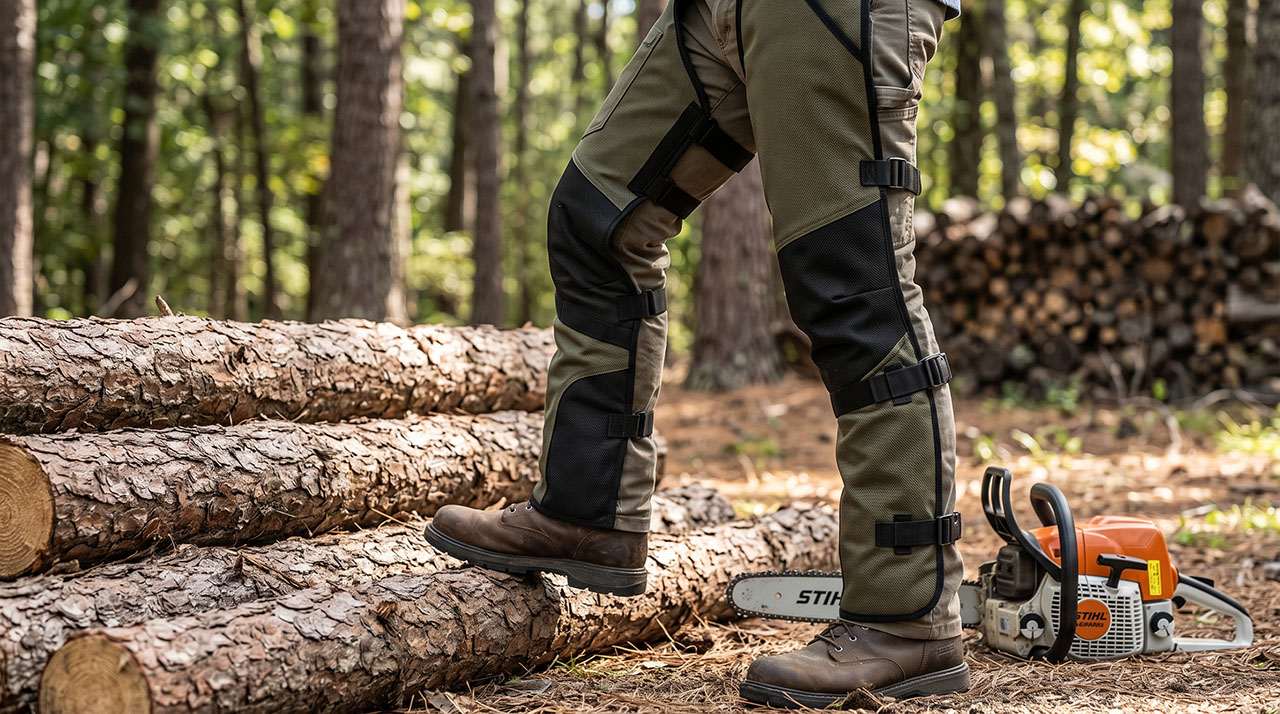
I used to think regular denim jeans were enough for cutting firewood. Then a spinning chain caught my pant leg, and I realized how quickly things can go wrong in the woods. That scary close call made me buy a pair of technical apron wrap chainsaw chaps, and it completely changed how I work.
If you run a saw, you already know safety gear is not just an option. But finding chaps that actually fit well, do not overheat, and offer real protection is surprisingly hard. In this guide, I will share my hands-on experience, the sizing mistakes I made, and why this specific style of chaps is now my daily choice.
Why I Switched to Technical Apron Wrap Chainsaw Chaps
For years, I wore cheap, heavy canvas chaps. They were stiff. They were incredibly hot. Worst of all, they made walking through thick brush feel like a tough workout.
I decided to upgrade because I was tired of fighting my gear. Technical chaps use modern fabrics. These materials are much lighter but offer the same heavy-duty protection. The “apron wrap” style gave me exactly what I was missing. It protects the front of my legs but also wraps around my lower calves.
This wrap feature is a massive upgrade. When you step over branches, your lower legs are highly exposed to scratches and saw kickback. The wrap design fixes this problem without adding the extreme heat of full-wrap chaps.
| Old Canvas Chaps | Technical Apron Wrap Chaps |
| Heavy and stiff material | Light and flexible fabric |
| Flat front coverage only | Wraps around the lower calf |
| Hot in summer weather | Breathes much better |
| Hard to walk through woods | Easy to move and bend |
The Confidence Factor
Wearing good gear changes your mindset. When my legs feel secure, I can focus entirely on the tree I am cutting. I do not worry about stray branches poking my shins.
The technical outer shell also repels water and bar oil. My old canvas chaps soaked up oil like a dirty sponge. These stay clean much longer.
What Exactly Does “Apron Wrap” Mean?
The naming of chainsaw chaps can confuse anyone. When I first shopped for them, I had no idea what the terms meant.
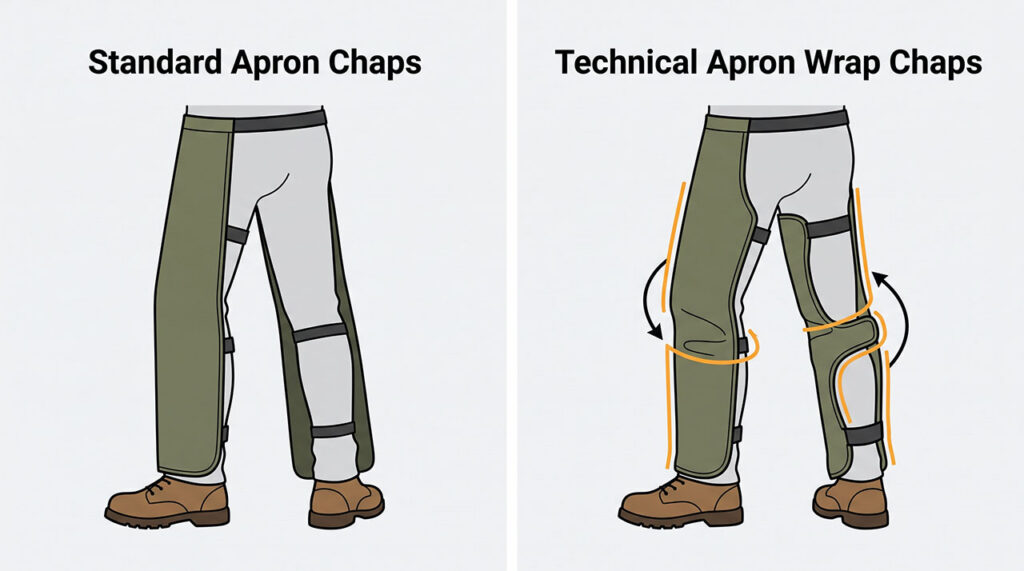
Standard apron chaps just cover the front of your legs. They look like a kitchen apron split into two legs. Full-wrap chaps cover your entire leg, front and back, from top to bottom. They are very safe but very hot.
Apron wrap chaps sit right in the middle. They cover the front of your thighs. However, below the knee, the protective pad wraps around the sides and back of your calf. You get extra safety where you need it most.
| Chap Style | Leg Coverage Area | Best Use Case |
| Standard Apron | Front of legs only | Light yard work |
| Apron Wrap | Front thighs, wrapped calves | Bucking logs, deep brush |
| Full Wrap | Full front and back | Extreme winter logging |
Why Calf Coverage Matters
Your lower legs take a beating in the woods. When you buck firewood, the saw sits very close to your shins. If the saw kicks back or drops, it often aims right for your lower leg.
Also, the wrap protects against painful briars and sharp sticks. I used to come home with scratched-up calves. Now, the wrap blocks all of that brush.
Best 12-Inch Battery Chainsaw: Top Models for 2026
Sizing Your Chaps the Right Way
Getting the right size is the biggest mistake people make. I made it too. I bought my first pair based on my pants inseam. That is totally wrong for chaps.
Chaps are measured by the outseam. This is the distance from your belt line down to your boots. You want the chaps to sit right on top of your instep. If they are too short, your ankles are naked. If they are too long, you will trip over them in the dirt.
Grab a tape measure before you order. Start right at your belly button or belt loop. Measure straight down the side of your leg to the top of your foot. That number is your correct chap length.
| Sizing Mistake | Better Sizing Approach |
| Guessing by pants size | Using a real tape measure |
| Measuring the inseam | Measuring the outseam (hip to foot) |
| Stopping at the ankle | Measuring down to the instep |
| Wearing the belt loose | Snugging the waist belt tight |
Setting Up the Waist Belt
The waist belt holds all the weight. If you wear it too loose, the chaps will slide down your hips. This pulls the crotch of the chaps down, which makes walking very difficult.
I like to wear the chap belt slightly higher than my regular pants belt. This keeps the chaps pulled up high. It gives my knees plenty of room to bend.
Real-World Fit and Comfort
Putting these chaps on takes a minute. You have a waist buckle and several clips for each leg.
The technical material shines when you start moving. Standard chaps fight your knees every time you squat down to check a saw cut. The technical fabric bends easily. It feels like wearing snow pants rather than stiff cardboard.
I highly suggest setting your strap lengths at home. Do not try to adjust them while standing in muddy woods with gloves on.
| Comfort Issue | Troubleshooting Step |
| Straps rubbing bare skin | Wear taller socks or light pants |
| Chaps sliding down legs | Tighten the waist belt higher up |
| Knee area feels tight | Loosen the top leg strap slightly |
| Tripping on lower straps | Tuck excess strap ends away |
Adjusting the Leg Straps
The straps need to be snug, but not tight. If you pull them tight, they will pinch the back of your knees when you bend. This causes terrible chafing after a few hours.
I leave the strap right behind my knee a little loose. I keep the straps on my calves tight. This keeps the wrap secure around my lower leg without pinching my joints.
Heat, Sweat, and Working Hard
Let us be brutally honest. Any protective layer is going to make you sweat. Running a saw is hard physical labor.
However, technical apron wrap chainsaw chaps manage heat much better than older styles. Because the back of your thigh is open, your legs can still catch a breeze.
I changed how I dress for the woods. I used to wear thick jeans. Now, I wear thin, breathable hiking pants under my chaps. The chaps provide the armor. The thin pants keep me cool.
| Weather Condition | My Clothing Recommendation |
| Hot Summer Days | Very thin hiking pants under chaps |
| Mild Fall Weather | Standard work pants under chaps |
| Cold Winter Days | Heavy jeans or thermals under chaps |
Dealing with Sawdust
Sawdust gets everywhere. The open back of the thigh means some chips will fall down your boots.
This is a minor annoyance. I gladly accept a little sawdust in my boots to avoid heat stroke. Just make sure to tie your boots tight.
How These Chaps Actually Stop a Chain
A lot of people misunderstand how this gear works. I used to think the chaps acted like a hard shield. I thought the chain would just bounce right off the fabric.
That is not true at all. These chaps work by stopping the saw engine.
Inside the chaps are many layers of long, strong fibers. Often this is Kevlar or a similar technical material. When the spinning chain bites into the outer shell, it grabs those long inner fibers. The chain pulls those tough threads directly into the drive sprocket of the chainsaw.
The fibers wrap around the sprocket in a fraction of a second. This jams the saw completely. The chain stops dead before it can cut your actual leg.
| Common Myth | The Actual Reality |
| Chaps are chain-proof armor | Chaps act as a fiber jammer |
| The saw will bounce right off | The saw will dig in and bind up |
| Minor cuts can be stitched | Any cut means the chaps are ruined |
| Any thick pants will work | Only safety fibers stop the sprocket |
Why the Outer Shell Matters
The outer layer hides the protective fibers. The “technical” part of the name usually refers to this outer shell.
It needs to be tough enough to resist briars and barbed wire. If a thorn pulls out the inner safety fibers, the chaps lose their power. The slick outer material on my chaps prevents snags. It also keeps bar oil from soaking deep into the protective pads.
Washing and Caring for Technical Chaps
You must clean your chaps. If they get soaked in oil and dirt, the protective inner fibers will stick together. If those fibers stick, they cannot pull out to jam the saw sprocket. Dirty chaps are dangerous chaps.
But you cannot just throw them in a normal laundry load. You have to treat them carefully. I wash mine once a season, or if I spill oil directly on them.
I start by brushing off all the loose dirt and wood chips. A stiff brush works great for this. Then, I check the washing tag.
| Maintenance Step | Why It Actually Matters |
| Brushing off dry dirt | Stops mud from forming in the wash |
| Hand washing gently | Protects the delicate inner fibers |
| Hanging them up to dry | Dryers will melt and ruin the chaps |
| Checking for small tears | A torn outer shell exposes safety layers |
The Washing Process
I fill a large tub with warm water and mild soap. I never use bleach. Bleach destroys the protective fibers.
I gently scrub the outer shell to remove grease and sap. I rinse them very well with clean water.
You must never put chainsaw chaps in a hot dryer. The extreme heat will shrink or melt the safety material. I hang mine over a chair in the garage and let them air dry for a few days.
Knowing When to Replace Them
Chaps do not last forever. Even if you never hit them with a saw, the material breaks down over time. Sunlight, dirt, and sweat weaken the fabrics.
If you do hit your chaps with a saw, they are instantly dead. Do not try to sew them up. Do not patch them with tape. Once the inner fibers are pulled, that section of the chap offers zero protection.
I caught my first pair of cheap chaps with a coasting chain. It just made a small rip. But I saw the white fibers poking out. I threw them away that same day. Your legs are worth a lot more than a pair of pants.
Checking for Wear and Tear
I inspect my chaps quickly before every cutting session. I look at the buckles first. A broken buckle means the chaps will flap around.
Then I check the lower leg wrap. This area hits a lot of brush. If the outer nylon is getting thin or fuzzy, it might be time to shop for a new pair. A good pair should easily last a homeowner several years. Professional loggers might replace them every year.
Final Thoughts
Buying technical apron wrap chainsaw chaps was one of the best choices I made for my safety. They are comfortable enough to wear all day long. They are tough enough to handle thick forest brush. Most importantly, they give me deep peace of mind when bucking heavy logs.
Do not wait for a scary close call to upgrade your safety gear. Take the time to measure your legs properly. Adjust those straps until they feel natural. Never pull the starter rope on your saw without your chaps fully buckled. Your legs will definitely thank you.