Stihl Chainsaw Trouble Starting: My Practical Fixes
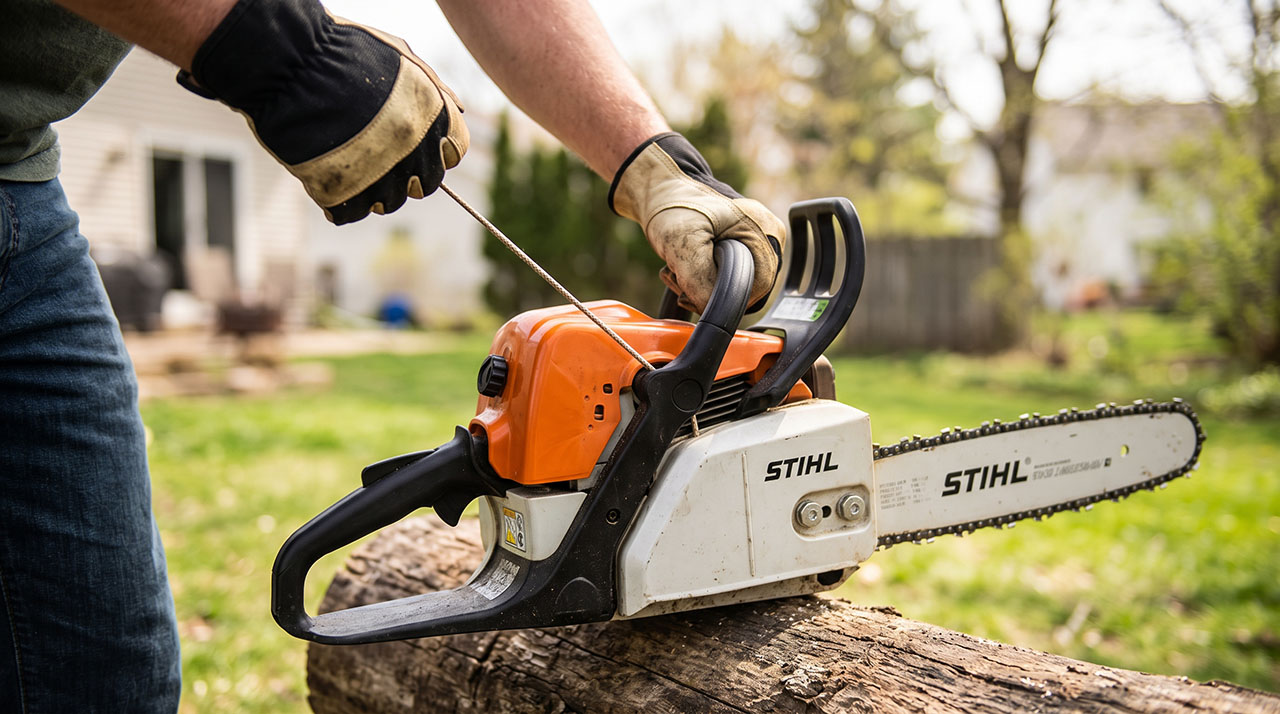
Few things ruin a weekend faster than Stihl chainsaw trouble starting. You put on your safety gear. You grab your saw. You pull the cord once. You pull it twice. Ten pulls later, your arm aches. The saw is completely dead. I know this deep frustration well. I used to fight with my saw every single spring.
I wasted hours yanking that cord before I learned how these engines actually work. The good news is that fixing a stubborn Stihl is usually easy. You rarely need an expensive mechanic. In this guide, I will share the exact steps I use. I will walk you through my past mistakes. You will learn how to fix a flooded engine, spot bad gas, and start your saw fast.
Why I Constantly Had Stihl Chainsaw Trouble Starting
When I first bought my saw, I treated it like a magic tool. I thought I could just add gas and pull the cord. I was wrong. Small engines need three basic things. They need fresh fuel. They need clean air. They need a strong spark.
If one part is missing, the saw stays dead. I learned this the hard way. I would pull the cord blindly. I ignored the signs the machine was giving me. Stihl saws are built tough. However, they are very strict about their starting routine. If you miss a step, you create annoying problems.
| The Symptom | The Likely Cause | My Quick Solution |
| Strong smell of fresh gas | Flooded engine | Clear the wet cylinder |
| Pull cord feels very easy | Low engine compression | Check the spark plug tightness |
| Engine fires once then dies | Normal choke cycle | Move lever to half-choke |
The Flooded Engine Trap I Always Fell Into
This is my biggest confession. I flooded my engine all the time. I would set the choke and pull the cord. The engine would make a tiny pop sound. I would miss that sound entirely. I just kept yanking the cord.
Every time you pull on full choke, you suck heavy gas into the engine. If the engine does not start, that gas just sits there. Soon, the spark plug gets wet. A wet spark plug cannot spark. You can pull all day. It will never start.
My Quick Checklist for Stihl Chainsaw Trouble Starting
Before you take anything apart, you must check the basics. I have a simple routine now. When my saw refuses to start, I stop pulling. I run through this fast checklist.
It saves my shoulder. It also stops me from making the problem much worse. Most starting issues get solved right here in the yard.
Getting the Master Control Lever Right
The master control lever used to confuse me. It is the switch by your thumb. It controls the choke. It controls the run mode. It is also the off switch. I used to just push it down and hope for the best.
You must understand how this lever works. It tells the carburetor what to do. If you have it in the wrong spot, the saw fights you.
| Lever Position | What It Actually Does | When I Use It |
| Full Choke (Bottom) | Blocks air, adds heavy fuel | Cold engine start only |
| Half Choke (Middle) | Adds extra idle speed | After the first engine pop |
| Run (I) | Normal air and fuel mix | Normal wood cutting mode |
Pulling and Inspecting the Spark Plug
If the lever is right and it still fails, I check the plug. This is your best window into the engine. You just need your basic scrench tool. Pull the thick rubber boot off the plug.
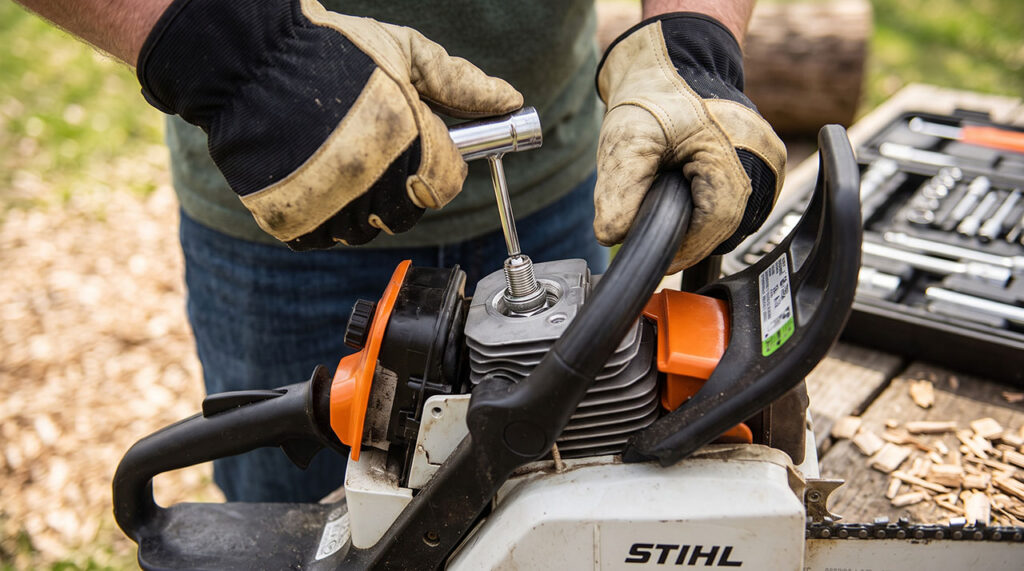
Unscrew the plug and look closely at the tip. The spark plug tells a story. It shows you exactly what is happening inside the dark cylinder. I save hours of guessing by looking at this small part.
| How the Plug Looks | What It Means | My Next Step |
| Wet and smells like gas | The engine is totally flooded | Dry the plug off |
| Black and crusty soot | Carbon blocks the spark | Clean with a wire brush |
| Dry and light brown | Normal healthy condition | Check the fuel system next |
Testing for a Live Spark
Sometimes the plug looks fine but it is actually dead. I test it before I put it back. I push the bare plug back into the rubber boot.
I touch the metal base of the plug against the metal engine block. I pull the starter cord quickly. I look for a tiny blue spark jump across the plug gap. If I see no spark, I buy a new plug.
Clearing a Flooded Stihl Engine My Way
So, you pulled the plug and it is soaking wet. Do not panic. I used to think a flooded engine meant a trip to the repair shop. It actually just takes five minutes to fix.
Here is the exact method I use. It works every single time. It feels a bit strange at first. Just trust the process.
The Step-by-Step Flood Fix
First, take the spark plug out completely. Wipe it dry with a clean rag. Set it aside. Now, flip your chainsaw upside down. Yes, turn it completely upside down.
Pull the starter cord three or four times. You might see liquid gas spit out of the open hole. This is normal. You are blowing out the bad excess fuel.
| My Old Mistake | The Right Way to Do It | Why It Works Better |
| Leaving the plug in | Taking the plug out | Lets trapped air out |
| Pulling upright | Flipping the saw upside down | Lets liquid gas drip out |
| Using the choke | Using the wide open throttle | Forces maximum air inside |
The No-Choke Start Trick
Now put the dry spark plug back in. Tighten it down. Attach the rubber boot securely. Here is the secret trick. Do not use the choke at all.
Move the lever to the normal run position. Hold the throttle trigger down wide open. I use my right foot on the rear handle. I pull the cord hard. It takes a few pulls. The saw will cough. It will smoke a little. Then it will roar to life.
The Fuel Problem: Bad Gas and Carburetor Issues
If the plug is dry, you likely have a fuel problem. Stihl chainsaw trouble starting is often caused by bad gas. I learned this after leaving gas in my saw all winter.
Come spring time, the saw was totally dead. Gasoline goes bad fast. It changes form. It clogs up the tiny delicate parts inside your saw.
Why Ethanol Gas is the Enemy
I used to buy cheap gas at the corner station. I mixed in my oil. I thought I was fine. I was slowly killing my carburetor. Normal pump gas has ethanol in it.
Ethanol pulls moisture right out of the air. Water and chainsaw engines hate each other. The water separates from the gas. It sinks. It turns fuel lines brittle. The carburetor fills with green slime.
| Fuel Choice | Average Shelf Life | My Honest Verdict |
| Regular Pump Gas | 30 days maximum | Causes endless carburetor problems |
| Ethanol-Free Gas | 3 to 6 months | Good, but needs careful mixing |
| Canned Premixed Fuel | 2 to 5 years | Expensive, but runs perfectly |
Cleaning the Air Filter Properly
Sometimes the engine just cannot breathe. Wood cutting is dirty work. Sawdust gets everywhere. The air filter on a Stihl sits right behind the top cover.
I take the cover off. I look at the filter. If it is caked in brown dust, the engine is choking. I tap it against my heavy boot. The dust falls off. I never wash paper filters with water.
Fishing Out the Fuel Filter
Inside the gas tank sits a small fuel filter. It looks like a little metal or felt thumb. I fish it out with a piece of bent wire.
If it looks dark grey or slimy, I replace it. A blocked fuel filter stops gas from reaching the engine. It causes severe starting issues. It is a cheap part to replace.
The Proper Starting Technique I Finally Learned
Most starting problems come from the user. I was the problem for a long time. I just yanked the cord. I hoped for pure magic.
Stihl saws have a very specific starting dance. Once you learn the steps, it becomes muscle memory. You will rarely flood the saw again. The real trick is listening.
Listening for the “Burp”
This is the most crucial part of starting a cold Stihl. Put the lever on full choke. Pull the cord. Do not just keep pulling fast. Listen closely to the engine.
Usually, on the third or fourth pull, the engine makes a quick pop sound. It tries to start. It dies instantly. Stop pulling immediately. That burp is your signal. The engine has enough fuel.
The Half-Choke Follow Through
After you hear that short pop, move the lever up one notch. Put it in the half-choke position. Now pull the cord again.
The saw should start within one or two pulls. It will run very fast and loud. This is normal. Just tap the throttle trigger once. The lever snaps back to normal. The engine settles into a calm idle.
Hardware Checks When Nothing Else Works
Sometimes you do everything perfectly right. You use good gas. You check the plug. You do the starting dance. But the saw still refuses to run.
This means you need to look a little deeper. When I face stubborn Stihl chainsaw trouble starting, I check two specific hardware pieces next.
Checking the Spark Arrestor Screen
This is a hidden problem many people ignore entirely. Your chainsaw muffler has a tiny metal screen inside it. It stops hot sparks from flying out. It prevents forest fires.
Over time, thick exhaust carbon covers this screen. It gets completely clogged solid. When exhaust cannot get out, fresh air cannot get in. The saw will not start. I remove the screen. If it is black, I burn it clean with a small torch.
| Part to Inspect | The Warning Sign | My Quick Fix |
| Spark Arrestor Screen | Clogged with hard black soot | Burn clean or scrub hard |
| Rubber Fuel Lines | Cracked, yellow, or stiff | Replace with new soft lines |
| Carburetor Body | Saw runs only with choke on | Needs a professional rebuild |
Dealing with Brittle Fuel Lines
Fuel lines rot over the years. If your saw is old, check the rubber hoses. They run from the gas tank to the carburetor.
I gently poke them with a flat screwdriver. If they feel like hard plastic, they are ruined. They probably have a tiny crack. A cracked line sucks in empty air instead of fuel. Replacing them takes patience. It fixes many mysterious starting issues.
Daily Habits to Prevent Stihl Chainsaw Trouble Starting
I hate fixing things when I should be cutting wood. I changed my basic habits. I treat my saw much better now.
These small changes take one extra minute at the end of the day. They save me hours of sweating and frustration the next season.
Running the Tank Dry
I never leave gas in my saw for long periods anymore. If I am putting the saw away for a month, I empty the tank.
I pour the leftover gas back into my fuel jug. Then, I start the saw. I let it idle until it completely dies on its own. This burns up every drop of fuel inside the carburetor. The carburetor stays bone dry. It cannot get clogged.
Switching to Canned Fuel
This was the absolute biggest game-changer for me. I stopped mixing my own gas. I started buying canned, premixed fuel like MotoMix.
Yes, it is more expensive per gallon. But it contains absolutely zero ethanol. It lasts for years on the garage shelf. Since I switched to canned fuel, my saw starts on the second pull every time.
Final Thoughts
Stihl chainsaw trouble starting is incredibly annoying. However, it is rarely a fatal engine problem. Most of the time, the fix is very simple. You either have a flooded engine, a dirty spark plug, or stale gas in the tank. By slowing down, listening for the engine pop, and keeping your fuel fresh, you eliminate most headaches.
I used to dread starting my saw. Now, it is just a fast routine. Take care of the basic maintenance. Avoid cheap ethanol gas at all costs. Learn the proper choke sequence. Your arm will thank you. You will spend much more time actually cutting wood instead of wrestling in your yard.