Stihl Chainsaw Flooded How Long To Wait: My Honest Guide
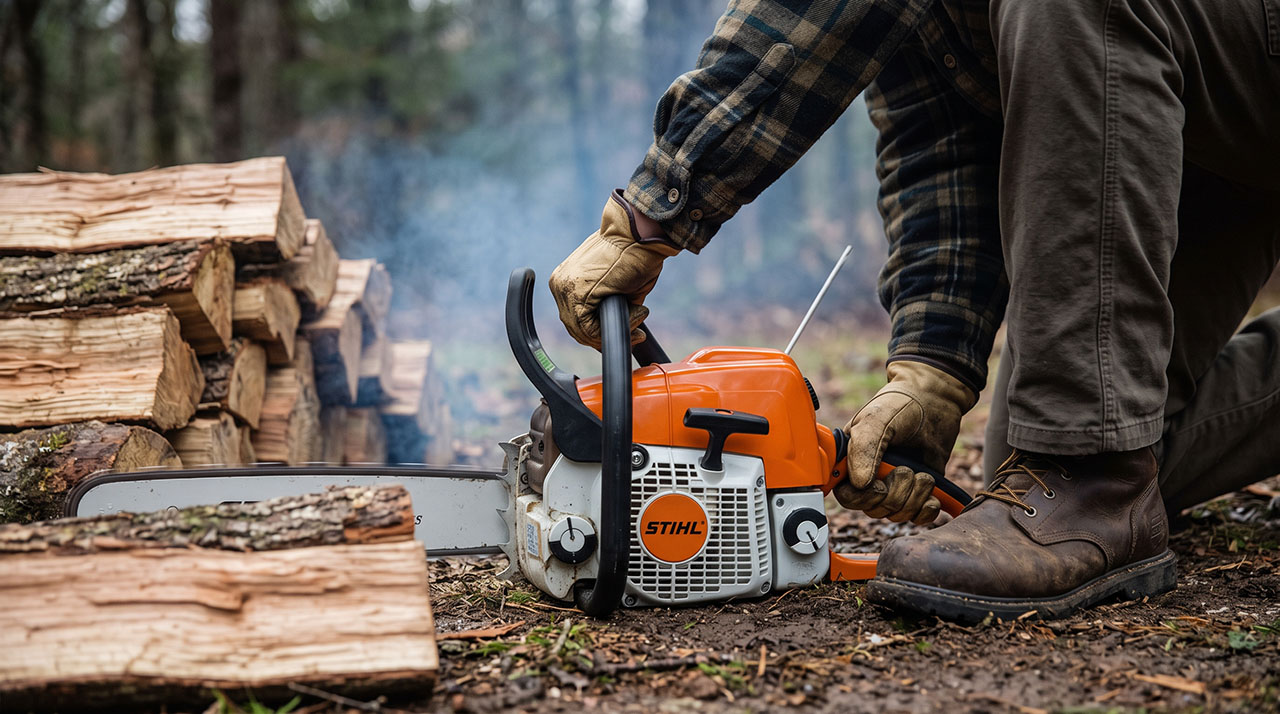
If you are asking about a Stihl chainsaw flooded how long to wait, you are probably standing outside right now. You are likely frustrated, tired, and staring at a saw that refuses to start. I know that exact feeling perfectly. I have spent way too much time pulling the cord on my own Stihl until my shoulder ached.
I wrote this guide because the manuals rarely tell you the reality of the situation. I want to share exactly what I learned from my own mistakes in the woods. You do not have to pack up and ruin your work day. I will show you exactly how long to wait, and better yet, how to force that flooded engine to start right now.
The Short Answer: Stihl Chainsaw Flooded How Long to Wait?
If you just want to set the saw down and walk away, the magic number is usually 20 to 30 minutes. You just leave the saw sitting on the ground in a safe spot.
This gives the liquid gas trapped inside the engine enough time to evaporate. Liquid fuel does not burn. Vapor burns. When you flood the saw, you have basically drowned the spark plug in liquid fuel. Waiting lets that fuel dry up so the plug can spark again. However, on cold or humid days, waiting might take even longer. I learned quickly that waiting is the slow way to fix the problem.
| Waiting Condition | Expected Wait Time | Why It Takes This Long |
| Warm, dry summer day | 15 to 20 minutes | Heat makes gas evaporate much faster. |
| Cold, damp winter day | 30 to 45 minutes | Cold air traps moisture and slows evaporation down. |
| Inside a warm garage | 20 minutes | Good airflow helps clear out the fuel vapor. |
Why Your Stihl Chainsaw Actually Floods
Understanding why this happens changed everything for me. Your Stihl carburetor mixes air and fuel. When you use the full choke, you close off the air.
This forces the engine to suck in almost pure gasoline. We need a lot of gas to start a cold engine. But if you keep pulling the cord without letting any air in, the engine simply fills up with liquid gas. The spark plug gets soaking wet. A wet plug cannot create a spark. Without a spark, the engine will never fire.
The Choke Mistake I Kept Making
My biggest mistake was ignoring the sounds the saw made. I used to put my Stihl on full choke and yank the cord ten times. That is a guaranteed way to flood it.
You only need a few pulls on full choke. The engine will make a tiny popping sound. It sounds like it wants to start, but then it dies immediately. If you hear that pop and pull the cord again on full choke, you have flooded your saw. You must switch to half-choke the very second you hear that sound.
Smelling Gas is Your First Clue
You can usually smell a flooded saw before you even realize what happened. The scent of raw, unburned mixed gas will hang in the air.
If my shoulder starts getting tired, and I smell strong gas, I stop pulling immediately. Continuing to pull on a flooded saw just makes the problem worse. It dumps more and more fuel into a space that is already full.
| Flooding Symptom | What It Actually Means |
| Strong smell of raw gas | Fuel is pouring out of the exhaust instead of burning. |
| Pull cord feels very hard | The cylinder is hydro-locked with liquid fuel. |
| Spark plug is soaking wet | Liquid gas is preventing the spark from firing. |
How to Unflood a Stihl Chainsaw Without Waiting
When people ask me about a Stihl chainsaw flooded how long to wait, I tell them they actually do not have to wait at all. You can clear the flood manually.
This is the method tree service pros use. They cannot afford to sit around for 30 minutes while a saw dries out. This process forces massive amounts of fresh air through the engine. It pushes the liquid gas out of the exhaust. It takes a little effort, but it works almost every single time I try it.
Step 1: Turn Off the Choke (Crucial)
First, you must stop adding fuel to the engine. Move the master control lever on your Stihl all the way up to the normal run position.
Do not leave it on full choke. Do not leave it on half choke. You want the choke completely off. This opens the airway fully. It lets the maximum amount of fresh air into the carburetor to help dry out the inside of the engine.
Step 2: Lock the Throttle Wide Open
This is the trickiest part, but it is deeply important. You need to hold the gas trigger down completely while you pull the cord.
Put the saw firmly on the ground. Put the toe of your right boot inside the rear handle to hold it down. Use your right hand to squeeze the throttle trigger wide open and hold it there. This opens the carburetor butterfly valve completely, allowing huge gulps of air inside.
Step 3: Pull Until It Clears
Keep holding that throttle wide open. Now, use your left hand to pull the starter cord. Pull it fast and hard.
It might take 10 or even 15 pulls. Do not give up. You will start to hear the engine sputter. Suddenly, it will roar to life. It will spit out a giant cloud of white and blue smoke. That smoke is just all the extra fuel burning off. Keep it revved up for a few seconds to clear the rest of the gas out.
| Common Starting Mistake | The Better Approach I Use Now |
| Pulling 10 times on full choke | Pulling 3 times max, listening closely for the pop. |
| Waiting an hour for it to dry | Holding the throttle open and pulling to force air in. |
| Yanking the cord when it feels stuck | Removing the spark plug to release the pressure first. |
The Spark Plug Trick for Heavily Heavily Flooded Saws
Sometimes, the throttle trick does not work. If you pulled the cord 30 times on full choke, the saw is severely flooded.
When this happens, the cylinder is basically a swimming pool of mixed gas. The cord might even feel impossible to pull. This happens because liquid does not compress. The engine gets physically stuck. I have had this happen twice. You have to open the engine up and let the liquid drain out.
Removing the Plug to Let It Breathe
Take out your scrench tool. This is the T-shaped wrench that came with your Stihl. Pop the top plastic cover off your saw.
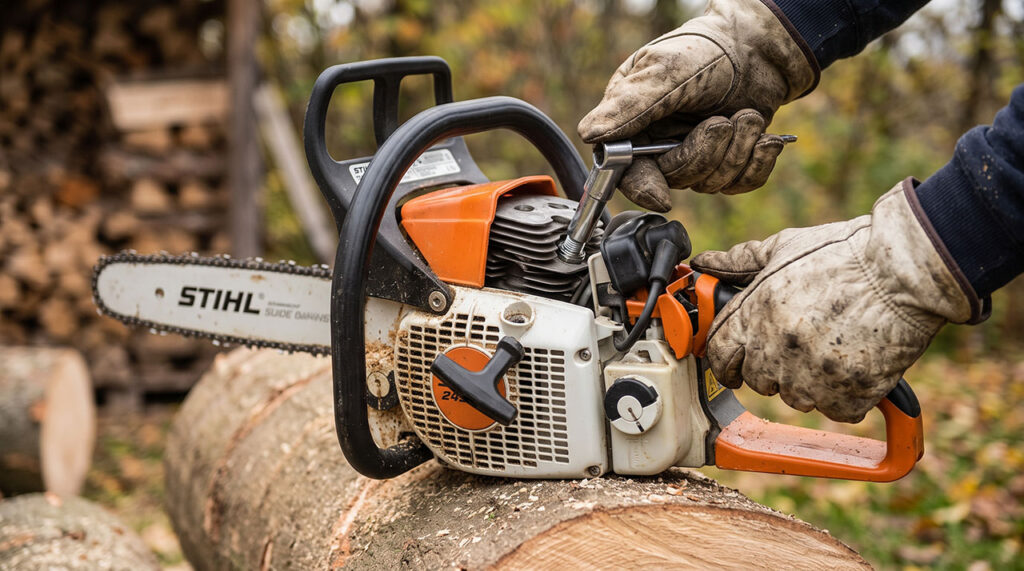
Pull the rubber boot off the spark plug. Use the scrench to unscrew the spark plug completely. Look at the tip of the plug. It will likely be dripping wet with dark fuel. Wipe it completely dry with a clean rag. Set the dry plug aside in a safe spot.
Drying the Cylinder Out
With the spark plug removed, the engine is completely open to the outside air. Now, pick the saw up and turn it completely upside down.
Pull the starter cord a few times while the saw is upside down. Be careful, because liquid gas will physically spit out of the spark plug hole. I was shocked the first time I saw how much fuel came shooting out of my saw. After you pull it a few times, flip it over. Put the dry spark plug back in. Reconnect the rubber boot. Try starting it again with the choke off.
| Clearing Method | Time It Takes | My Effort Level |
| Waiting for evaporation | 20 to 30 minutes | Very low effort |
| Wide-open throttle pull | 2 to 3 minutes | High physical effort |
| Removing the spark plug | 5 to 10 minutes | Medium effort and uses tools |
Preventing the Flood in the First Place
Once you clear a flooded saw, you never want to do it again. It wastes time and drains your energy.
I had to change my entire starting routine to stop flooding my saw. Stihl chainsaws are very predictable once you learn their specific quirks. The secret is paying very close attention during the cold start process. You have to use your ears just as much as your hands.
Listening for the “Burp”
I cannot stress this enough. The false start is everything. When you pull the cord on full choke, you are waiting for a very specific sound.
Mechanics call it a burp, a pop, or a cough. The engine will literally run for half a second and immediately die. That is the engine telling you, “I have enough fuel, now give me air!” The very next thing you do must be moving the lever up one notch to the half-choke position. If you pull again on full choke, you will flood it instantly.
Hot Starts vs Cold Starts
Another massive mistake I used to make was choking a hot saw. If you just used your saw five minutes ago, it is still hot.
You do not need any choke for a hot engine. Just put the master control switch in the normal run position and pull the cord. If you put a hot saw on full choke, it will flood on the very first pull. I ruined a lot of quick firewood sessions by choking a saw that was already warmed up.
| Starting Scenario | Correct Choke Position to Use |
| Saw has sat overnight in the cold | Full choke (until it pops once). |
| Saw ran 5 minutes ago | No choke at all (normal run position). |
| Saw ran out of gas, just refilled | Full choke (it needs fuel pulled back in). |
Myths About Flooded Two-Stroke Engines
When I first dealt with a flooded saw, I searched everywhere for help. A lot of the advice I got from old forums was actually terrible.
People love to share tricks that can ruin your expensive Stihl equipment. You have to be very careful about what chemicals you spray into your engine. Two-stroke engines need the oil mixed in their gas to keep the metal parts lubricated. If you strip that oil away, you will destroy the engine in seconds.
| Flooded Saw Myth | The Honest Truth I Learned |
| Use starting fluid to force it | Starting fluid strips the oil and ruins the piston. |
| Keep pulling, it will eventually start | Pulling a flooded saw just adds more fuel and breaks the cord. |
| Heat the spark plug with a lighter | This is dangerous and completely unnecessary. Just wipe it dry. |
Final Thoughts
I hope this guide helps you get back to cutting wood faster. If someone asks you about a Stihl chainsaw flooded how long to wait, you can finally give them the real answer. You can wait 30 minutes if you want a break, but you certainly do not have to.
Learning the wide-open throttle trick saved me countless hours of frustration. Just remember to listen closely for that initial pop on full choke. Respect the cold start process, wipe your spark plug dry when necessary, and pay attention to what your saw is telling you. You will never have to sit around waiting for your saw to dry out ever again.