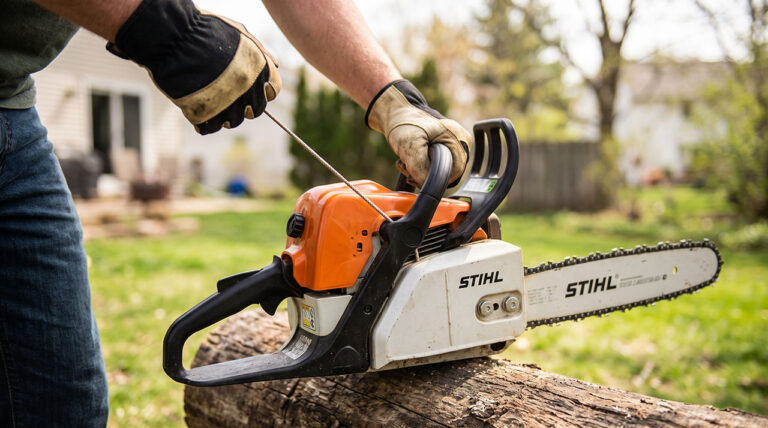
How to Start a Flooded Stihl Chainsaw? My Proven Fix
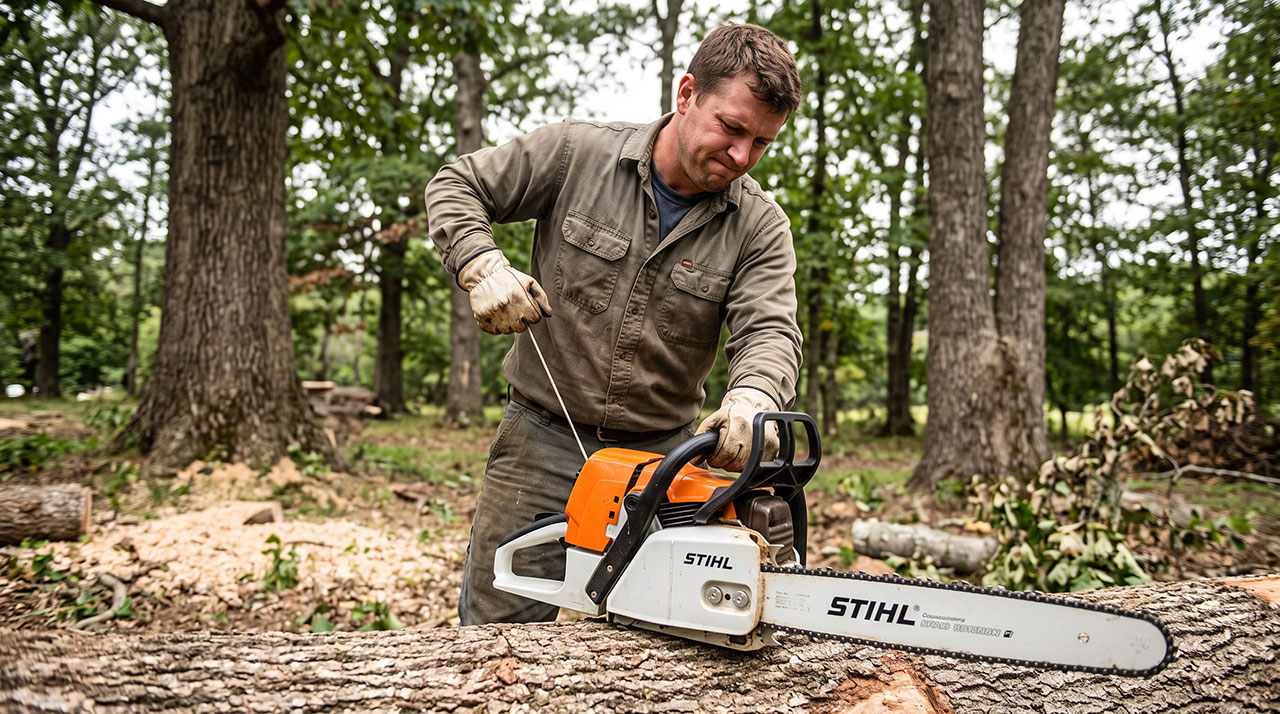
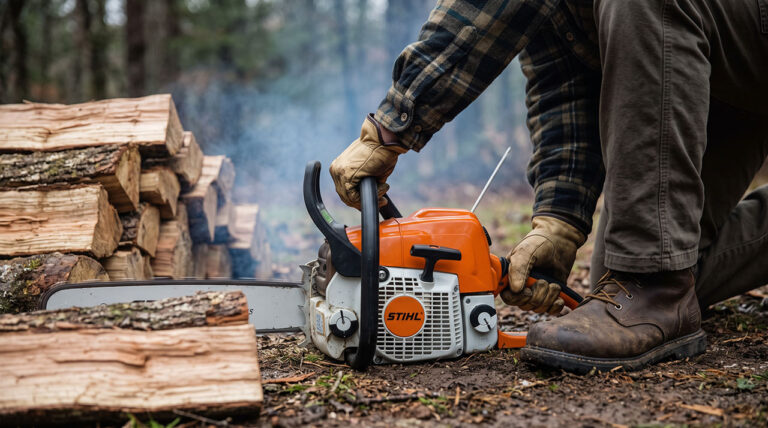
I remember the first time I had to figure out how to start a flooded Stihl chainsaw. I was standing in the woods on a freezing Saturday morning, staring at a pile of unsplit logs. I pulled the starter rope ten times on full choke. All I got was a strong smell of raw gas and a sore shoulder. My saw was completely dead.
I thought I broke it. I packed up my gear, went home, and spent the rest of the day researching what went wrong. It turns out, I simply flooded the engine. A flooded chainsaw happens when there is too much liquid fuel and not enough air in the engine. The spark plug gets soaking wet, and the saw cannot fire. Over the years, I have flooded my saws more times than I care to admit. But I also learned exactly how to fix it quickly.
How Do You Know If It’s Actually Flooded?
It is easy to panic when your chainsaw refuses to start. Before you start tearing the machine apart, you need to confirm the engine is actually flooded. Sometimes, a saw will not start because it is out of gas, or the on/off switch is in the wrong position. But a flooded engine gives off very specific clues.
The Classic Signs I Always Look For
The most obvious sign is the smell. If you pull the starter cord a few times and suddenly smell strong, unburned gasoline, you probably flooded it. The engine is pulling fuel from the tank, but it is not burning it.
Another sign is how the pull cord feels. Sometimes, a severely flooded engine feels harder to pull. This happens because liquid fuel does not compress easily. If the cord feels heavy or jerky, stop pulling immediately. You are just making the flood worse.
| What You Notice | What It Actually Means |
| Strong gas smell | Unburned fuel is sitting in the engine block |
| Pull cord feels heavy | Liquid fuel is resisting the piston movement |
| Saw “coughed” then died | You missed the cue to turn off the choke |
How to Start a Flooded Stihl Chainsaw (The Field Method)
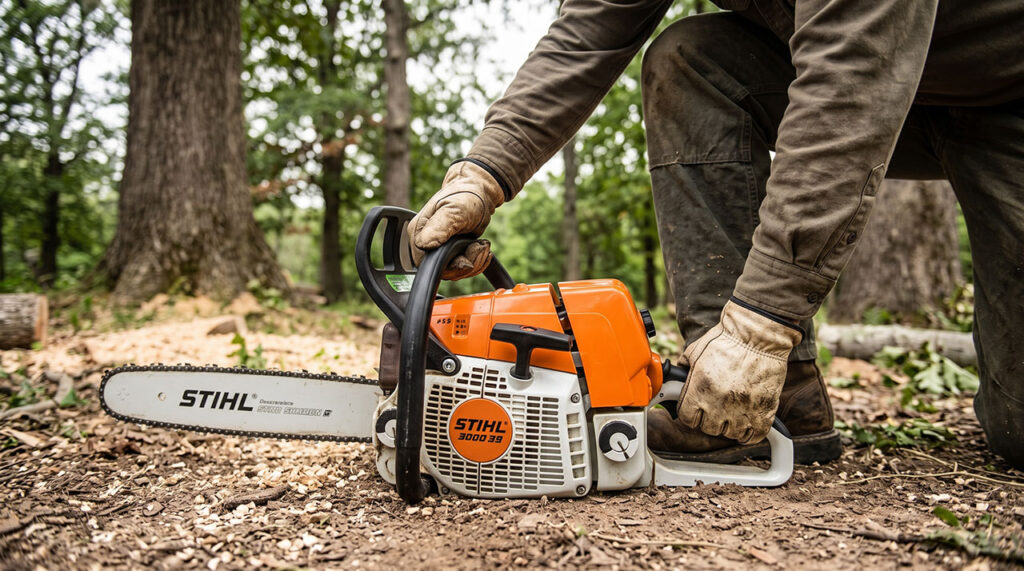
When I am deep in the woods, I do not want to take my chainsaw apart. I want a fast fix. This is the first method I always try. It works about eighty percent of the time. You do not need any tools for this. You just need a little patience and some muscle.
Why the Wide-Open Throttle Trick Works
A flooded engine has too much gas. To fix the ratio, we need to force massive amounts of air into the engine. We do this by opening the throttle completely.
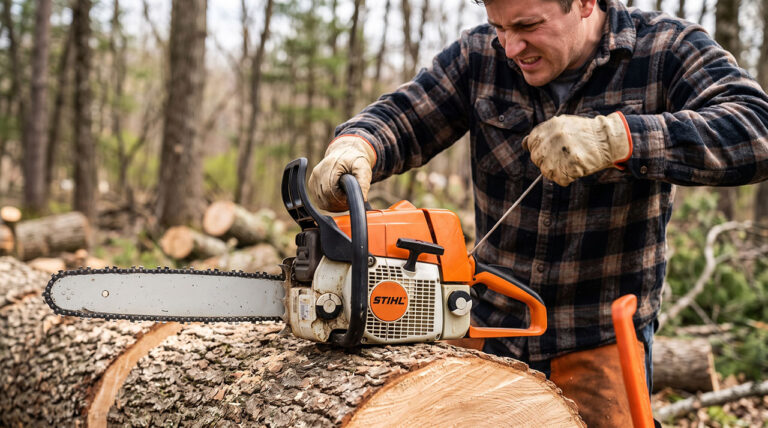
First, push the master control lever down to the “Run” position. This is usually marked with an “I”. Do not use the choke. Next, put the chainsaw flat on the ground. Put the toe of your right boot into the rear handle to hold it down. Grab the front handle with your left hand.
Now, use your right hand to squeeze the throttle trigger all the way in. You want it wide open. Keep holding it open. With your left hand holding the handle, use your right hand to pull the starter cord. Pull it fast and hard. You might have to pull it five, ten, or even fifteen times. Eventually, it will sputter, smoke like crazy, and roar to life.
| Step in the Field Method | Why I Do It This Way |
| Lever set to “Run” (I) | Stops the carburetor from adding more extra fuel |
| Throttle held wide open | Opens the air valve to dry out the wet engine |
| Pulling the cord repeatedly | Pumps fresh air through the combustion chamber |
The Spark Plug Method (When the Field Trick Fails)
Sometimes, the fast method does not work. If you pulled the cord fifteen times with the throttle open and nothing happened, the engine is badly flooded. There is too much liquid gas trapped inside. When this happens, I have to use my scrench tool. This is the metal T-tool that comes with every Stihl saw.
Clearing the Combustion Chamber
This method sounds technical, but it is incredibly simple. First, turn the chainsaw off. Push the control lever all the way up to the “0” or “Stop” position. This is very important for safety. You do not want a spark near raw gas.
Take off the top plastic engine cover. Pull the rubber boot off the spark plug. Use your scrench tool to unscrew the spark plug. When you pull it out, look at the tip. It will be dripping wet with gas. Wipe the spark plug completely dry with a clean rag.
Next, turn the entire chainsaw upside down. The open spark plug hole should point toward the ground. Pull the starter cord briskly five or six times. You might actually see drops of raw gas spit out of the hole. You are manually pumping the flooded gas out of the engine. Once nothing else sprays out, put the dry spark plug back in. Tighten it, attach the rubber boot, put the cover on, and start the saw normally on the “Run” setting.
| Tool or Part | What I Use It For |
| Scrench Tool | Safely removing the spark plug without stripping it |
| Clean Shop Rag | Drying the liquid gasoline off the spark plug tip |
| Master Control Lever | Keeping the saw firmly in the “Off” position for safety |
What Causes a Stihl Chainsaw to Flood in the First Place?
Engines rarely flood themselves. It is almost always human error. I know this because I caused every single flood I ever dealt with. Stihl chainsaws have a very specific starting sequence. If you ignore the sequence, you will flood the saw every time.
My Biggest Mistakes with the Choke Lever
When an engine is cold, it needs a rich mixture of fuel to start. The full choke setting provides this. But the engine only needs full choke for a brief second.
My biggest mistake as a beginner was ignoring the “burp.” When you pull a Stihl on full choke, it will eventually make a quick popping sound. It sounds like it wants to start, but dies instantly. That is the burp. The very second you hear that pop, you must move the lever up one notch to the half-choke or warm-start position.
If you do not hear the pop, and you keep pulling on full choke, you are just dumping raw liquid fuel into the engine. Four or five pulls after the burp is all it takes to completely swamp the spark plug. Now, I listen to my saw very closely. The sound tells me exactly what to do.
| My Old Mistake | The Better Approach I Use Now |
| Pulling 10 times on full choke | Pulling only until I hear the first engine “pop” |
| Starting a warm saw on choke | Starting a warm saw on the normal “Run” setting |
| Yanking the cord out of anger | Using smooth, fast pulls to engage the flywheel |
Preventing a Flooded Engine Next Time You Cut Wood
The best way to deal with a flooded chainsaw is to never flood it at all. Once I finally understood how a two-stroke engine breathes, my starting issues vanished. It all comes down to respecting the master control lever. Stihl designed this lever to manage the fuel and air mixture perfectly. We just have to use it right.
Understanding the Master Control Lever
Stihl chainsaws usually have four positions on the master control lever. From top to bottom, they are Off (0), Run (I), Warm Start (half-choke), and Cold Start (full choke).
If the saw has not run today, I push the lever all the way to the bottom. I pull the cord once, twice, maybe three times. I listen for the cough. The moment it coughs, I move the lever up one click to the Warm Start position. I pull again, and it starts roaring. I immediately tap the throttle trigger. Tapping the trigger automatically flips the lever up to the normal Run position.
If I turn the saw off to move a log, and want to start it again five minutes later, I never use the choke. The engine is already hot. I just put it in the Run position and pull. If you use the choke on a hot saw, you will flood it instantly.
| Lever Position | When I Actually Use This Setting |
| Full Choke (Bottom) | Only when the saw is completely cold and hasn’t run all day |
| Half Choke (Middle) | Right after the engine “burps” on the cold start setting |
| Run / I (Normal) | When the saw is already warm from cutting wood recently |
Myths About Flooded Chainsaws I Used to Believe
When I first struggled with chainsaws, older guys would give me all sorts of weird advice. Much of it was completely wrong. I wasted a lot of time following bad tips. Learning the actual mechanics of a Stihl saw helped me separate fact from fiction.
Learning the Hard Way
One guy told me that if I flooded my saw, I had to dump all the gas out of the tank and mix a fresh batch. This makes no sense. The gas in the tank is perfectly fine. The problem is the gas trapped inside the small engine cylinder. Dumping the tank just wastes expensive mixed fuel.
Another myth is that pulling the cord harder and faster on full choke will force the engine to start. This is the worst thing you can do. Pulling harder just pumps more fuel into the already flooded cylinder. It makes the problem worse and wears out your starter rope. You have to change the air-to-fuel ratio, not your arm strength.
| Common Myth I Heard | The Real Truth I Discovered |
| You must empty the gas tank | The tank is fine; the cylinder is the only flooded part |
| Just keep pulling the cord | Pulling on choke makes a flooded engine much worse |
| A flooded saw needs a mechanic | It just needs fresh air and a dry spark plug to start |
Final Thoughts
Learning how to start a flooded Stihl chainsaw is a rite of passage for anyone who cuts wood. It is frustrating the first few times it happens, but it is never the end of the world. You have not broken your saw. You just fed it a little too much gas.
Now, when I smell that raw fuel, I do not get mad. I just switch to the wide-open throttle method, pull a few times, and get back to cutting. Pay attention to the sounds your saw makes, respect the choke lever, and always listen for that first engine pop. That simple habit will save your shoulder, your time, and your sanity.