Safety Rules for a Table Saw: My Honest Guide
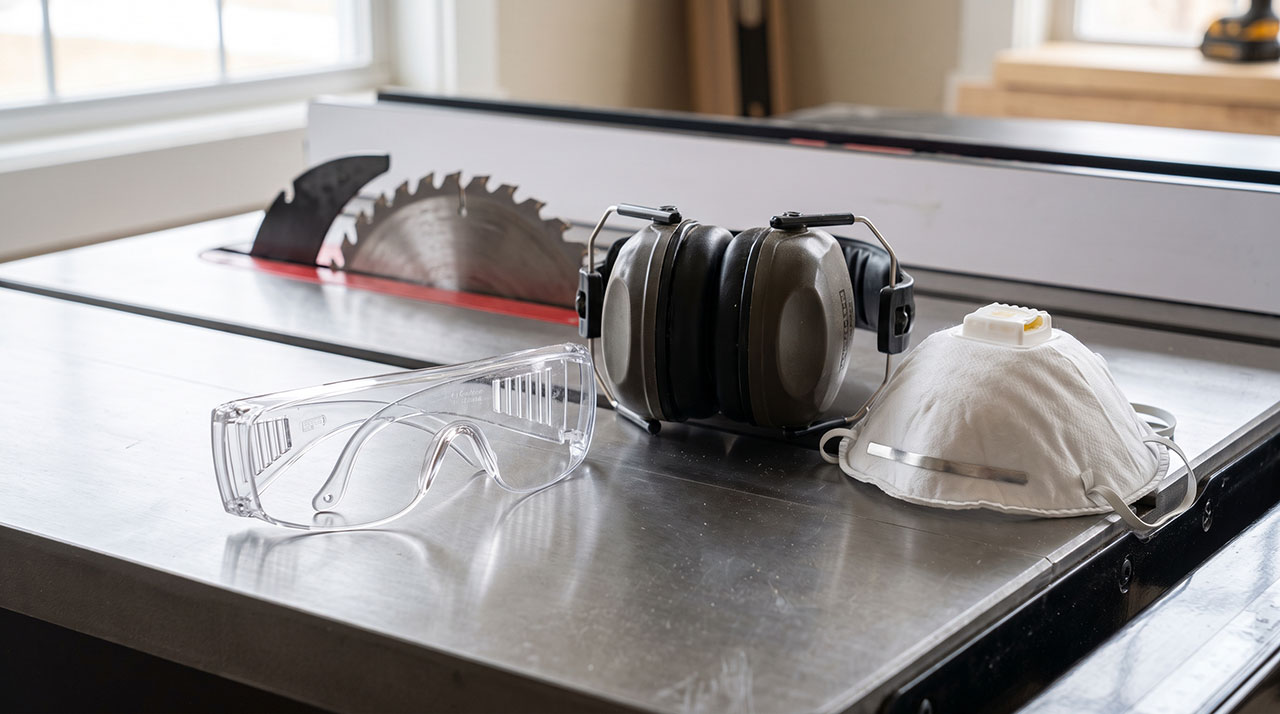
When I first started woodworking, learning the right safety rules for a table saw felt overwhelming. I looked at that spinning blade and honestly felt a little terrified. The internet was full of scary stories, missing fingers, and wood flying across the room. I wanted to build things, but I also really wanted to keep all my digits attached.
Over the years, I went from being terrified of the machine to respecting it deeply. I made my fair share of rookie mistakes along the way. I learned that safety is not about reading a manual once. It is about building daily habits. Once I understood how the machine actually works, the fear faded, and confidence took its place. I wrote this guide to share what actually works in the real world, past the boring textbook warnings.
Why I Take Safety Rules for a Table Saw Seriously
A table saw is the heart of most woodshops. It is incredibly useful. But it is also unforgiving. The rules exist because things go wrong in a fraction of a second. You do not have time to react. You only have time to prepare.
The Kickback Wake-Up Call
Early on, I experienced kickback. I was pushing a small piece of plywood through the blade. I did not keep it tight against the fence. The back teeth of the blade grabbed the wood. In a split second, it shot back and hit my stomach. It felt like getting punched by a professional fighter.
That was my wake-up call. Kickback happens when the wood gets pinched or wanders away from the fence. The blade lifts the wood and throws it back at you at over 100 miles per hour. This is the biggest danger you face. Almost all severe table saw injuries start with kickback. Your hand is pushing the wood, the wood flies away, and your hand falls right into the spinning blade.
| Wood Behavior | Warning Sign | What I Do Immediately |
| Pinching | Wood feels hard to push | Turn off the saw |
| Wandering | Gap opens at the fence | Stop pushing, hit the off switch |
| Lifting | Board rises off the table | Keep pressure down, turn it off |
Essential Safety Rules for a Table Saw Before You Power Up
The best time to prevent an accident is before you ever turn the machine on. I have a mental checklist I run through every single time I walk up to the saw. It only takes ten seconds, but it saves me a lot of trouble.
Checking Your Safety Gear First
I used to skip safety gear if I was “just making one quick cut.” That is exactly when accidents happen. Now, I never skip it. Wood dust is awful for your lungs. A flying wood chip to the eye will ruin your week. And the noise will permanently damage your hearing over time.
I keep my safety gear right next to the power switch. If I have to reach for the switch, my hand bumps the safety glasses. It forces me to remember.
| Safety Gear | Purpose | My Honest Take |
| Safety Glasses | Stops flying chips | Buy comfortable ones or you won’t wear them. |
| Ear Protection | Prevents hearing loss | A quiet shop helps me stay calm and focused. |
| Dust Mask | Protects lungs | Essential if you cut MDF or plywood often. |
The Magic of the Riving Knife
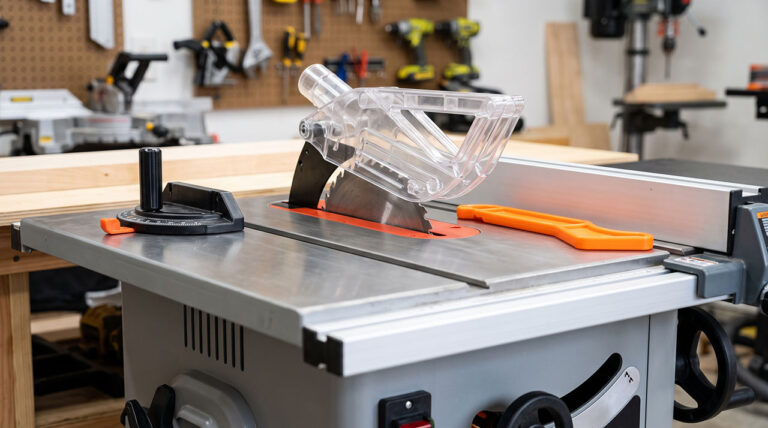
If you learn anything from me today, let it be this. Never take the riving knife off your saw. The riving knife is a curved piece of metal that sits right behind the blade. As the blade cuts the wood, the riving knife keeps the two halves separated.
If the wood tries to pinch together, it pinches the riving knife instead of the back of the spinning blade. This single feature prevents almost all kickback. Older saws do not always have them, but modern saws do. I refuse to use a table saw without one. It is the most important safety feature on the tool.
Managing Your Wood and Your Hands
Where you put your hands matters more than anything else. A table saw blade does not care if it is cutting oak, pine, or skin. You have to keep your hands out of the danger zone. I call the area directly around the blade the “red zone.” My hands simply do not go there while the blade is spinning.
Using Push Sticks Properly
When I first started, I used a cheap plastic push stick that came with the saw. It looked like a long plastic finger. I hated it. It felt flimsy. It only held the back edge of the wood. The front of the wood would flutter and bounce.
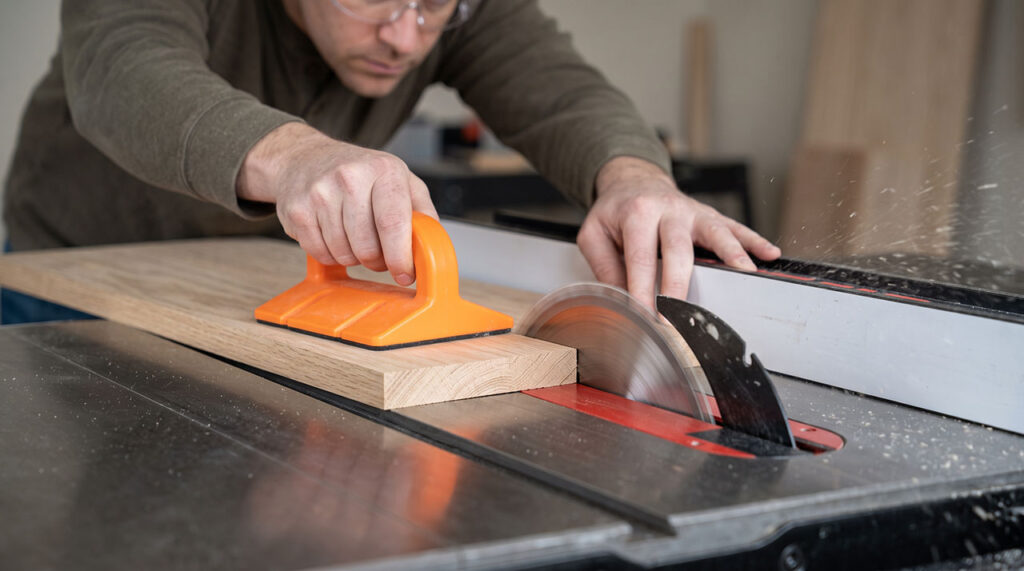
I eventually upgraded to friction-style push blocks. These look like heavy-duty plastic irons with rubber on the bottom. They grip the wood from the top. This gives me control over the forward motion, the downward pressure, and the inward pressure against the fence. It changed everything for me. I felt completely in control of the wood.
| Hand Position | Risk Level | Better Approach |
| Bare hands near blade | Extreme Danger | Use a push block |
| Cheap stick pushing back edge | Moderate Risk | Apply downward pressure too |
| Rubber push block holding top | Very Safe | Grip firmly and push smoothly |
The Golden Rule: Never Mix Fence and Miter Gauge
This is a mistake almost every beginner tries to make. You want to cut a piece of wood across its width (a crosscut). You set the fence to the length you want. You put the wood against the miter gauge, slide it against the fence, and push it through.
This is incredibly dangerous. As the cut finishes, the severed piece of wood gets trapped between the spinning blade and the fence. It has nowhere to go. The blade grabs it and fires it right back at you. Never use the fence and the miter gauge at the same time. If you need a stop for repeatable cuts, clamp a block of wood to the fence well before the blade starts.
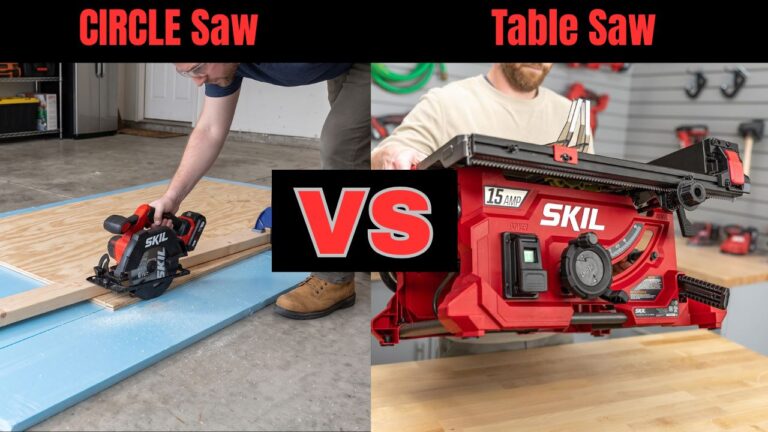
Table Saw Vs Circular Saw: My Brutally Honest Take
Common Mistakes I Made Early On
No one is perfect. I made several dumb mistakes when I was learning the safety rules for a table saw. Thankfully, I got away with them. But I look back now and cringe. Here are a few things I had to unlearn.
Reaching Over the Spinning Blade
It sounds obvious, but you would be surprised how easy it is to do. I used to push a board through the cut. The cut would finish. I would then reach my hand right over the spinning blade to pull the offcut away.
One day, the sleeve of my shirt brushed the blade guard. I realized how close I was to disaster. Now, I let the offcut fall away. Or, I turn the saw off and wait for the blade to completely stop before I grab anything. There is never a good reason to reach over a running blade.
| Common Mistake | What Happens | The Fix |
| Reaching over blade | Sleeve catches | Turn off saw, wait for stop |
| Pulling wood from back | Hand slips forward | Let offcut fall or use outfeed support |
| Backing wood out | Blade grabs wood | Turn off saw, hold wood still |
Ignoring the Blade Height
I used to crank the blade all the way up for every cut. I thought it made the saw cut faster. It actually just exposes way more blade than necessary. If your hand slips, you want the absolute minimum amount of sharp metal waiting for you.
I learned to set the blade height so that only one full tooth is visible above the wood I am cutting. This gives the sawdust a place to escape, but keeps the danger low. It also gives a cleaner cut.
Body Positioning and Stance
How you stand matters just as much as how you push the wood. Good balance prevents accidents. If you are leaning awkwardly, a sudden snag can pull you right into the table. I learned to rethink my entire posture.
Staying Out of the Firing Line
When I had my kickback incident, the wood hit my stomach because I was standing directly behind the blade. That is the exact path the wood takes when it flies back. Now, I stand slightly to the left of the blade (since the fence is usually on the right).
If a piece of wood does fly back now, it will shoot past my right hip, not into my ribs. It takes a little practice to learn how to push the wood while standing off to the side, but it is worth the effort.
| Stance Habit | Resulting Danger |
| Standing right behind blade | Catching kickback in the chest |
| Leaning over the table | Losing balance if wood slips |
| Feet close together | Poor leverage and slipping |
Dealing with Distractions
A woodworking shop is full of distractions. Phones ringing, people walking in, or the dog barking. I had to create a strict rule for myself. If the saw is running, nothing else exists.
If someone walks into my shop while I am in the middle of a cut, I do not look up. I finish the cut safely, turn the saw off, wait for the blade to stop, and then turn around. Looking away for even one second is all it takes for the wood to drift away from the fence and cause a massive problem.
Upgrading Your Safety Game Over Time
Following the basic safety rules for a table saw is a great start. But as you get more comfortable, you can start modifying your setup to make the whole process inherently safer. A better setup means you fight the machine less.
Building a Simple Outfeed Table
For a long time, I struggled with cutting long boards. I would push the board through, and as it hung off the back of the saw, it would tilt. I would have to press down incredibly hard just to keep it flat. I almost tipped the saw over once.
I finally built a cheap outfeed table that sits right behind the saw. It catches the wood as it exits the blade. I no longer have to worry about balancing long boards. I can just focus on feeding the wood smoothly. It is easily the best safety upgrade I ever made.
| Table Saw Add-On | Safety Benefit |
| Outfeed Table | Catches wood, prevents tipping |
| Zero Clearance Insert | Stops small pieces from jamming |
| Featherboards | Holds wood tight against fence |
Keeping Your Blades Sharp
This seems like a maintenance tip, but it is actually a safety rule. A dull blade burns the wood. More importantly, you have to push much harder to force the wood through a dull blade.
When you push hard, you lose control. If the wood suddenly gives way, your hand slips forward rapidly. A sharp blade should cut through wood like a hot knife through butter. You should only need gentle, steady pressure. If I find myself leaning my weight into the cut, I stop immediately and change the blade.
The Mental Safety Rules for a Table Saw
We talk a lot about physical rules. Push sticks, fences, and blades. But the mental game is where accidents really happen. Woodworking requires focus. When focus slips, danger spikes.
Knowing When to Walk Away
I love being in the shop. Sometimes I try to squeeze in one last cut at 10:00 PM when I am exhausted. This is a terrible idea. Most accidents happen at the end of the day. You are tired, you are rushing, and you start taking shortcuts.
I developed a simple rule. If I drop a tool twice, or if I catch myself staring blankly at a measurement, I turn off the lights and go inside. No cut is worth risking a trip to the emergency room. Working tired is basically working drunk.
| Warning Sign | What It Means | Action to Take |
| Rushing a cut | You are losing patience | Step back, take a breath |
| Forgetting safety glasses | Your mind is distracted | Reset your routine |
| Feeling heavy fatigue | Reflexes are compromised | Turn off the lights, go rest |
Trusting Your Gut
Sometimes, a setup just feels wrong. Maybe the wood is warped. Maybe the piece is too small to hold safely. In the early days, I would try to force the cut anyway. I figured I could just power through it.
Now, if my gut says a cut is sketchy, I do not make it. I find another way. I use a hand saw, or a bandsaw, or I build a special jig to hold the wood. If you feel nervous about a cut, your brain is trying to protect you. Listen to it.
Final Thoughts
Learning the safety rules for a table saw transformed my woodworking experience. I went from being scared of the tool to viewing it as a reliable, predictable partner in the shop. It took time to build these habits. Now, using a push block, checking the riving knife, and standing to the side happen automatically without me even thinking about it.
The main takeaway I want to leave you with is that safety is a choice you make on every single cut. The saw has no brain; you have to do the thinking for it. Respect the blade, stay focused, and never rush the process. If you follow these practical lessons, you can enjoy years of building amazing things safely. What is the first safety habit you plan to upgrade in your shop today?