Makita Replacement Chainsaw Chain: My Honest Guide
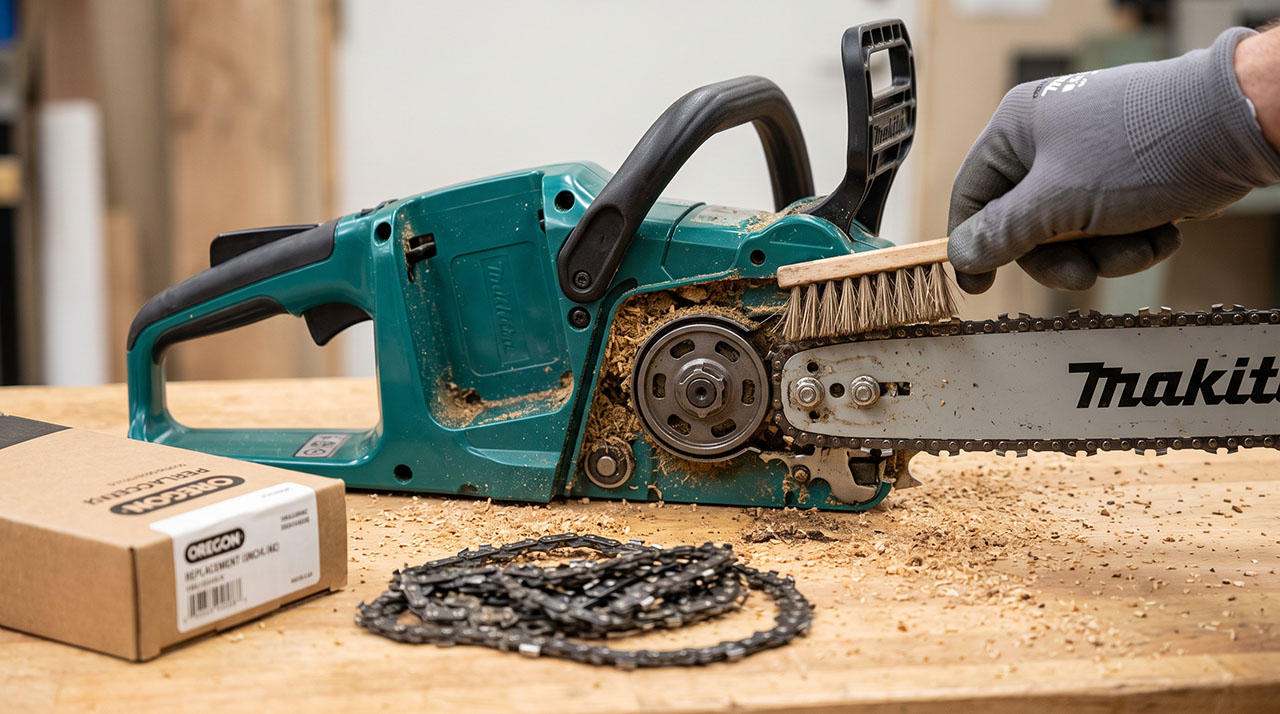
I still remember the afternoon I ruined my first chain. I was cutting an old oak log in my backyard. Hidden inside that log was a rusty thick nail. Sparks flew, the saw kicked back slightly, and the wood stopped cutting. I immediately knew I needed a Makita replacement chainsaw chain.
I figured buying a new chain would be simple. I planned to just run to the hardware store, grab a 16-inch chain off the shelf, and go back to work. I was very wrong. Finding the right chain turned into a confusing puzzle of numbers, pitches, and gauges. Today, I want to share exactly what I learned so you can skip the frustration and get back to cutting wood.
Why Finding the Right Makita Replacement Chainsaw Chain is Tricky
Most people think all chainsaws are the same. They just look at the length of the metal bar and buy a chain to match. I made this exact mistake.
Chainsaws are precision tools. The chain must lock perfectly into the sprocket that spins it. It also has to slide smoothly inside the groove of the metal bar. If the chain is too thick, it gets stuck. If the chain links are spaced wrong, the saw will vibrate violently. Getting a Makita replacement chainsaw chain means matching three specific numbers. It is not a guessing game.
The Mistake I Made With Bar Length
My saw has a 16-inch bar. So, I bought a generic 16-inch chain. When I got home, it was too loose. It hung off the bottom of the saw like a wet noodle. I could not tighten it enough.
It turns out that “16 inches” is just a rough category. Different brands use a different number of little drive links to make up that 16 inches. Some need 52 links. Others need 56 links. Buying by length alone is a fast way to waste money.
| My Mistake | The Better Approach |
| Buying based on bar length alone | Buying based on the drive link count |
| Throwing away the old chain box | Saving the box or taking a photo of it |
| Guessing the chain thickness | Reading the stamped numbers on the bar |
How to Read the Numbers on Your Chainsaw Bar
You do not need to memorize the manual to find the right chain. Your chainsaw actually tells you exactly what it needs. You just have to know where to look.
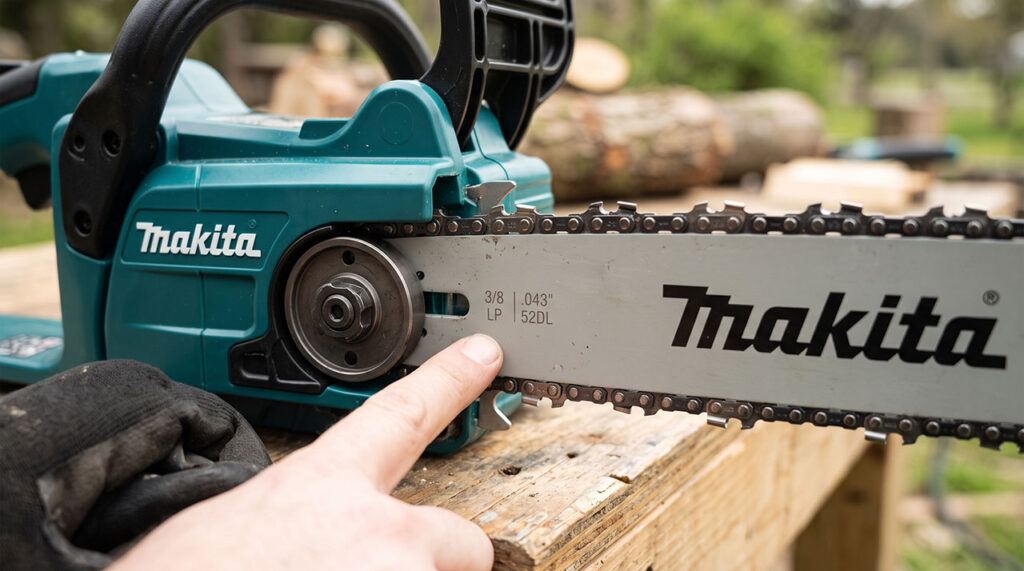
Take a close look at the metal bar on your saw. Near the base, right where the bar attaches to the motor, you will see some tiny numbers stamped into the metal. These numbers are the secret code for your Makita replacement chainsaw chain. You might need to wipe away some oily sawdust to see them clearly.
Pitch, Gauge, and Drive Links Explained
There are three magic numbers stamped on that bar. You must match all three to get a chain that fits and cuts safely. Let me break down what they actually mean in plain English.
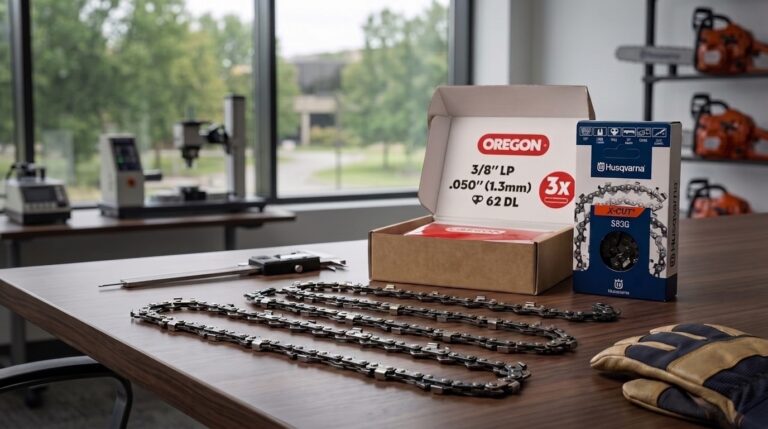
Pitch is the distance between the links. Gauge is how thick the links are. Drive links are the little shark fins on the inside of the chain that ride inside the bar. If you count those fins, you will never buy the wrong chain size again.
| Chain Term | What It Actually Means | Where To Find It |
| Pitch | The space between the chain links | Stamped on the bar (e.g., 3/8″ or .325″) |
| Gauge | The thickness of the metal link | Stamped on the bar (e.g., .043″ or .050″) |
| Drive Links | Total count of the inner teeth | Stamped on the bar (e.g., 52 DL or 56 DL) |
OEM Makita Chains vs. Aftermarket Brands
When I first needed a new chain, I searched everywhere for an official Makita box. I assumed only a Makita brand chain would work properly on my Makita saw.
Here is a helpful secret I learned from a local small engine mechanic. Makita does not actually forge their own chains in a secret factory. Like many major tool brands, they partner with chain specialists. This completely opened up my options when shopping for replacements.
Best 12-Inch Battery Chainsaw: Top Models
Why Oregon Often Wins for Replacements
Most official Makita chains are actually made by a company called Oregon. Oregon is a massive brand in the logging and tree care world. They make excellent cutting gear.
Once I figured this out, I stopped hunting for the blue Makita box. I started buying Oregon chains that matched my saw’s numbers. They are exactly the same quality. The best part is that Oregon chains are usually easier to find at local farm stores, and they often cost less money.
| Comparison Point | Official Makita Chain | Oregon Brand Equivalent |
| Manufacturer | Often made by Oregon | Made by Oregon |
| Availability | Harder to find in stores | Very common everywhere |
| Price | Usually a bit more expensive | Often more affordable |
Signs You Need a Makita Replacement Chainsaw Chain
How do you know when it is actually time for a new chain? I used to just guess. I would keep cutting until the saw was practically burning the wood instead of cutting it. That is terrible for the saw motor.
A sharp chain pulls itself into the wood. You barely have to push. A bad chain forces you to press down hard. If you are leaning your body weight onto the saw to make a cut, your chain is done. Another dead giveaway is what falls out of the saw. A good chain makes nice, big wood chips. A bad chain makes fine, dusty powder.
| The Symptom | What It Means |
| You are pushing very hard | The teeth are completely dull |
| Smoke comes from the cut | High friction from dull teeth or no oil |
| Dust instead of chips | The chain is no longer slicing the wood |
Sharpening vs. Replacing
You do not have to buy a new chain every time it gets dull. You can sharpen them. I bought a cheap round file and learned to sharpen my chains by hand. It saves a lot of money.
However, sharpening only goes so far. Eventually, there is not enough metal left on the cutting tooth to hold an edge. Also, if you hit a rock or a nail like I did, you can chip the metal teeth. Once teeth break off, or if the chain stretches out so much that you cannot tighten it anymore, it is time for the trash bin. A damaged chain is very dangerous.
Choosing the Right Tooth Style for Your Saw
When you finally go to buy your Makita replacement chainsaw chain, you might notice different tooth styles. The boxes will say things like “semi-chisel” or “full-chisel.” This confused me at first. I just wanted to cut firewood.
The shape of the cutting tooth changes how the saw behaves. If you pick the wrong style, your saw might feel wildly aggressive and unsafe. For most homeowners, there is a clear winner.
Semi-Chisel is Usually the Best Choice
I highly recommend semi-chisel chains for normal backyard use. The cutting teeth have slightly rounded corners. They stay sharp much longer, especially if the wood is dirty or muddy. They also have a lower risk of kickback, which makes them safer.
Full-chisel chains have perfectly square, sharp corners. They cut incredibly fast. Professionals love them for dropping clean timber. But they get dull extremely fast if they touch dirt. For a battery-powered Makita saw cutting firewood, semi-chisel is the most reliable option.
| Chain Style | Best Used For | Kickback Risk |
| Semi-Chisel | Dirty wood, firewood, DIYers | Lower (Safer) |
| Full-Chisel | Clean wood, fast cuts, pros | Higher |
| Low-Profile | Battery saws, small gas saws | Lowest |
Swapping the Chain: My Step-by-Step Routine
Putting the new chain on feels intimidating the first time. I was worried I would break something. But once you do it once, it takes less than three minutes.
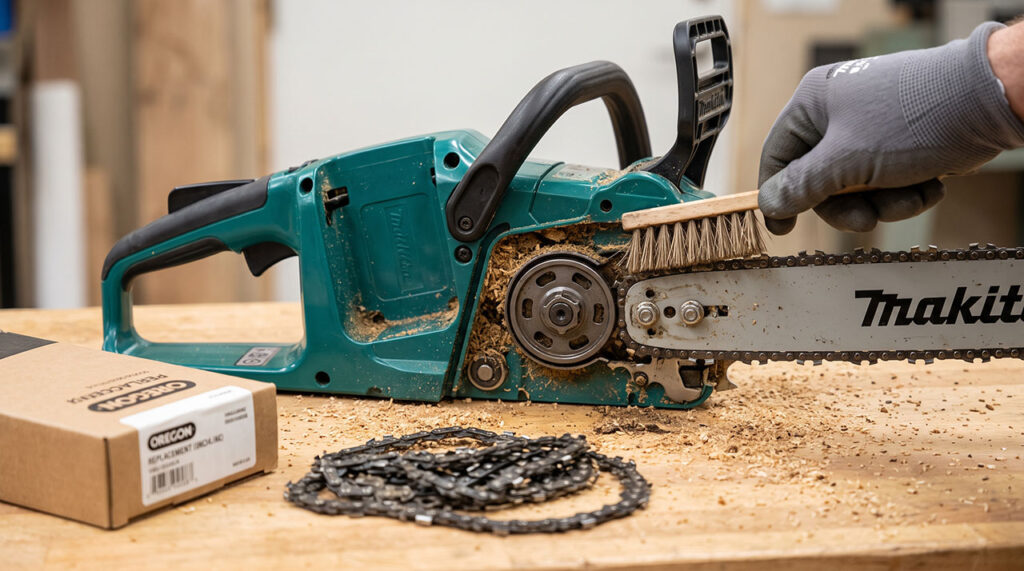
First, I take the battery out of my saw. Never work on a saw with a live power source. Then, I loosen the nuts on the side cover and take the cover off. I slide the bar back to loosen the old chain, pull it off, and grab a rag. The area behind the cover is always packed with oily, nasty sawdust. I clean all of that out before the new chain goes on.
Getting the Tension Just Right
Putting the new chain on the bar is easy. The tricky part is tightening it. If it is too loose, it will fly off the bar while spinning. If it is too tight, it will snap or burn up the motor.
I use the snap test. I tighten the chain until it sits nicely against the bottom of the bar. Then, I pinch the chain in the middle of the bar and pull it down. It should pull away slightly, showing a tiny bit of daylight, and then snap firmly right back into place when I let go. If it droops, it is too loose. If I cannot pull it down at all, it is too tight.
| Tension Mistake | The Real-World Result |
| Tightening it as hard as possible | Drains battery fast, ruins the bar |
| Leaving a small droop at the bottom | Chain derails during a heavy cut |
| Not checking tension after 5 minutes | New chains stretch and get loose quickly |
A Few Maintenance Habits I Swear By
Buying a new Makita replacement chainsaw chain is great, but taking care of it is even better. I learned a few simple tricks that make my chains last three times as long.
First, I always check the bar oil before I cut. A dry chain will ruin itself in minutes. The metal gets incredibly hot. I also make sure the tiny oil hole on the metal bar is completely clear of debris. Sometimes sawdust clogs it up, and the oil never actually reaches the chain.
Flipping the Bar and Avoiding Dirt
Here is a great trick someone taught me. Every time I take the chain off for cleaning, I flip the metal bar upside down before putting the cover back on. The bottom of the bar takes all the heavy friction during cuts. Flipping it makes the bar wear out evenly on both sides. The Makita logo might be upside down, but the saw will cut better.
Finally, I do everything in my power to keep the running chain out of the dirt. Dirt is the absolute worst enemy of a sharp chain. Hitting the soil for even two seconds will instantly dull your fresh chain. I always use a plastic wedge or a thick branch under my logs to keep them off the ground while I cut.
Final Thoughts
Finding the right Makita replacement chainsaw chain does not have to be a miserable experience. It all comes down to checking the stamped numbers on your bar and matching the pitch, gauge, and drive links. Once you learn how to read those numbers, you can easily find affordable, high-quality replacements from brands like Oregon anywhere you shop.
My biggest piece of advice is to buy two chains at a time. There is nothing worse than hitting a rock halfway through a big weekend project and having to stop working. Keep a spare chain in your truck or garage. Keep your bar oil topped off, clean out the gunk under the side cover, and your saw will chew through wood perfectly every single time. Have you checked your bar numbers yet?