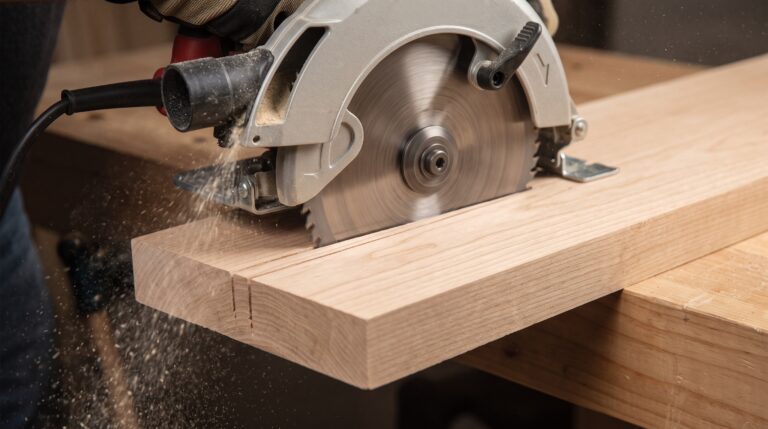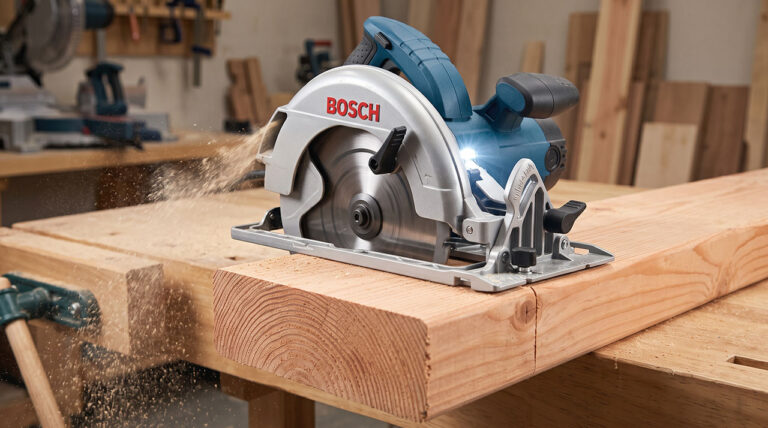
How to Use a Circular Saw for Beginners: A Real-World Guide
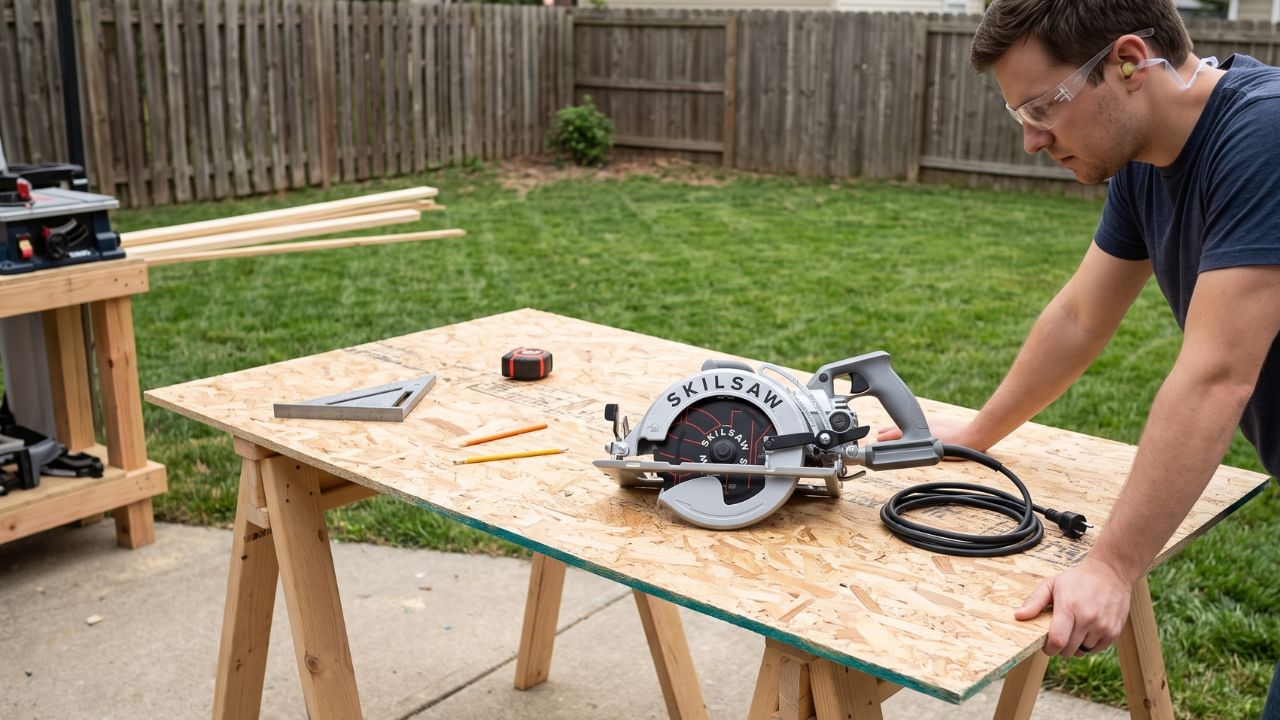
I still remember the first time I bought a circular saw. It sat in the box for three weeks. The noise, the spinning blade, and the fear of making a massive mistake kept me away from my own workbench. But once I finally learned how to use a circular saw for beginners, everything changed. It quickly became the most used tool in my garage.
If you feel nervous about pulling that trigger, you are entirely normal. This guide will walk you through exactly what you need to know to make your first cut safely. I will share the exact steps I use, the mistakes that ruined my early projects, and the simple habits that keep my fingers attached. You do not need to be a master carpenter to get this right. Let us just take it one step at a time.
Why the Circular Saw Intimidates Everyone (And Why It Shouldn’t)
When I first started DIY projects, the circular saw felt like a wild animal. It is loud. It kicks dust everywhere. It feels heavy in your hand. Most people avoid it because they think one slip will ruin their project or cause a serious injury.
But here is the truth. A circular saw only does exactly what you tell it to do. It does not have a mind of its own. Once you understand the basic mechanics, it actually feels incredibly stable. The weight of the saw works in your favor. It wants to rest flat on the wood. It wants to cut in a straight line.
The fear comes from a lack of control. Once you know how to support your wood, where to put your hands, and how to set your blade, that fear disappears. It gets replaced by confidence. You will suddenly realize you can break down heavy plywood or frame a wall in minutes.
The Must-Have Gear Before You Plug Anything In
Before we even talk about cutting, we need to talk about gear. I skipped some of this when I first started. I paid the price with sawdust in my eyes and ringing ears for a week. Do not skip this step.
Safety gear is not just about following rules. It is about comfort. When you feel safe, you cut better. You do not flinch when the saw turns on. You stay focused on the line.
| Safety Item | Why You Absolutely Need It |
| Safety Glasses | Wood chips fly everywhere. You cannot cut if you cannot see. |
| Ear Protection | These saws scream at over 100 decibels. Save your hearing. |
| Dust Mask | Sawdust goes straight into your lungs. Wear a simple N95 mask. |
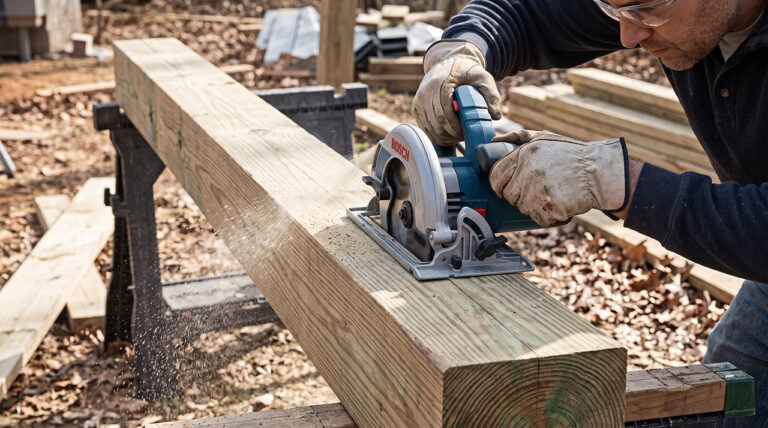
Avoid wearing gloves while making cuts. This sounds backward to a lot of beginners. But loose fabric can easily get caught in a spinning blade. Bare hands give you a better grip and a better feel for the tool. Roll up long sleeves. Tie back long hair. Keep everything tight.
How to Set Up Your Circular Saw Without Guessing
Your saw setup dictates how good your cut will be. Most beginners take the saw out of the box, plug it in, and start hacking away. This is how you burn wood, ruin blades, and experience kickback.
Taking two minutes to check your saw makes the actual cut effortless. Always make sure the saw is unplugged or the battery is removed before you touch the blade. I made it a strict habit to pull the battery the second I set the saw down.
Getting the Blade Depth Just Right
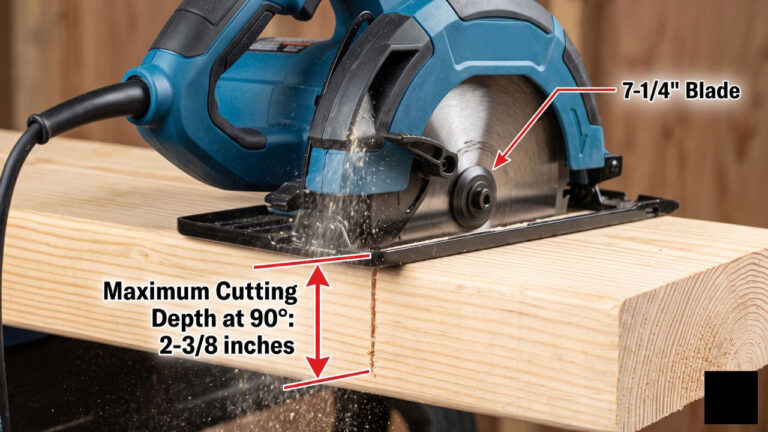
Blade depth is the most critical setting on your saw. If the blade is too deep, you expose too much spinning metal. This increases friction, burns your wood, and massively raises the chance of a dangerous kickback.
If the blade is too shallow, it will not cut all the way through the board. You want the blade to stick out just below the bottom of the wood.
Here is my quick method. Unplug the saw. Place it flat on the board you plan to cut. Loosen the depth adjustment lever located on the back or side of the saw. Lift the back of the saw until the bottom of the lowest blade tooth is just about a quarter-inch below the wood. Tighten the lever. That is it.
Checking the Bevel Angle for Flat Cuts
The bevel angle determines if your cut is straight up and down. Circular saws can tilt to make angled cuts. But 99 percent of the time, you want a perfectly flat, zero-degree cut.
Sometimes the bevel adjustment slips in the truck or the toolbox. If it is off by even one degree, your boards will not fit together. Check the dial on the front of the saw. Make sure it is locked tightly at the zero mark. If you want to be extra sure, unplug the saw and place a square against the baseplate and the blade. It should sit perfectly flush.
How to Make Your Very First Cut
You have your gear. Your blade depth is set. The saw is unplugged, but you are ready. Making that first cut is all about smooth, steady confidence.
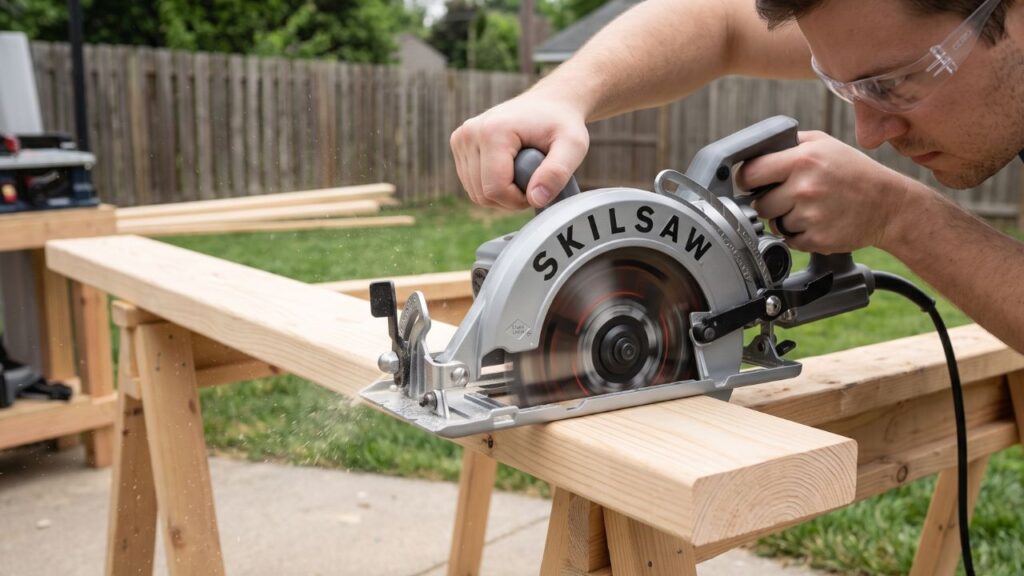
Do not force the saw. Let the motor do the heavy lifting. Your job is just to steer it. I used to push the saw as hard as I could, thinking faster was better. All I got were jagged edges and a smoking motor.
Supporting the Wood the Safe Way
Where you place your wood matters more than how you hold the saw. If the wood pinches the blade while you cut, the saw will violently kick back toward you.
The piece you are cutting off must be free to fall away. Never support the cut directly underneath the line. Let gravity help you.
| Support Setup | How Safe Is It? | Best Used For |
| Two Sawhorses | Highly Safe | Cutting long boards like 2x4s |
| Foam Insulation Board | Extremely Safe | Breaking down large plywood sheets |
| Between Two Chairs | Very Dangerous | Never do this. Wood will pinch the blade. |
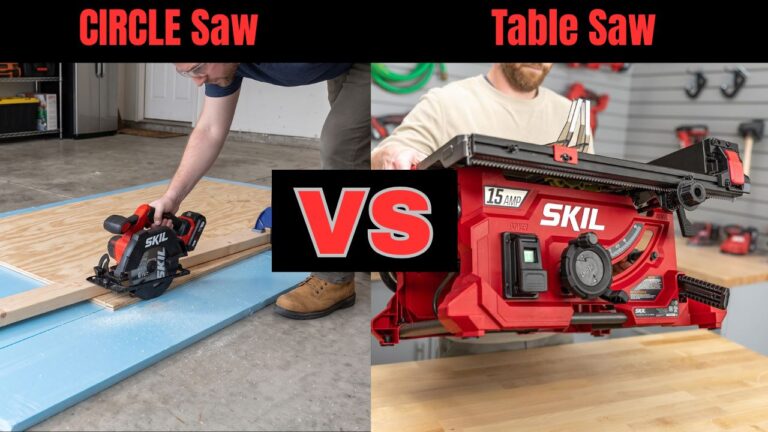
When I cut heavy 4×8 plywood sheets, I lay a piece of rigid foam insulation flat on the ground. I put the plywood on top. I set my blade depth to just barely score the foam. I can crawl right on top of the wood and cut without worrying about sawhorses shifting.
Check out the top 5 circular saws Best Circular Saw for Woodworking
Using a Speed Square for Perfectly Straight Cuts
Freehand cuts rarely stay perfectly straight. Even pros use guides. The absolute best trick for learning how to use a circular saw for beginners is using a speed square as a cutting fence.
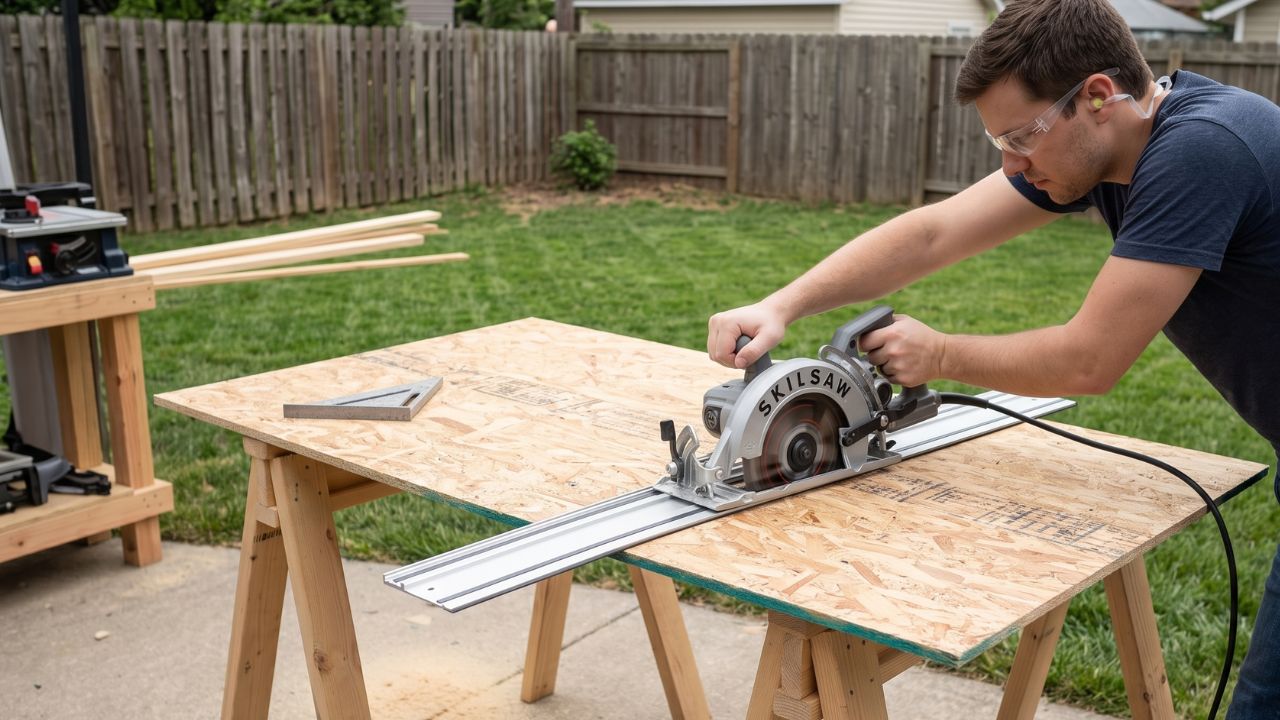
Mark your cut line with a pencil. Place your speed square flat against the edge of the board. Slide your circular saw onto the wood so the blade aligns with the pencil mark. Now, slide the square tightly against the metal baseplate of the saw.
Hold the square firmly with your non-dominant hand. Pull the trigger. Wait for the saw to reach full speed. Now push the saw forward, keeping the baseplate pressed tight against the metal or plastic edge of the square. You will get a factory-perfect edge every single time.
The Hidden Danger: Understanding and Preventing Kickback
We need to talk about kickback. It is the one thing that truly scares beginners, and for good reason. Kickback happens when the wood suddenly pinches the spinning blade. The saw violently jolts backward toward you.
I experienced this once early on because I supported a board on both ends and cut right in the middle. As I cut, the board sagged in the center in a V-shape. It clamped down on the blade. The saw jumped out of my hands. It was terrifying.
Kickback is entirely preventable. It only happens when you break the rules of wood support or blade depth.
| Common Cause of Kickback | How to Prevent It Immediately |
| Wood pinching the blade | Let the cut-off piece fall freely. Do not support both ends. |
| Blade set way too deep | Adjust depth so only one tooth drops below the wood. |
| Twisting the saw mid-cut | Keep the saw moving perfectly straight. Do not force turns. |
If you ever feel the saw bog down, slow down, or start to whine loudly, stop immediately. Release the trigger. Do not pull the saw backward while the blade is spinning. Let it come to a complete stop. Assess why it got stuck before you try again.
The Differences Between Rip Cuts and Crosscuts
When you read about circular saws, you will hear people mention rip cuts and crosscuts constantly. Understanding the difference will help you choose the right blade and avoid splintering your wood.
Wood has grain. It runs in one direction, like a bundle of straws glued together. How you cut across those straws changes how the saw behaves.
| Cut Type | What It Means | Best Practice |
| Rip Cut | Cutting along the length of the grain (parallel). | Use a guide rail. The saw moves fast and easy. |
| Crosscut | Cutting across the grain (perpendicular). | Use a speed square. Watch out for wood splintering. |
Your saw likely came with a general-purpose blade. This is perfectly fine for framing a shed or building a simple workbench. But if you want to cut nice plywood for a bookshelf, you will want to buy a fine-finish blade with more teeth. More teeth mean a smoother cut with less tear-out.
5 Rookie Mistakes I Wish Someone Warned Me About
Experience is just a series of mistakes you survived. I made plenty of them when I was figuring this tool out. Avoiding these common traps will save you time, money, and frustration.
The biggest lesson I learned was to stop watching the blade. It sounds crazy, but watching the spinning metal makes you drift off your line. Every circular saw has a small notch on the front of the metal baseplate. That notch lines up perfectly with the blade. Watch the notch. Guide the notch along your pencil line. Ignore the blade completely.
| The Common Mistake | The Better Approach |
| Starting the saw touching wood | Pull the trigger, wait for full speed, then push into the wood. |
| Pushing the saw too fast | Let the motor work. If it sounds strained, slow down. |
| Cutting on the wrong line side | Remember the blade has thickness. Cut on the waste side. |
Always account for the kerf. The kerf is the width of the blade, usually about an eighth of an inch. If you cut directly down the center of your pencil line, your board will actually be too short. Always align the blade on the waste side of the line so your final piece stays exactly the size you measured.
Simple Maintenance to Keep Your Saw Cutting Clean
Tools take care of you if you take care of them. A circular saw does not need much babying, but a little basic maintenance goes a very long way.
I used to just throw my saw in a dusty box. After a year, the blade guard stuck open, and the motor ran hot. Dust is the enemy of power tools. Taking a few minutes to clean up prevents major headaches later.
| Maintenance Task | How Often You Should Do It |
| Wipe down the baseplate | After every major project. Use a dry rag. |
| Check blade for dull teeth | Every few months. Dull blades burn wood and cause kickback. |
| Blow dust out of the motor | Monthly. Use an air compressor or a can of air. |
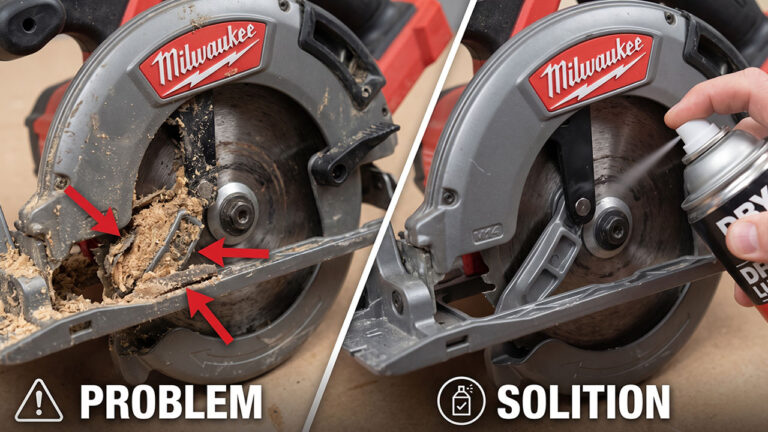
Also, pay attention to the lower blade guard. It is the plastic or metal piece that snaps back over the blade when you finish a cut. Never wedge it open permanently. That is incredibly dangerous. If it gets sticky from sap or dust, unplug the saw and wipe the spring mechanism clean until it snaps back instantly.
Final Thoughts
Learning how to use a circular saw for beginners changes the way you look at building things. You stop seeing limits and start seeing possibilities. It is the ultimate tool for turning raw lumber into actual furniture, walls, and weekend projects.
Respect the tool, but do not fear it. Set your blade depth correctly, support your wood the smart way, and let the saw do the work. Take your time with your first few cuts. Before long, pulling that trigger will feel like second nature, and you will wonder why you ever hesitated in the first place.