How to Get a Chainsaw Unstuck ? My Practical Guide
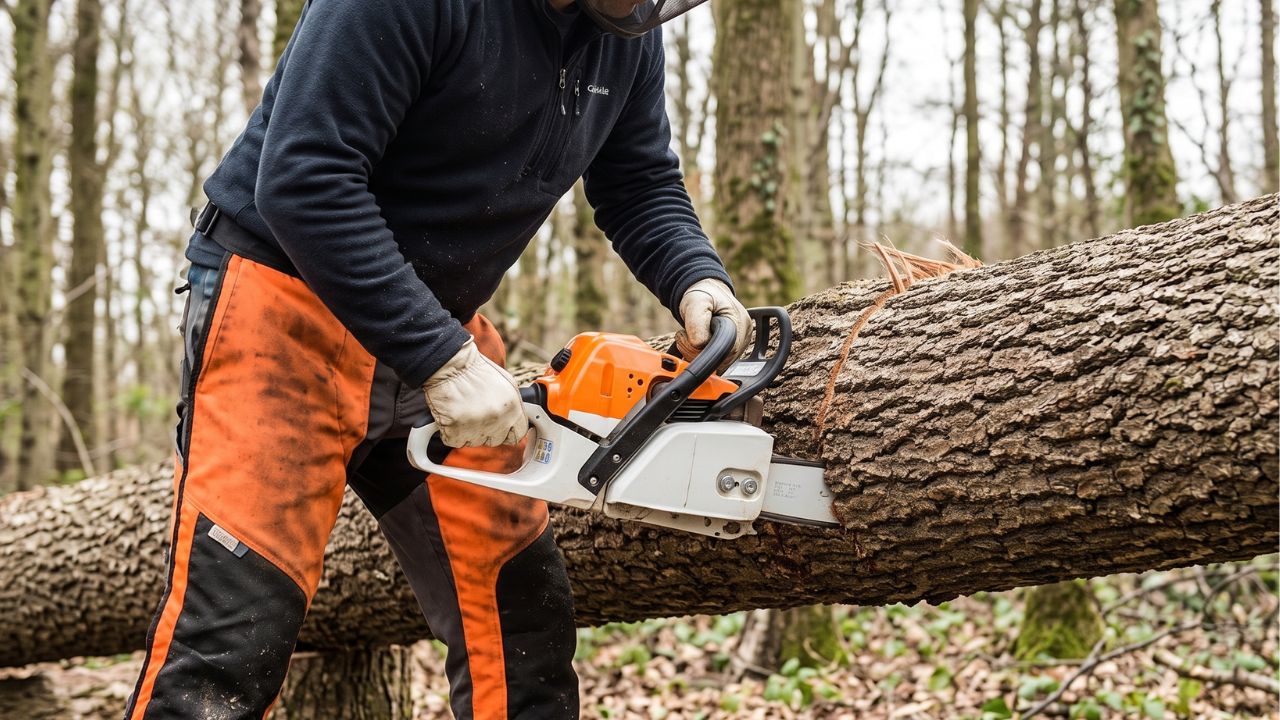
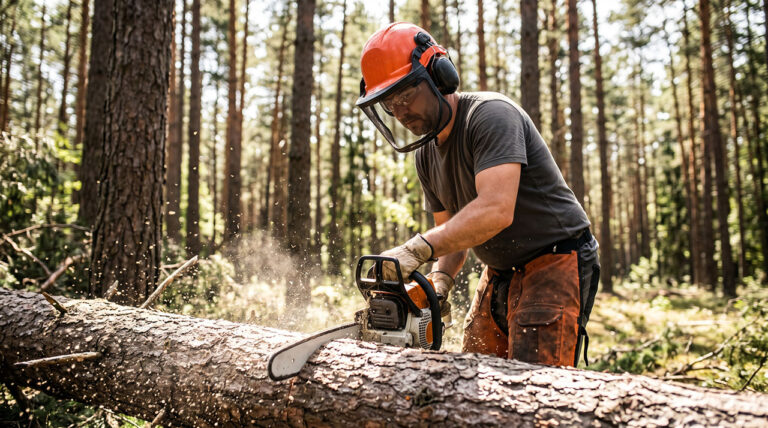
If you cut firewood or clear fallen trees long enough, you will eventually face a stuck saw. I still remember the first time it happened to me. I was bucking a large oak log. Halfway through the cut, the wood simply snapped shut. The chain stopped instantly. The bar was locked tight like a vise. I tried yanking it out, but that log was not letting go.
Learning how to get a chainsaw unstuck is a rite of passage. It is frustrating, slightly embarrassing, and completely normal. Over the years, I have pinched my bar more times than I care to admit. But I also learned exactly how to free it safely without bending the bar, burning up the engine, or getting hurt. This guide covers the real-world methods I use to rescue a trapped saw.
Why Chainsaws Get Stuck in the First Place
Before you can free a pinched saw, it helps to understand why the wood grabbed it. Trees and logs are incredibly heavy. When you cut into them, gravity takes over. The wood shifts.
The Hidden Weight of Wood
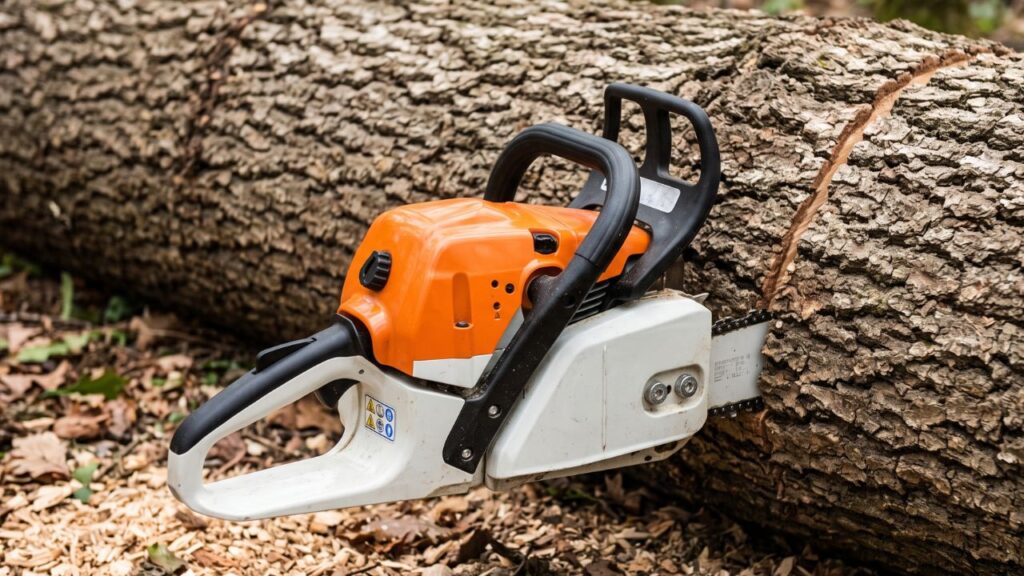
A single log can weigh thousands of pounds. When that weight shifts during a cut, it pinches the small gap you just made. We call this gap the kerf. If the kerf closes while your bar is inside, the saw is instantly trapped. You cannot overpower the weight of a tree with your bare hands.
Tension and Compression Explained
Every log resting on the ground has pressure points. These points are called tension and compression. Reading these forces is the secret to keeping your saw running freely. When I first started cutting, I ignored this completely. I paid for it by getting my saw stuck constantly.
| Wood State | What It Means | Where to Cut First |
| Compression | The side of the log being squeezed together. | Always start your cut here. |
| Tension | The side of the log being stretched apart. | Finish your cut on this side. |
First Steps When You Hear the Pinch
That sudden clunk sound is unmistakable. The log clamps down, and your engine bogs out. Your first reaction will probably be frustration. Take a breath. What you do in the next five seconds is critical.
Best Chainsaw My Honest Review
Shut It Down Immediately
Do not try to force the saw to run. The moment the bar gets pinched, take your finger off the throttle. If you keep revving the engine while the chain is trapped, you will burn out your clutch in seconds. I ruined a perfectly good clutch this way once. Just hit the kill switch and step back.
Assess the Danger Zone
Look at the log before you try to unstick the saw. Is the log resting on a hill? Could it roll over on your legs? Is it attached to a heavy root wad that might suddenly snap back? You need to make sure the area is safe. No tool is worth a broken leg. Once you know the wood is stable, you can start the rescue process.
How to Get a Chainsaw Unstuck (Methods That Actually Work)
There is no single magic trick to free a stuck bar. The right method depends on the size of the log and what tools you have nearby. I always try the easiest methods first before moving on to the heavy lifting.
Method 1: The Trusty Plastic Wedge (My Go-To)
Felling wedges are cheap, simple, and absolutely essential. I never go into the woods without two or three plastic wedges in my back pocket. When your saw is stuck, a wedge is usually the fastest way to get it out. You simply tap the wedge into the cut right behind the pinched bar.
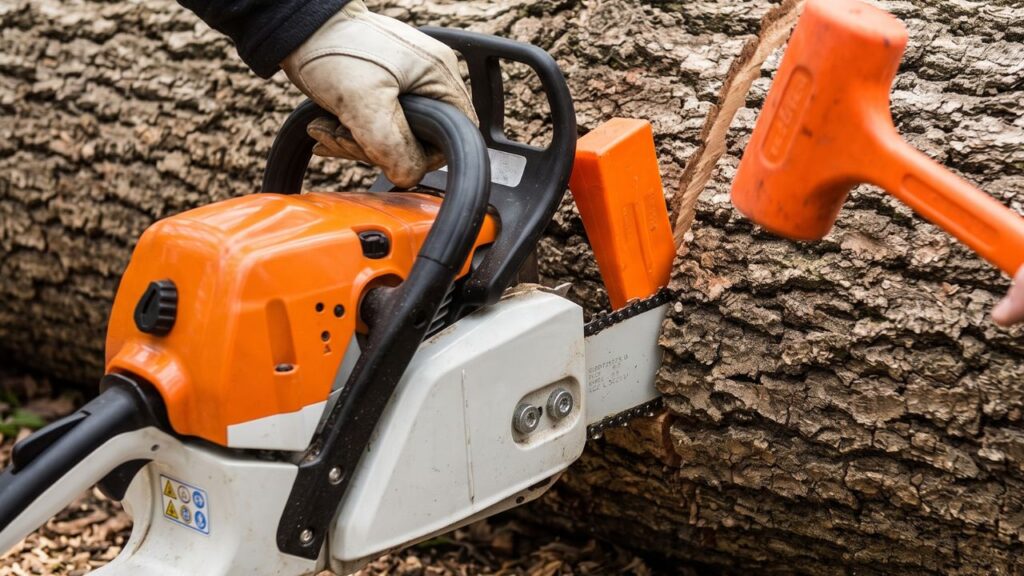
As the wedge drives deeper, it forces the wood apart. You will hear a loud crack as the log opens up. Once the gap is wide enough, you can slide your saw right out. Always use plastic wedges. If you accidentally hit a plastic wedge with your chain, it will just shave off some plastic. Hitting a metal wedge will instantly ruin a sharp chain.
| Bind Location | Wedge Placement | Action to Take |
| Top of the log | Hammer straight down behind the saw. | Lift the saw out carefully. |
| Bottom of the log | Tap gently upward from underneath. | Support the saw so it doesn’t drop. |
Method 2: Lifting or Rolling the Log
Sometimes, you can use raw leverage to free your saw. If the log is small enough, try lifting one end. This shifts the weight and opens the cut. Do not use your back for this. Use a sturdy branch or a metal digging bar as a lever.
Place a rock or a smaller chunk of wood near the stuck log. Put your heavy lever over the rock and under the stuck log. Push down on your lever. This lifts the heavy wood with very little effort. As the log lifts, the cut usually opens wide enough to free the bar.
Method 3: Using a Cant Hook or Peavey
A cant hook is a large wooden handle with a swinging metal hook on the end. It is designed to grip and roll heavy logs. If your saw is pinched from the side, rolling the log a few inches can completely release the pressure.
I bought a timberjack a few years ago. It is basically a cant hook with a built-in metal stand. You hook the log, pull back on the handle, and the tool lifts the log right off the ground. If you cut a lot of firewood on the ground, this tool will save you from getting stuck in the first place.
| Lifting Tool | Best Used For | Biggest Limitation |
| Cant Hook | Rolling logs over on flat ground. | Struggles with massive, old-growth logs. |
| Timberjack | Lifting medium logs off the dirt to cut. | Can sink into soft mud or snow. |
| Simple Lever | Quick fixes with nearby branches. | Branches can snap under heavy pressure. |
Method 4: The Second Chainsaw Rescue
This is a common method, but it comes with a warning. If you have a backup chainsaw, you can make a second cut to free the first one. You just cut a new slice a few inches away from the stuck saw.
However, you must be incredibly careful. If you do not read the wood correctly the second time, the log will pinch your backup saw too. I have seen guys get two saws stuck in the exact same log. It is a terrible feeling. Make sure you understand why the first saw got stuck before you bring in the backup.
When Everything Fails: The Powerhead Disconnect
Sometimes, the log is too massive to lift. Maybe you forgot your wedges at home. Maybe you do not have a second saw. When you are completely out of options, you have to leave the bar and chain behind and rescue the engine.
Detaching the Engine
This is the ultimate backup plan. It takes a little time, but it works safely. Take your scrench (the combination wrench and screwdriver that came with your saw) and loosen the bar nuts. Take the side cover off completely.
Once the cover is off, you can slide the heavy powerhead off the bar studs. Set your expensive engine safely to the side. Now, you just have a flat metal bar and a chain stuck in the tree.
Retrieving the Bar and Chain
With the engine out of the way, the bar is much easier to manage. You can usually wiggle it back and forth to work it out. If it is still jammed tightly, you will need a hand tool to finish the job.
I usually grab an axe and carefully chop away the wood around the bar. Be gentle. You do not want to hit the bar or the chain with your axe blade. Just chip away the wood until the pressure releases.
| Rescue Tool | How It Helps Unstick the Saw |
| Scrench | Removes the engine cover to detach the saw. |
| Felling Axe | Chops away tension wood around a trapped bar. |
| Hand Saw | Finishes a cut safely without risking another engine. |
Mistakes I Made When Trying to Free a Pinched Saw
When you are stressed out in the woods, it is easy to make bad decisions. I have made plenty of them. Learning what not to do is just as important as knowing the right steps.
Yanking and Pulling Like Crazy
When the saw gets stuck, your first instinct is to pull it out by the rear handle. A little wiggling is fine. But if you brace your feet and yank with all your strength, you are going to break something.
Chainsaw bars are tough, but they are not meant to bend sideways. If you pull too hard, you will permanently warp the bar. Once a bar is bent, it will never cut straight again. You will end up cutting curved slices of firewood forever. Save your strength and use a wedge instead.
Throttle Through the Bind (A Huge Mistake)
I mentioned this earlier, but it is worth repeating. Sometimes the pinch is slow. You feel the wood starting to squeeze the bar. You might think, “If I just give it full throttle, I can cut through before it traps me.”
This never works. The wood is always stronger. Revving the engine just creates massive friction. The chain stops moving, but the engine keeps spinning. This melts the clutch drum, scorches the plastic casing, and ruins the drive sprocket.
| Common Mistake | The Result | A Better Idea |
| Yanking hard on the handle. | Bending the guide bar permanently. | Use a wedge to open the gap. |
| Revving a trapped chain. | Burning up the clutch system completely. | Turn the saw off immediately. |
| Kicking the saw body. | Breaking the plastic housing or handle. | Detach the powerhead from the bar. |
How to Avoid Getting Your Chainsaw Stuck Next Time
The best way to handle a stuck chainsaw is to never get it stuck at all. Once you learn how wood behaves, you can anticipate the pinch before it happens. It just takes a little observation before you squeeze the throttle.
Reading the Wood Before You Cut
Walk around the log before you start cutting. Look at how it is resting on the ground. Is it supported on both ends like a bridge? Or is it supported in the middle like a seesaw?
If the log is supported on both ends, the top of the log is in compression. It wants to fold inward. If you cut from the top down, the wood will eventually pinch your bar. If the log is supported in the middle, the bottom is in compression.
Mastering the Overbuck and Underbuck
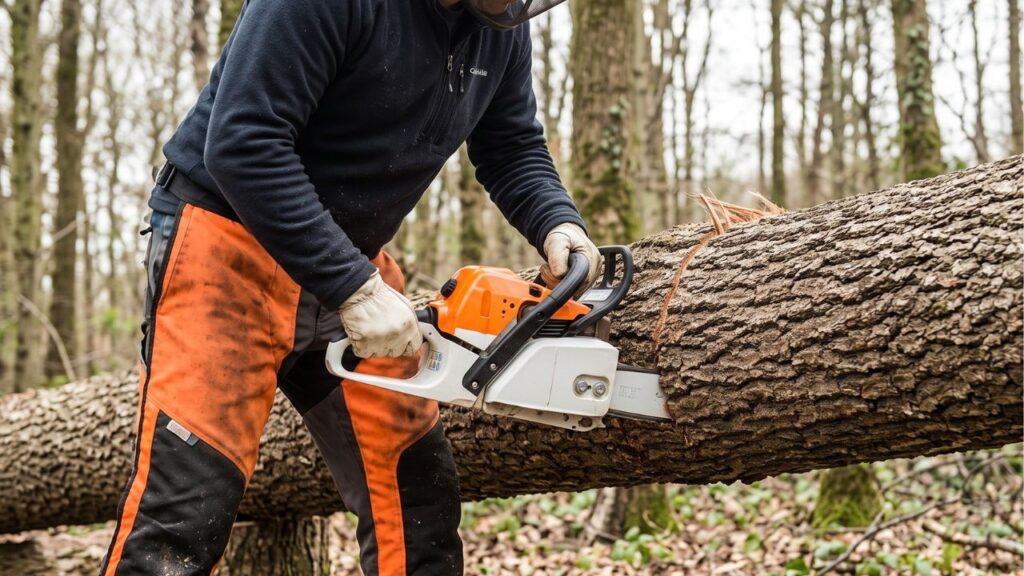
To avoid getting stuck, you need to use two different types of cuts. An overbuck is cutting straight down from the top. An underbuck is cutting upward from the bottom of the log.
If the top of the log is compressing, start by cutting a third of the way down from the top. Then, move your saw underneath and finish the cut by slicing upward. The cut will open up naturally, and your saw will drop free. It takes practice to match up the cuts perfectly, but it prevents 90 percent of all pinched bars.
| Cut Name | Starting Point | Finishing Point |
| Overbuck | Top of the log. | Bottom of the log. |
| Underbuck | Bottom of the log. | Top of the log. |
Final Thoughts
Learning how to get a chainsaw unstuck is a skill every woodcutter needs. The biggest lesson I ever learned was to simply slow down. Getting angry or trying to force the saw out using brute strength always leads to damaged equipment or dangerous situations. Keep a couple of plastic wedges in your pocket, learn to read the tension in the wood, and accept that getting stuck occasionally is just part of the job.
Eventually, reading the wood becomes second nature. You will instinctively know when to overbuck, when to underbuck, and when to pause and tap a wedge into the kerf. Until then, work safely, keep your spare tools nearby, and never panic when you hear that inevitable pinch.