Cutting Tree Branches With Chainsaw: My Practical Guide
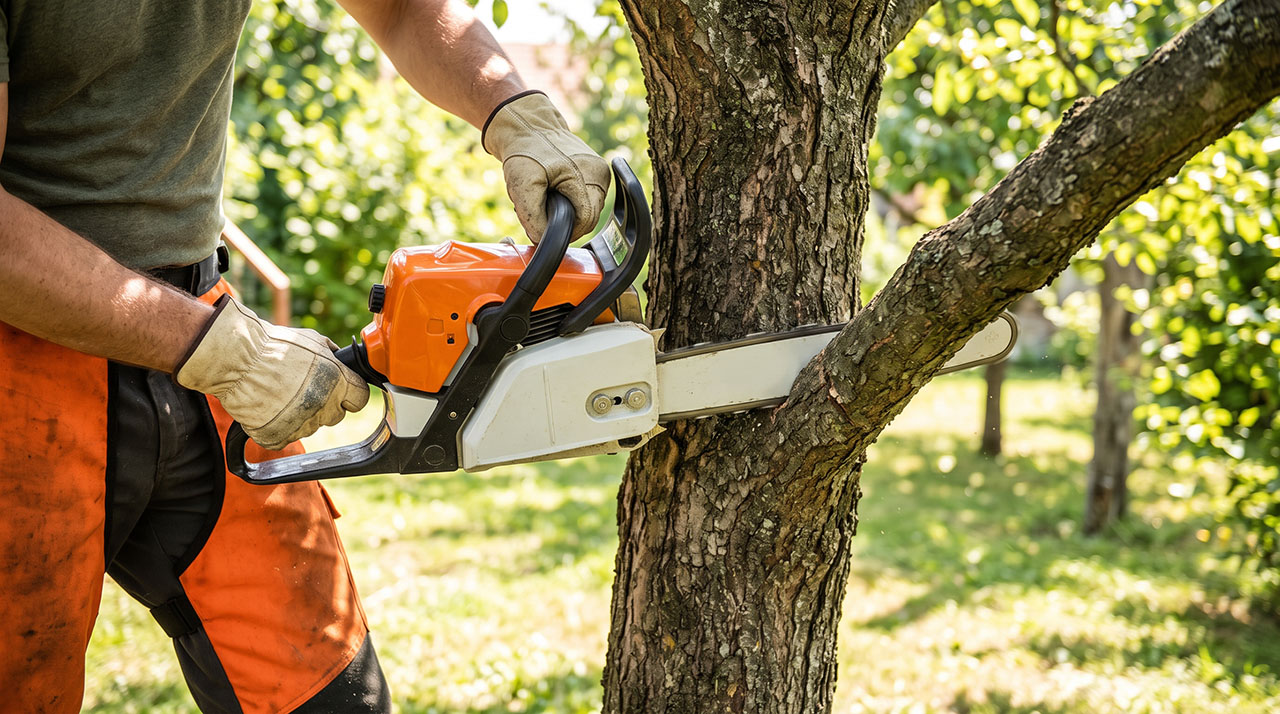
I still remember the first time I tried cutting tree branches with chainsaw in hand. I thought I could just walk up to my overgrown oak tree, pull the trigger, and let the tool do all the hard work. I quickly learned exactly how fast things can go wrong in the yard.
Between getting my blade pinched in heavy wood and nearly taking a falling limb to the shoulder, I realized tree work requires a strict system. Over the years, I have dropped hundreds of limbs and learned how to read wood tension, avoid dangerous kickback, and make clean cuts that actually heal. If you want to clean up your property without ruining your saw or getting hurt, here is exactly what I have learned.
Why Cutting Tree Branches With Chainsaw Needs Respect
Working with live trees is entirely different from cutting flat lumber on a workbench. Branches are heavy, unpredictable, and constantly under pressure.
| Common Myth | The Dangerous Reality |
| Any cut will do | Bad cuts cause bark tearing and tree rot. |
| Gravity does the work | Gravity pinches your blade if you cut wrong. |
| Thinner branches are safer | Thin branches can whip back and hit you. |
Understanding Wood Tension
Every branch hanging off a tree is under stress. If you do not understand where that pressure is, you will trap your saw.
I used to just hack straight down from the top of a branch. Almost every time, the wood would pinch together as it bowed, trapping my metal bar. You have to learn to spot the tension side (where the wood fibers are stretching) and the compression side (where the wood is squeezing together). You always want to make your final cut on the tension side so the cut opens up as the branch falls.
The Hidden Danger of Kickback
Kickback is the scariest part of running a saw. It happens when the upper half of the chainsaw bar tip touches something solid.
Ryobi 40 Volt Chainsaw Reviews
The spinning chain grabs the wood instead of cutting it. The force violently throws the saw backward, straight toward your face. I had this happen once while trying to reach a tangled branch, and it terrified me. Now, I constantly watch where the tip of my bar is pointing, and I never use that section to make a cut.
The Safety Gear I Actually Wear Now
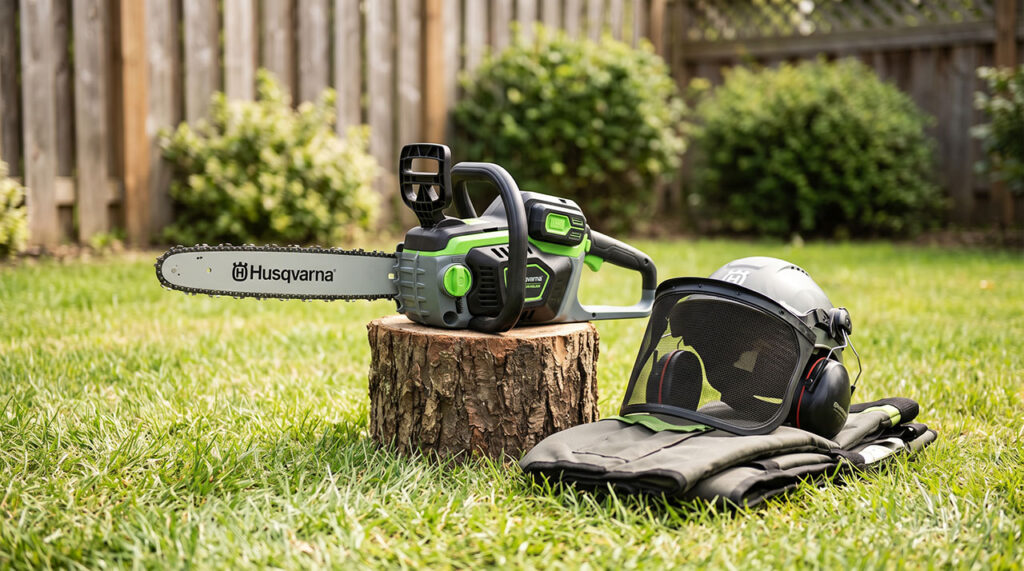
When I first started, I thought a basic pair of safety glasses was enough. That was a huge mistake.
| Safety Gear | Why I Actually Wear It |
| Chainsaw Chaps | Stops the chain instantly if I slip. |
| Helmet with Visor | Blocks snapping branches from my face. |
| Leather Gloves | Prevents blisters and improves grip. |
How Chainsaw Chaps Save Legs
Chainsaw chaps look heavy and uncomfortable, but I never cut without them. They are not just thick fabric.
They are packed with layers of loose Kevlar fibers. If a running chain hits your leg, those fibers pull out, wrap around the chainsaw sprocket, and jam the motor in a fraction of a second. It ruins the chaps, but it saves your leg. That is a trade I will make every single day.
Don’t Forget Your Ears
Gas saws are incredibly loud. Even battery-powered saws whine at a high pitch that damages your hearing over time.
I used to just deal with the ringing in my ears after a day of yard work. Now, I use a forestry helmet that has earmuffs attached directly to the sides. It blocks out the engine noise but still lets me hear if a branch starts cracking or tearing above me.
My 3-Step Method for Clean Cuts
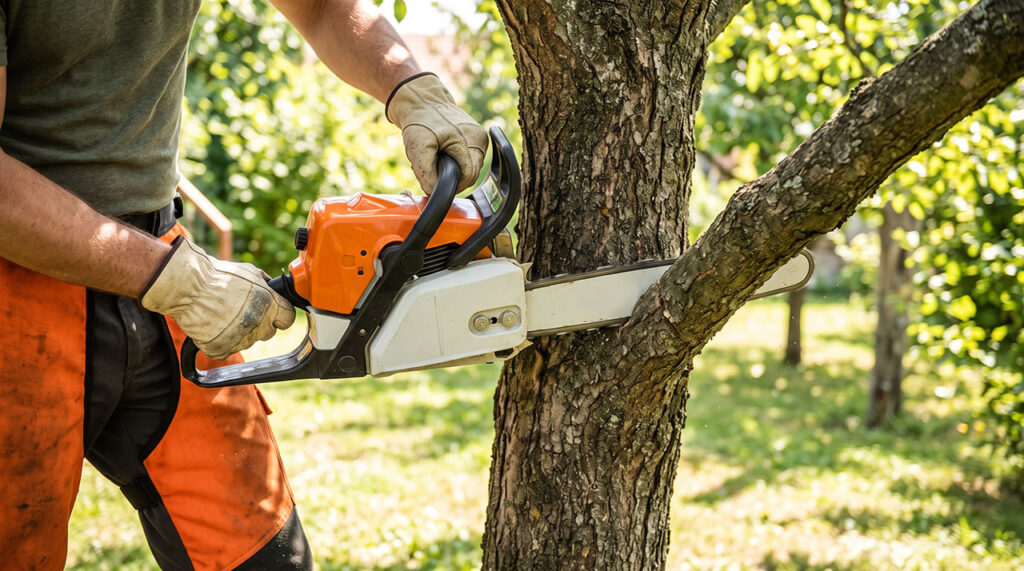
If you just cut a branch straight through from the top, the weight will snap the wood before you finish. This rips a long, ugly strip of bark right down the tree trunk.
| Step in the Process | Why I Do It This Way |
| 1. The Undercut | Stops bark from tearing down the trunk. |
| 2. The Relief Cut | Removes the heavy weight safely. |
| 3. The Final Cut | Leaves a clean surface so the tree heals. |
Step 1: The Crucial Undercut
Never start your cut at the trunk. Move about a foot away from the tree base.
Reach under the branch and cut about one-third of the way up into the bottom. This acts as a hinge break. If the branch falls suddenly, the tearing bark stops the moment it hits this bottom cut. It protects the main trunk from lasting damage.
Step 2: The Relief Cut
Move another inch or two further out on the branch, away from the tree.
Cut straight down from the top. Because you already made your undercut, the branch will drop cleanly to the ground once you reach the middle. The heavy weight is now gone, and your saw stays completely free from getting pinched.
Step 3: The Final Clean Cut
Now you just have a short, lightweight stub left attached to the tree.
Look closely at the base. You will see a swollen ring of bark where the branch meets the trunk. This is called the branch collar. Cut just outside this collar. Do not cut flush against the trunk. The tree stores healing cells in that collar, and leaving it intact helps the tree seal the wound quickly.
Frustrating Mistakes I Made Early On
Learning how to run a saw meant making plenty of mistakes. Some were just annoying, but others taught me hard lessons about cutting tree branches with chainsaw power.
| Common Mistake | My Better Approach |
| Cutting with the bar tip | I always cut with the middle of the bar. |
| Yanking a stuck saw | I turn it off and use a plastic wedge to free it. |
| Reaching above my head | I use a pole saw for high branches instead. |
Getting the Chainsaw Bar Stuck
Getting your bar stuck in a log is embarrassing. It happens to everyone, but pulling and yanking on the saw is terrible for the tool.
If my blade gets pinched now, I do not fight it. I keep a cheap plastic felling wedge in my pocket. I turn the saw off, tap the wedge into the top of the cut to pry the wood open, and simply lift my saw out. It saves time, saves my back, and saves the chain from bending.
Cutting Too High
Chainsaws are heavy. When you lift them above your shoulders, you lose all your leverage and control.
I used to try reaching just a little bit higher to grab a stubborn branch. It is a terrible habit. If the saw kicks back when your arms are fully extended upward, you cannot stop it. If a branch is above my chest, I put the chainsaw down and grab a manual pole saw instead.
Handling Difficult Branches on the Ground
Cutting tree branches with chainsaw effort is only half the job. Once the limbs are in the grass, you have to cut them into manageable firewood or green waste chunks.
| Ground Issue | How I Handle It |
| Hitting rocks or dirt | Cut halfway, roll the log, then finish the cut. |
| Tangled brush piles | Start from the outside and work inward. |
| Wood under pressure | Cut the compression side first, then the tension. |
Watch Out for Spring Poles
When a heavy tree branch falls on a smaller sapling or branch, it bends that smaller wood to the ground.
That bent wood becomes a loaded spring. If you cut straight through it blindly, it will snap up violently and hit you in the face or chest. When I see a bent branch under tension, I carefully shave the inside curve of the bend first. This slowly releases the pressure until the branch safely cracks on its own.
Keeping the Chain Out of the Dirt
Hitting the dirt with your chain dulls the teeth instantly. Soil is full of tiny rocks and sand that destroy a sharp edge.
One second of cutting into the soil means twenty minutes of hand sharpening. I never cut completely through a log while it rests flat on the grass. Instead, I cut halfway through all the branches along the trunk. Then, I roll the entire log over and finish the cuts from the top.
Simple Maintenance That Makes Cutting Easier
A dull saw is a dangerous saw. When you have to push and force the blade down into the wood, you are bound to slip.
| Saw Symptom | My Quick Fix |
| Making fine sawdust | The chain is dull. I stop and sharpen it. |
| Cutting in a curve | One side of the chain teeth is damaged. |
| Chain is smoking | Bar oil is empty, or the oil hole is blocked. |
Reading Your Sawdust
You can tell exactly how healthy your chain is just by looking at the ground.
A sharp chain pulls out large, thick chips of wood. It feels like the saw is pulling itself into the branch. If your saw starts spitting out fine, powdery sawdust, the teeth are dull. I immediately stop and touch up the chain with a round file. Forcing a dull saw just burns up the motor.
Checking Chain Tension
Chains stretch as they get hot from friction. A loose chain can hop off the bar and hit your legs.
I check my tension every single time I add gas or swap a fresh battery. You want the chain snug against the bottom rails of the bar, but loose enough that you can easily pull it around the bar with your gloved hand. If it hangs down loosely, tighten it up before you make another cut.
Final Thoughts
Learning the right way to approach this job changed everything about how I maintain my property. It took a few scary moments and some ruined bark to realize that reading wood tension is a skill you have to practice. Cutting tree branches with chainsaw tools is incredibly satisfying once you stop fighting the wood and start working with its natural gravity.
Take your time, always wear your chaps, and never rush a messy cut. A chainsaw is an amazing tool when you respect its power and limitations. The slower and more methodical you are, the faster the job actually gets done. What is the biggest, ugliest branch on your property that you have been putting off cutting?