How to Fix a Flooded Chainsaw Engine Fast

I still remember standing in the freezing woods, yanking the pull cord of my chainsaw until my shoulder ached. The air smelled heavy with raw gas, and my pile of uncut firewood sat there mocking me. It was deeply frustrating. I eventually learned that figuring out how to fix a flooded chainsaw engine is a rite of passage for anyone who cuts their own wood.
Once you understand what is happening inside that small engine, fixing it becomes incredibly easy. You do not need to be a master mechanic to clear a flooded saw. You just need a few basic tricks, a little bit of patience, and a standard chainsaw wrench. Today, I am going to share exactly how I clear out flooded engines and get back to work without wasting half the day.
Recognizing a Flooded Chainsaw
Before you start tearing things apart, you need to make sure the saw is actually flooded. Sometimes a saw just has a bad spark plug or old fuel.
The Telltale Signs
The biggest giveaway is the smell. If you sniff near the muffler and smell strong, unburned gasoline, you probably have a flooded engine. You might also notice the pull cord feels different. Sometimes it pulls easier than normal because the gas washed away the oil seal. Other times, it might feel completely locked up.
| Symptom | Flooded Engine | Normal Engine |
| Smell | Strong raw gas odor | Faint exhaust smell |
| Sound | Deep, hollow thuds | Sharp, snappy pops |
| Spark Plug | Wet and dark | Dry and light brown |
Why Flooding Happens in the First Place
A flooded engine simply means there is too much liquid gas in the cylinder and not enough air. Spark plugs cannot ignite liquid fuel. They can only ignite fuel vapor mixed with air.
Most of the time, this happens because of user error. I used to do this all the time. I would leave the choke fully closed and keep pulling the cord long after the engine tried to start. Every time you pull the cord with the choke on, the carburetor dumps more liquid gas directly into the engine.
| Common Mistake | What Actually Happens |
| Ignoring the “burp” | Engine takes in too much gas |
| Pumping primer bulb too much | Forces extra fuel into the lines |
| Pulling choke on a warm saw | Instantly drowns the hot cylinder |
How to Fix a Flooded Chainsaw Engine (The Fast Way)
When you are out in the woods, you do not want to take your saw completely apart. You want a fast fix. This is the exact method I use first.
Step 1: Prep and Safety First
Always start by turning the master switch to the “off” position. You do not want the saw firing up unexpectedly while you are messing with the throttle.
Set the chainsaw down on a flat, solid surface. Make sure the chain brake is engaged. You always want the saw securely locked down when you are trying to clear a stubborn engine.
Step 2: The Open Choke Method
This trick works for a mildly flooded saw. It clears the engine without needing any tools. First, push the choke lever completely in. You want the choke fully open to let maximum air inside.
Next, squeeze the throttle trigger all the way down and hold it there. You can use your knee to hold the saw down, leaving one hand for the throttle and one for the pull cord. Pull the cord five to ten times quickly. Holding the throttle open forces fresh air through the engine, which pushes the rich gas vapor out the muffler.
| Method | Best For | Time It Takes |
| Open Choke Pulls | Mildly flooded engines | 1 minute |
| Spark Plug Removal | Badly flooded engines | 5 minutes |
| Overnight Rest | Stubborn, unfixable saws | 12 to 24 hours |
Step 3: The Spark Plug Removal Trick
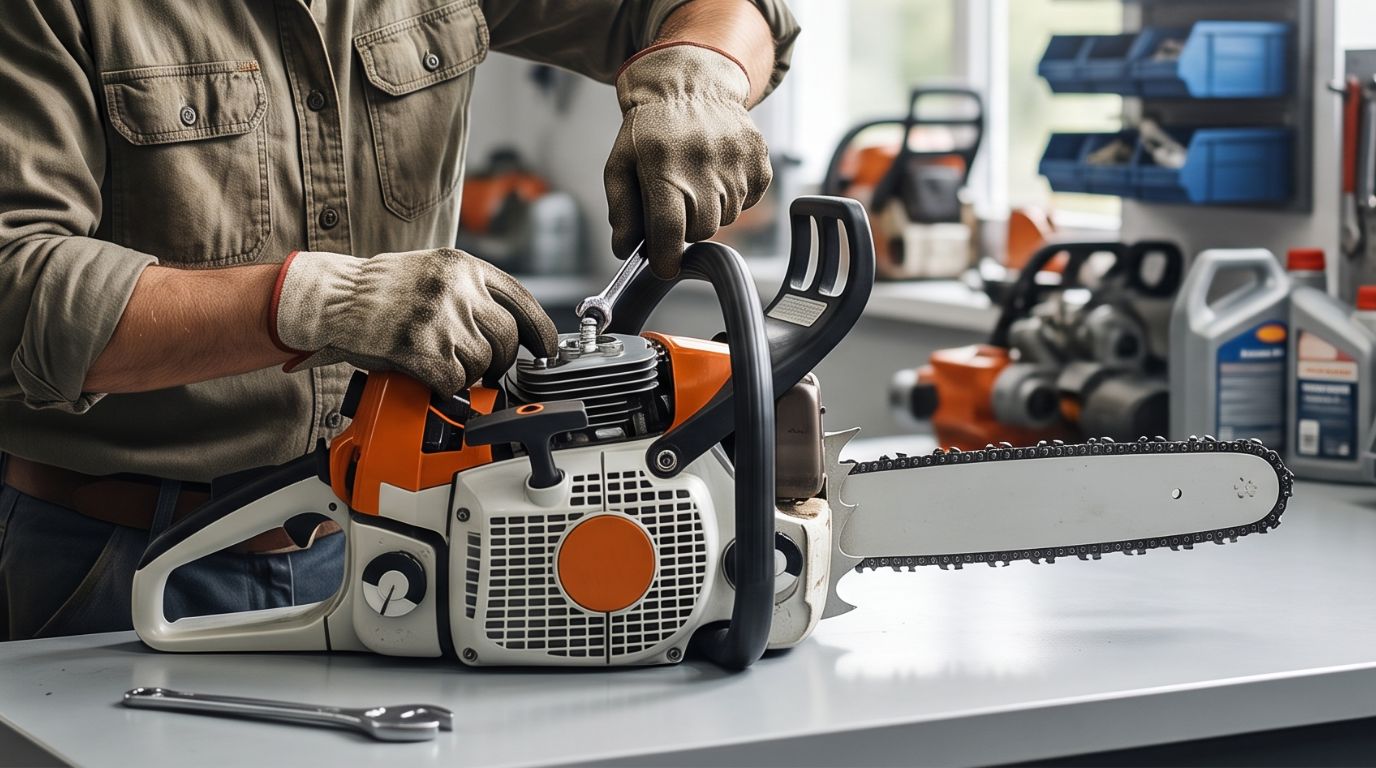
If holding the throttle open did not work, the engine is deeply flooded. You will need your scrench tool for this. This is the heavy-duty way to fix a flooded chainsaw engine.
Take the top plastic cover off your chainsaw. Pull the rubber boot off the spark plug. Use your scrench to unscrew the spark plug completely. Look at the tip of the plug. If it is dripping wet with dark liquid, you know for sure the engine is flooded.
Advanced Tricks If the Engine Still Won’t Turn Over
Sometimes, you pull a spark plug out and find an absolute mess. The cylinder is basically swimming in gasoline. You have to get that liquid out.
Drying Out the Cylinder
This is my favorite trick. With the spark plug completely removed, turn the chainsaw upside down. Point the open spark plug hole toward the ground.
Make sure the ignition switch is turned off. Now, pull the starter cord briskly a few times. You will likely see a misty spray of raw gasoline shoot out of the hole. Keep pulling until the mist stops. You are physically pumping the trapped liquid out of the machine.
Checking for a Fouled Plug
A wet spark plug will not create a spark. Even if you clear the cylinder, a soaked plug will just leave you stranded again.
I usually wipe the plug dry with a clean rag. If I am in a hurry, I will blow on it or let it sit in the sun for a few minutes. If the plug looks completely black, fouled, or burnt, just replace it. I always keep a spare spark plug in my chainsaw case for exactly this reason.
| Part | Sign of Trouble | Action Needed |
| Spark Plug Tip | Wet with raw gasoline | Wipe dry and let air out |
| Plug Electrodes | Covered in black soot | Clean with a wire brush |
| Porcelain Base | Cracked or chipped | Replace immediately |
Mistakes I Made When Learning to Unflood Saws
I made every mistake in the book when I first started using chainsaws. I ruined parts and wasted hours trying to force a saw to run.
Pulling the Cord Forever
When a saw won’t start, human nature tells you to pull harder and faster. I used to yank the cord until my arm gave out. This is the worst thing you can do.
If the choke is on, pulling the cord thirty times just pumps thirty times more fuel into the cylinder. Eventually, the cylinder gets so full of liquid that it creates a vapor lock. The cord will physically stop moving. I actually broke a starter rope doing this once. If a saw does not start after five pulls, stop and change your approach.
Using Ether or Starting Fluid
This is a dangerous mistake. Older mechanics love using starting fluid on old trucks. Do not ever use starting fluid on a two-stroke chainsaw engine.
Two-stroke engines get their internal lubrication from the oil mixed into the gasoline. Starting fluid strips that oil right off the metal walls. If you spray ether into the carburetor, the engine might fire up briefly, but it runs completely dry. This will score the piston and destroy your engine very quickly.
| What People Do | Why It Fails | What to Do Instead |
| Pull the cord 50 times | Floods engine worse | Stop after 5 pulls |
| Spray starting fluid | Ruins engine lubrication | Clear cylinder manually |
| Leave choke on forever | Starves engine of air | Open choke after a pop |
How to Prevent Your Chainsaw From Flooding Again
Fixing a flooded saw is annoying. Preventing it from happening in the first place is much better. You just need to develop a solid starting routine.
The Right Starting Routine
Every chainsaw has a sweet spot. When starting a cold saw, put the choke on fully. Press the primer bulb three or four times. Do not push it ten times.
Now, pull the cord. Listen very closely. Usually, on the third or fourth pull, the saw will make a brief “pop” or “burp” sound. It will try to start and immediately die. The second you hear that pop, push the choke in. If you pull it again with the choke on, you will flood it. Once the choke is off, pull the cord again. It should start right up.
| Starting Step | Choke Position | Throttle Position |
| Cold Start Pulls | Fully Closed (On) | Locked on fast idle |
| After the First Pop | Fully Open (Off) | Locked on fast idle |
| Warm Start Pulls | Fully Open (Off) | Normal resting idle |
Adjusting the Carburetor (When Needed)
If your chainsaw floods constantly, even when you do everything right, you might have a carburetor issue. The saw might be running too rich.
A rich engine is getting too much fuel and not enough air by default. You can usually tweak this with a tiny screwdriver on the side of the saw. Look for the screws marked “H” (High) and “L” (Low). Turning the L screw slightly clockwise leans out the fuel mixture. If you are not comfortable doing this, take it to a small engine shop. It is a quick and cheap fix for a professional.
Final Thoughts
Learning how to fix a flooded chainsaw engine saves a massive amount of frustration. It turns a ruined afternoon into a minor five-minute delay. Once I figured out the upside-down pulling trick, I stopped dreading those moments when my saw refused to start.
Just remember to take your time. Listen for that first engine pop when starting cold, and respect the choke lever. Keep a clean rag and a spare spark plug in your tool kit. If you treat the machine right and understand how it breathes, you will rarely have to deal with a flooded engine again.