How to Safely Cut Firewood With a Chainsaw
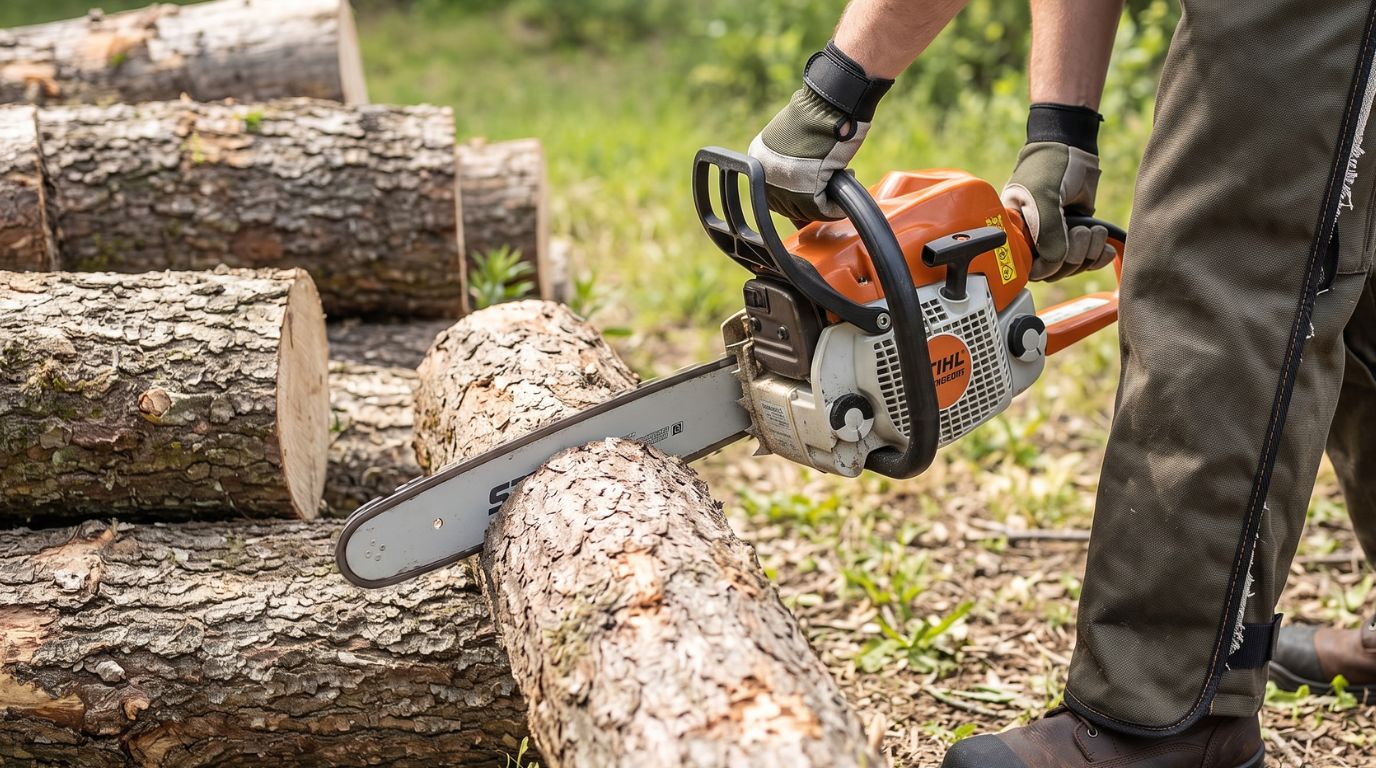
Learning how to safely cut firewood with a chainsaw took me years of trial and error. I still remember the first time I pulled the cord on my 50cc saw. My hands were sweating, and I had no idea how easy it was to get a metal bar stuck in a thick oak log.
Today, heating my home with wood is my favorite winter chore. But respecting the tool is the only way to keep all your fingers and toes. In this guide, I will share the real-world lessons, embarrassing mistakes, and simple safety habits that keep me safe in the woods.
The Safety Gear That Actually Saved My Shins
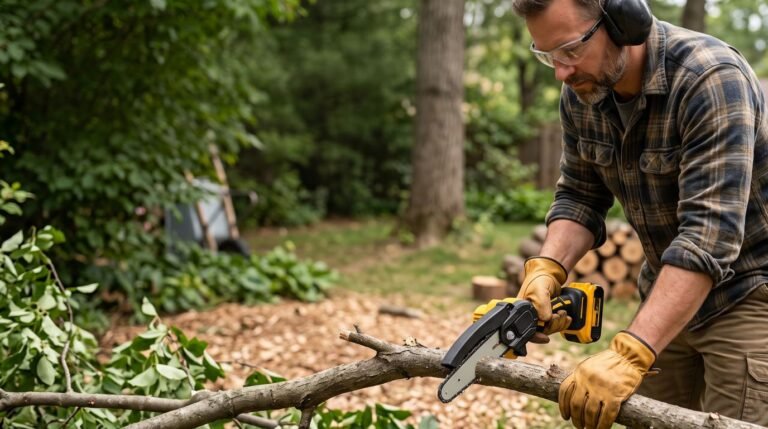
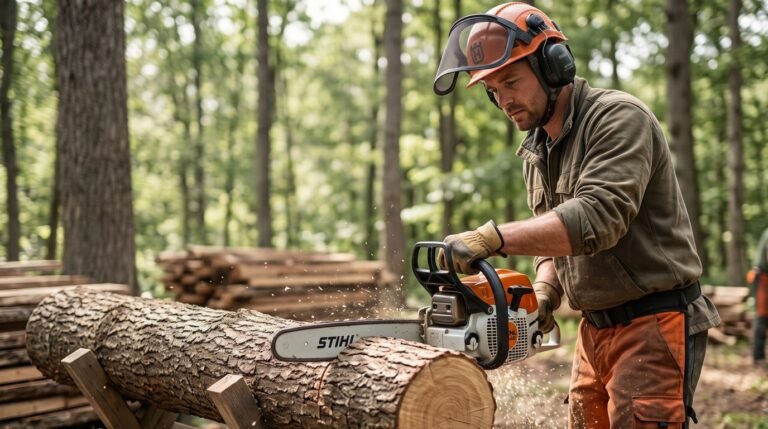
When I first started, I wore jeans, work gloves, and sunglasses. That was a huge mistake. A moving chainsaw chain can cut through denim in less than a second. Good safety gear is not about looking professional. It is about going home in one piece.
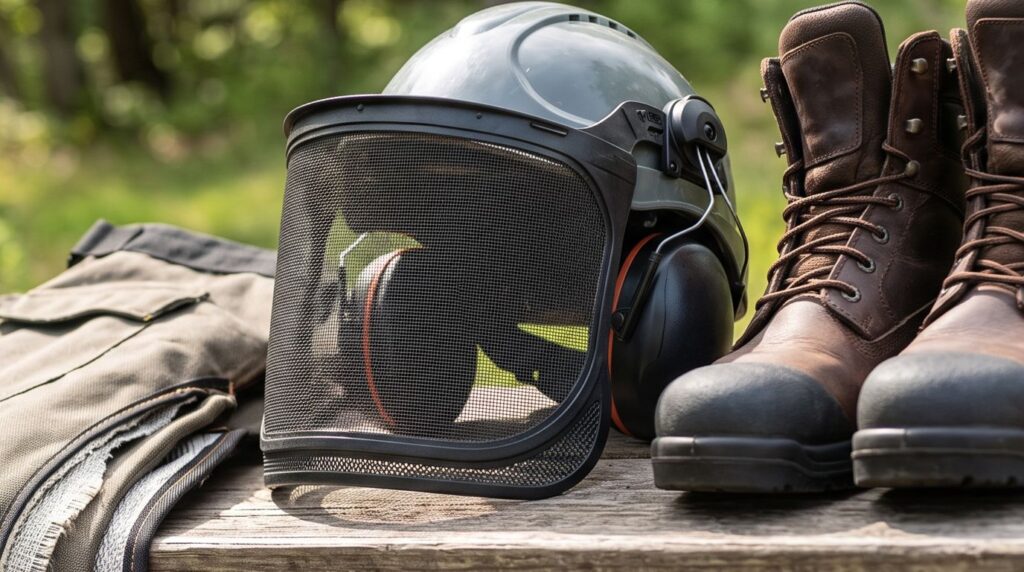
| Safety Gear Item | What Beginners Think | The Real Safety Value |
| Chainsaw Chaps | “Jeans are thick enough.” | Special fibers jam the sprocket and stop the chain instantly. |
| Mesh Face Shield | “Safety glasses are fine.” | Stops flying wood chips from hitting your face and eyes. |
| Steel-Toe Boots | “Sneakers give me better grip.” | Protects your toes from falling logs and accidental blade drops. |
Why Chainsaw Chaps Are Non-Negotiable
You might think you have great control over your saw. I thought so too, until I hit a hidden knot in a maple log. The bar bounced off the wood and swung down toward my left leg.
My chaps caught the chain before it touched my skin. The Kevlar layers pulled out, wrapped around the drive sprocket, and choked the engine dead in a split second. Buying a forty-dollar pair of chaps saved me thousands of dollars in hospital bills. Never start your saw without them.
Best Chainsaw Chain for Cutting Firewood
Setting Up Your Work Area for Success
Most cutting accidents do not happen because the saw malfunctions. They happen because people trip over branches or lose their footing on uneven ground. You need a clean, stable space to work.
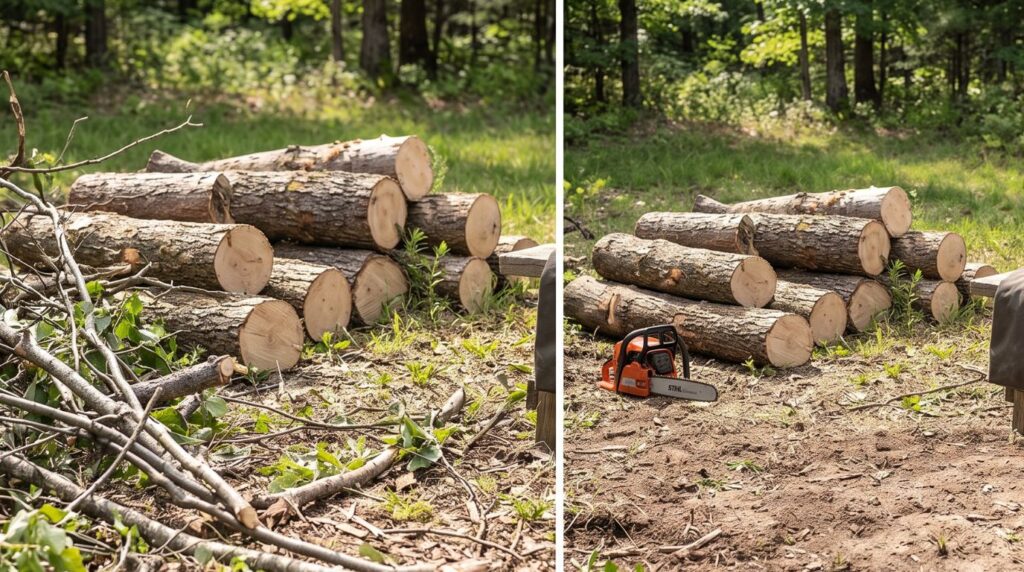
| Work Area Hazard | Why It Is Dangerous | My Quick Fix |
| Loose branches on ground | Causes trips while carrying a running saw. | Clear a 10-foot circle around your wood pile before cutting. |
| Sloped ground | Logs can roll toward your shins after a cut. | Always stand uphill from the log you are cutting. |
| Mud or snow | Slippery footing leads to accidental blade contact. | Spread wood chips or gravel to create a solid stance. |
Why Ground Clearing Matters
I used to wade right into a pile of fallen branches and start slicing. My feet were tangled in brush, and my balance was terrible. Once, I stumbled backward while the chain was still spinning.
Now, I take ten minutes to clear my work area before I even fuel up my saw. I toss loose limbs out of the way. I make sure I have a clear path to step backward if a log rolls. That ten-minute prep makes the actual work faster and much safer.
Step-by-Step Technique: How to Safely Cut Firewood With a Chainsaw
Knowing how to safely cut firewood with a chainsaw is all about controlling the wood and controlling your body. If you force the saw, you will make mistakes. Let the weight of the machine do the hard work for you.
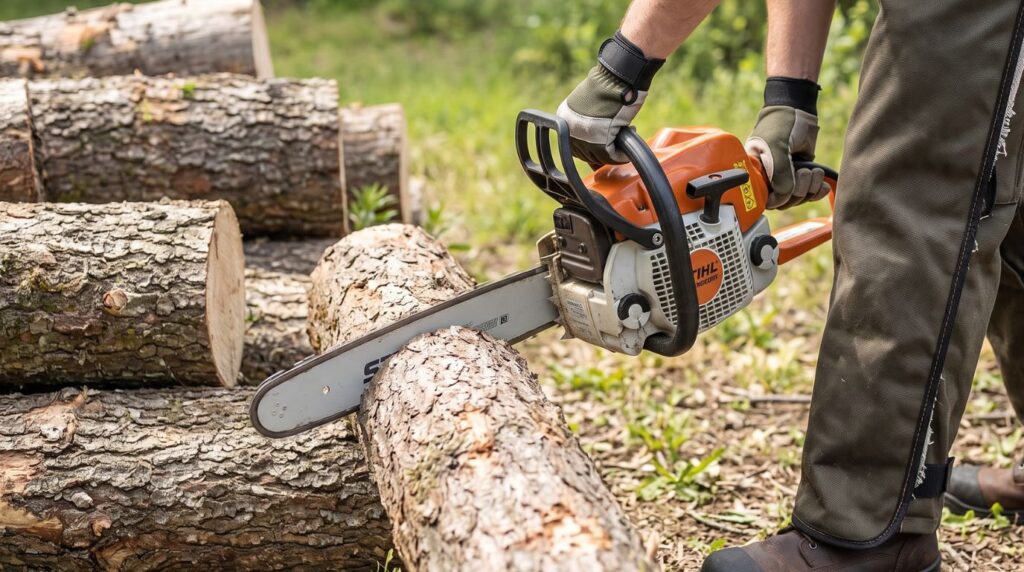
| Step | Proper Action | Why This Keeps You Safe |
| 1. Stance | Plant feet shoulder-width apart. | Gives you balance if the saw suddenly kicks or drops. |
| 2. Grip | Wrap your left thumb under the handle. | Stops the saw from ripping out of your hands during kickback. |
| 3. Throttle | Run the engine at full speed before touching wood. | Prevents the chain from grabbing and jerking the log. |
The Golden Rule of Bucking Logs
Bucking is simply cutting a long fallen tree into smaller firewood lengths. The biggest danger here is pinching your bar. Wood is heavy, and it bends as you cut it.
Think of a log like a giant bent rubber band. One side is pulling apart. We call this the tension side. The other side is squeezing together. We call this the compression side. If you cut the compression side first, the wood will pinch your chain and trap your saw.
How to Read Wood Tension and Avoid Pinching
Learning to read the bend in a log was a turning point for my cutting speed. Before I understood tension, I spent half my afternoon getting my saw unstuck.
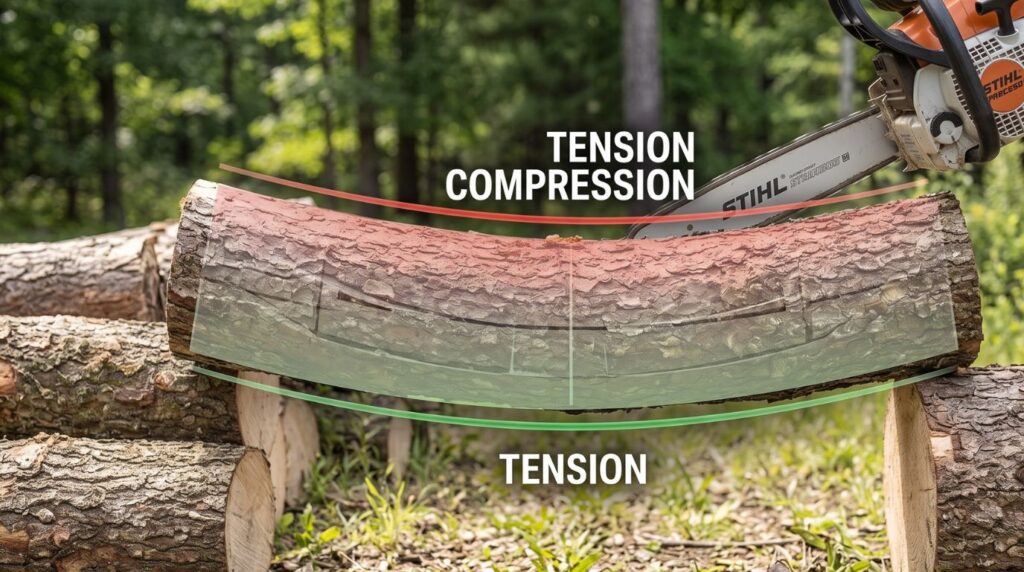
| Wood Position | Where the Compression Is | How I Make the Cut |
| Supported on both ends | Top of the log | Cut 1/3 from top, then finish from bottom. |
| Supported on one end | Bottom of the log | Cut 1/3 from bottom, then finish from top. |
| Flat on flat ground | Top of the log | Cut 3/4 through, roll log over, finish from top. |
What to Do When Your Saw Gets Stuck
Even experienced cutters get their saws trapped sometimes. When it happens to me, I never yank or twist the handles. Pulling hard can bend your bar or break your vibration mounts.
Instead, turn off the engine immediately. Use a stout wooden lever or a log jack to lift the wood slightly. This opens the cut and releases the blade. If the log is too heavy, I use a cheap plastic felling wedge. I tap the wedge into the top of the cut with a hammer to push the wood open.
Understanding and Beating Chainsaw Kickback
Kickback is the fastest and scariest thing that can happen when you cut firewood. It happens when the top half of the bar tip touches wood or a solid object. The chain grabs the wood and throws the whole saw upward toward your face.
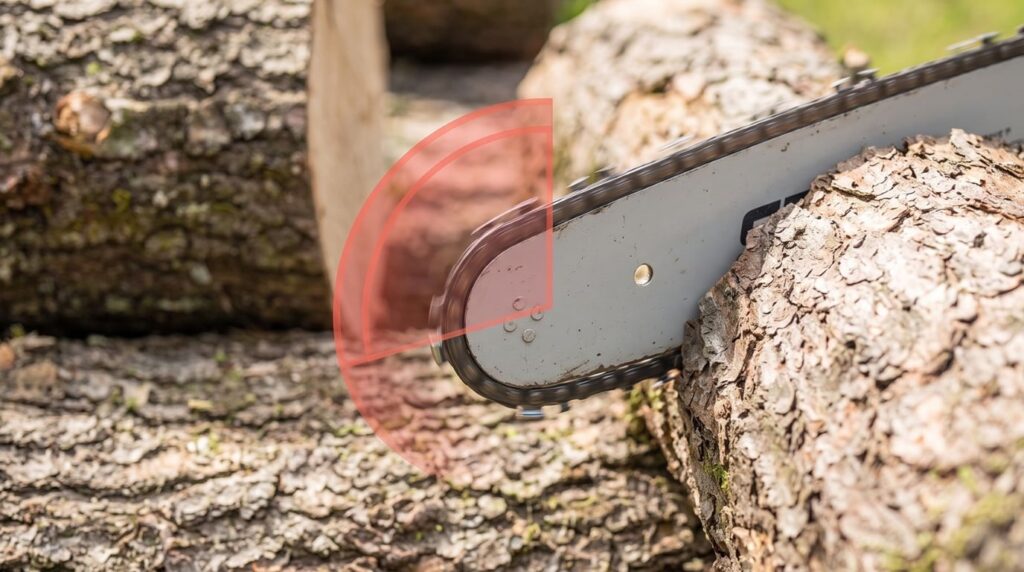
| Kickback Factor | How It Happens | My Prevention Habit |
| The Danger Zone | Touching the top corner of the bar tip to wood. | I never use the tip of the bar to make a cut. |
| Loose Grip | Holding the handle with your thumb on top. | Always wrap your left thumb firmly under the front bar. |
| Low Engine Speed | Chain catches because it is moving too slowly. | I always cut at full throttle so the teeth slice cleanly. |
Why Your Left-Hand Thumb Wrap Saves Lives
I cannot state this enough: your left thumb must wrap underneath the front handle. Many beginners rest their thumb on top of the handle alongside their fingers.
If the saw kicks back with your thumb on top, the handle will strip right out of your grip. With your thumb wrapped underneath, your hand locks around the bar. Your wrist will hit the chain brake naturally, stopping the chain before it reaches your chest or face.
Why a Sharp Chain Is a Safe Chain
A dull chain is one of the biggest safety hazards in the woodyard. When your chain is dull, you have to push down hard to make it cut. That physical strain makes you tired, and fatigue causes accidents.
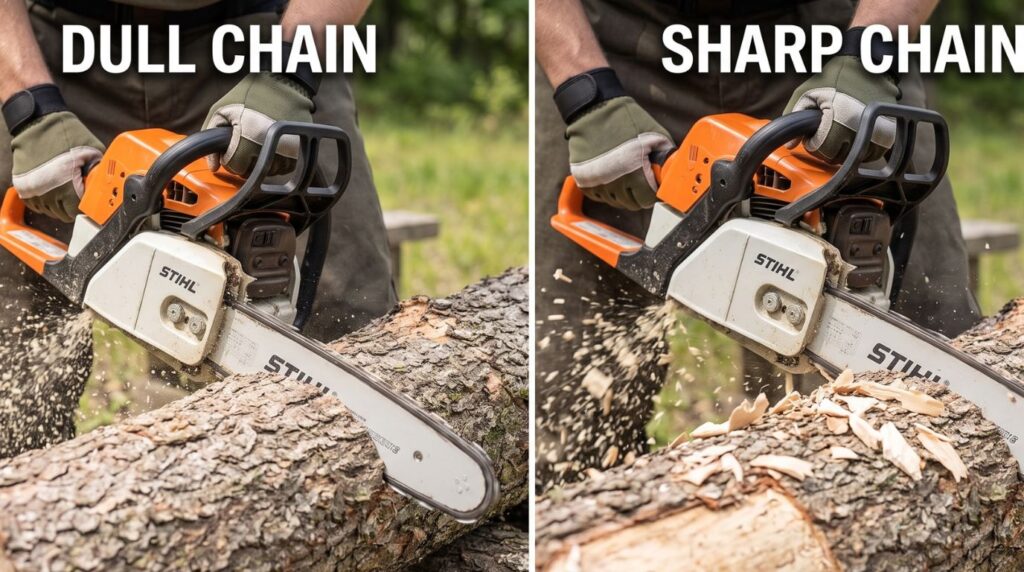
| Chain Condition | Visual Clue | How It Affects Safety |
| Sharp Chain | Pulls itself into the wood; throws large wood chips. | Low effort, high control, very safe. |
| Dull Chain | Needs pushing; throws fine, dusty sawdust. | High effort, slips easily, causes heat and fatigue. |
Keeping Your Blade Out of the Dirt
The easiest way to dull a chain is to touch the dirt. The soil is full of tiny rocks and sand. Touching the ground for even one second will ruin your cutting edges.
To avoid the dirt, I never cut all the way through a log lying on the ground. I cut about four-fifths of the way through the wood all along the tree trunk. Then, I put my saw down and roll the whole log over with my foot. After that, I can easily finish the cuts from the top without ever threatening my chain in the soil.
Best Chainsaw Chain for Cutting Firewood
Common Firewood Cutting Mistakes I Made Early On
We all make mistakes when learning a new skill. However, chainsaw mistakes carry high risks. Here are the bad habits I had to break during my first few winters of cutting wood.
| Bad Habit | Why I Did It | Why I Stopped Doing It |
| Cutting when tired | “I just want to finish this last pile.” | Most accidents happen at the end of the day when arms shake. |
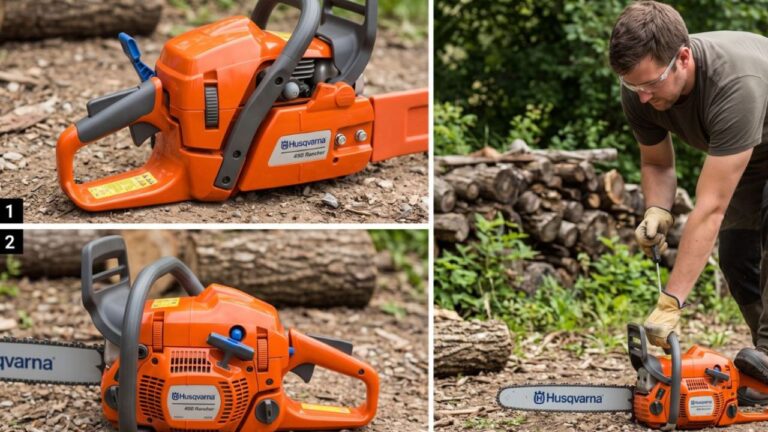
| Drop starting the saw | It looked cool and felt fast. | The saw swings wildly; it is easy to cut your leg or fall over. |
| Working alone in the woods | I enjoy quiet time outdoors. | If you get hurt, nobody is there to call for help or apply pressure. |
Knowing When to Call It a Day
Chainsaw work is a heavy workout. It vibrates your hands, strains your lower back, and demands deep mental focus.
I used to push through the tiredness just to finish a cord of wood before dark. Now, the moment I feel my arms getting heavy or I start missing my cut marks, I pack up. A half-cut pile of firewood can wait until tomorrow. Your health cannot.
Simple Maintenance That Keeps You Safe
You do not need to be a mechanic to take care of your chainsaw. A few simple checks before you pull the cord will keep the saw running smoothly and predictably.
| Maintenance Task | How Often to Do It | Why It Increases Safety |
| Check chain tension | Every time you refuel | A loose chain can derail and whip back toward your hands. |
| Test the chain brake | Before your first cut of the day | Ensures the safety brake will actually stop the saw during kickback. |
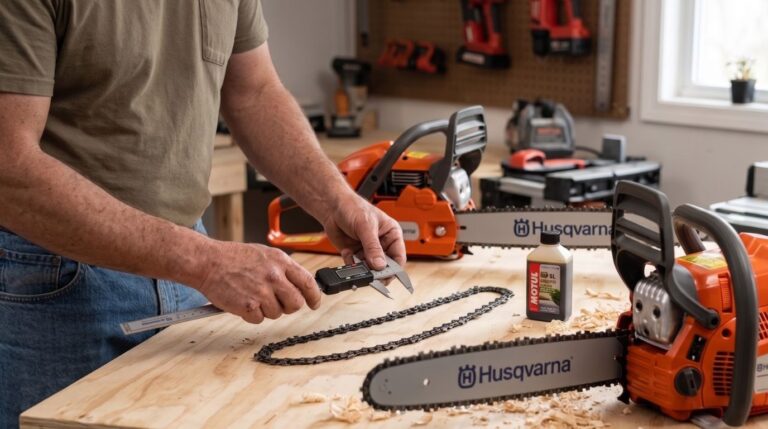
| Clean the oil port | After every full day of cutting | Keeps the bar cool so the chain does not snap from friction. |
How to Check Your Chain Tension
A new chain stretches out as it heats up. If it gets too loose, it can jump out of the bar groove. That is called throwing a chain, and it is startling and dangerous.
Before I start cutting, I pull the chain down from the bottom of the bar using a gloved hand. The drive links should stay inside the bar groove. When I let go, the chain should snap right back against the metal bar. If it sags, I grab my wrench and tighten it up before I start the engine.
Final Thoughts
Learning how to safely cut firewood with a chainsaw is about building solid, repeatable habits. You do not need to rush the work. Take your time to wear your chaps, read the tension in the logs, and keep your chain sharp enough to throw large wood chips.
Respect the tool every single time you pull the starter rope. When you work with patience and focus, cutting firewood transforms from a daunting chore into a deeply satisfying autumn tradition. Stay safe, keep your chain out of the dirt, and enjoy the warmth of your winter fires.