How to Mix Petrol with 2 Stroke Oil for Chainsaw Easily
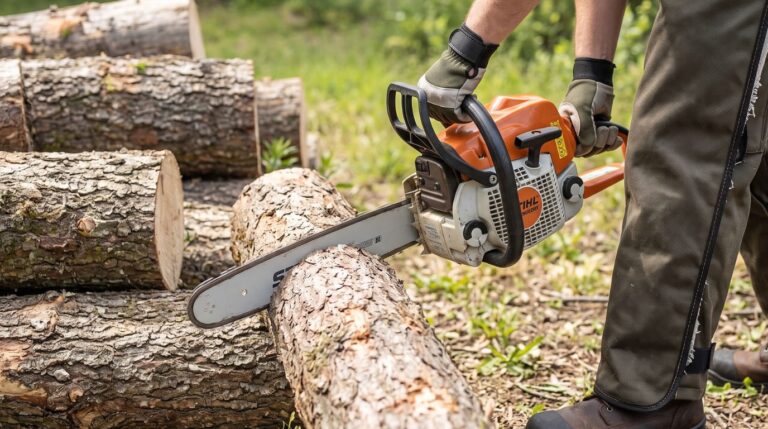
I still remember the sick feeling in my stomach when my very first chainsaw died on me. It made a terrible metallic screeching sound, sputtered a few times, and then completely locked up. I had no idea how to mix petrol with 2 stroke oil for chainsaw engines back then. I just guessed the amounts and hoped for the best.
That single mistake cost me a completely ruined engine. Since then, I have learned that getting your fuel mixture right is the single most important thing you can do for your saw. In this guide, I will show you exactly how to do it correctly, share the mistakes I used to make, and help you keep your equipment running smoothly for years.
Why Getting the 2-Stroke Mix Right Matters So Much
A 2-stroke engine does not have a separate oil tank to lubricate its internal moving parts. Your car has an oil pan, but your chainsaw does not.
Because of this design, the oil must be mixed directly into the fuel. As the petrol burns to create power, the oil coats the piston and cylinder to stop them from grinding together. If you mess up the mixture, you either slowly choke the engine with carbon or you quickly destroy it with friction.
The Warning Signs of Bad Fuel
When I first started cutting firewood, I ignored how my saw sounded. I just kept pulling the trigger. Now, I listen closely. Your saw will actually tell you if it hates the fuel you gave it.
| Engine Symptom | Likely Fuel Mix Cause |
| Heavy thick white smoke | Too much oil in the mix (Rich) |
| Engine runs extremely hot | Too little oil in the mix (Lean) |
| Engine bogs down on throttle | Old fuel or separated mixture |
| Spark plug is black and wet | Too much oil in the mix (Rich) |
| Sudden complete engine lockup | No oil in the fuel at all |
The Golden Rule: Understanding Ratios
You will always hear people talk about ratios when discussing chainsaws. A ratio is simply how much petrol you need compared to how much oil you need.
Most modern chainsaws run on a 50:1 ratio. This means you need fifty parts of petrol for every one part of oil. Some older saws require a 40:1 or even a 32:1 ratio. You must always check your chainsaw manual or look at the sticker right next to the fuel cap to find your specific number.
Translating Ratios into Real Measurements
Math is the last thing I want to do when I am standing in my garage with a jerry can. I used to try doing the math in my head, and I always messed it up. Now, I just use a simple chart.
| Mix Ratio | Petrol Amount | Oil Needed |
| 50:1 | 5 Liters | 100 ml |
| 40:1 | 5 Liters | 125 ml |
| 50:1 | 1 US Gallon | 2.6 fluid oz |
| 40:1 | 1 US Gallon | 3.2 fluid oz |
Gathering the Right Supplies
You cannot just grab any gas from the station and any oil from the auto parts store. I learned this the hard way after constantly cleaning dirty carburetors.
You need specific items to create the perfect mixture. Using the right ingredients makes the saw start on the first pull instead of the tenth.
Choosing the Best Petrol
Always buy high-octane premium petrol. More importantly, try to find ethanol-free petrol. Ethanol attracts moisture from the air. That water then separates from the gas and sinks to the bottom of your fuel tank. This ruins engines quickly.
| Fuel Grade | Ethanol Content | Impact on Chainsaw |
| Standard Unleaded | Usually 10% | Poor idling, attracts water |
| Premium Unleaded | Often 5% or less | Runs cooler, starts easier |
| Ethanol-Free Fuel | 0% | Best choice, lasts much longer |
Picking Your 2-Stroke Oil
Do not use standard motor oil. You must use oil specifically labeled for 2-stroke or 2-cycle air-cooled engines. I highly recommend spending a few extra dollars on fully synthetic 2-stroke oil. It burns much cleaner, produces way less smoke, and keeps your exhaust screen from plugging up with thick carbon deposits.
Step-by-Step: How to Mix Petrol with 2 Stroke Oil for Chainsaw
Learning how to mix petrol with 2 stroke oil for chainsaw use is actually a very simple process once you build the right habits.
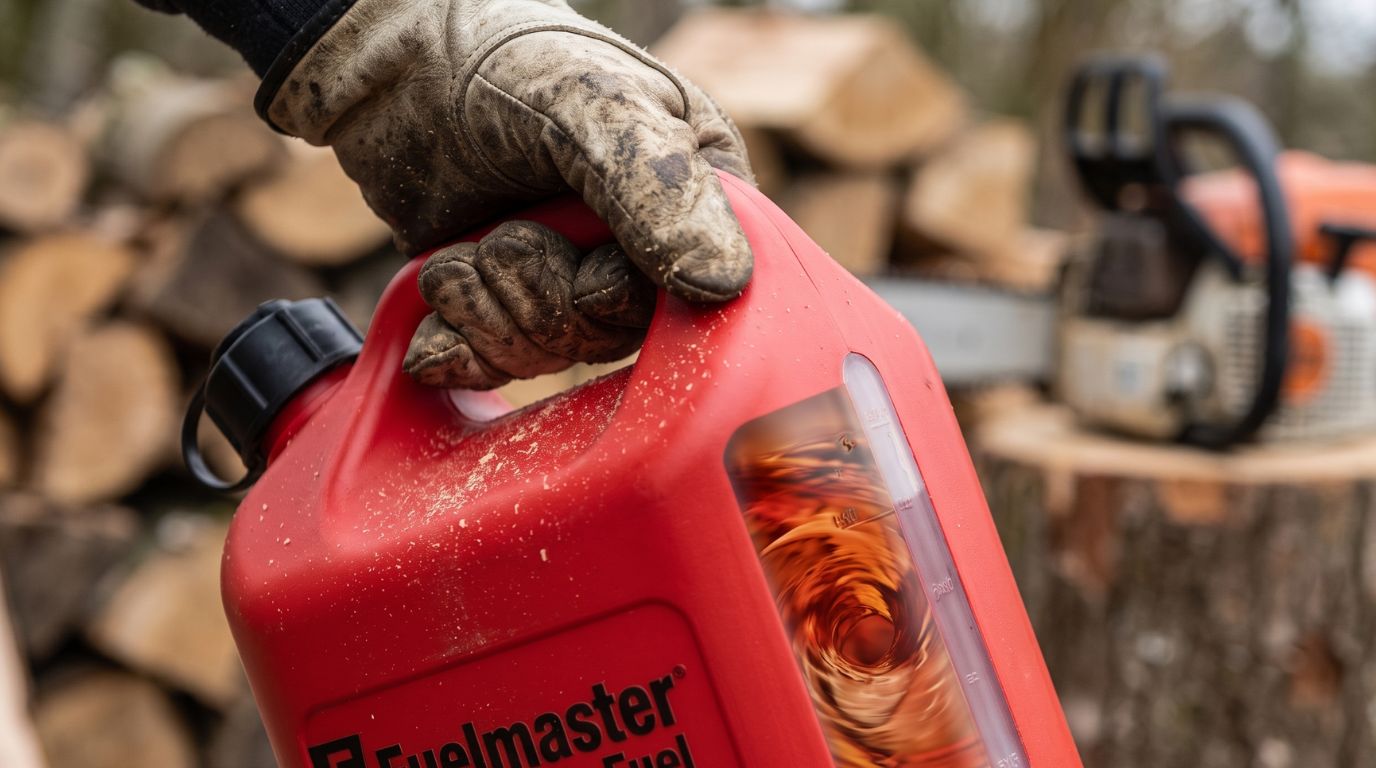
You need a clean, dedicated gas can. I always use a red can specifically for mixed fuel. I even write “CHAINSAW MIX 50:1” on it with a thick permanent marker. This stops anyone else from accidentally pouring straight gas into my saw, or pouring my mixed gas into the lawnmower.
Step 1: Add Half the Petrol First
Never pour the oil into an empty can. If you pour oil into an empty can, it coats the bottom and sides. When you add the gas later, some of that oil stays stuck to the plastic. This throws off your entire ratio. Always pour exactly half of your measured petrol into the can first.
Step 2: Measure and Pour the Oil
Measure your 2-stroke oil carefully. Do not eyeball this part. Use a small measuring cup or a squeeze bottle with measurement lines. Pour the exact amount of oil into the gas can.
Step 3: Swirl and Add the Rest
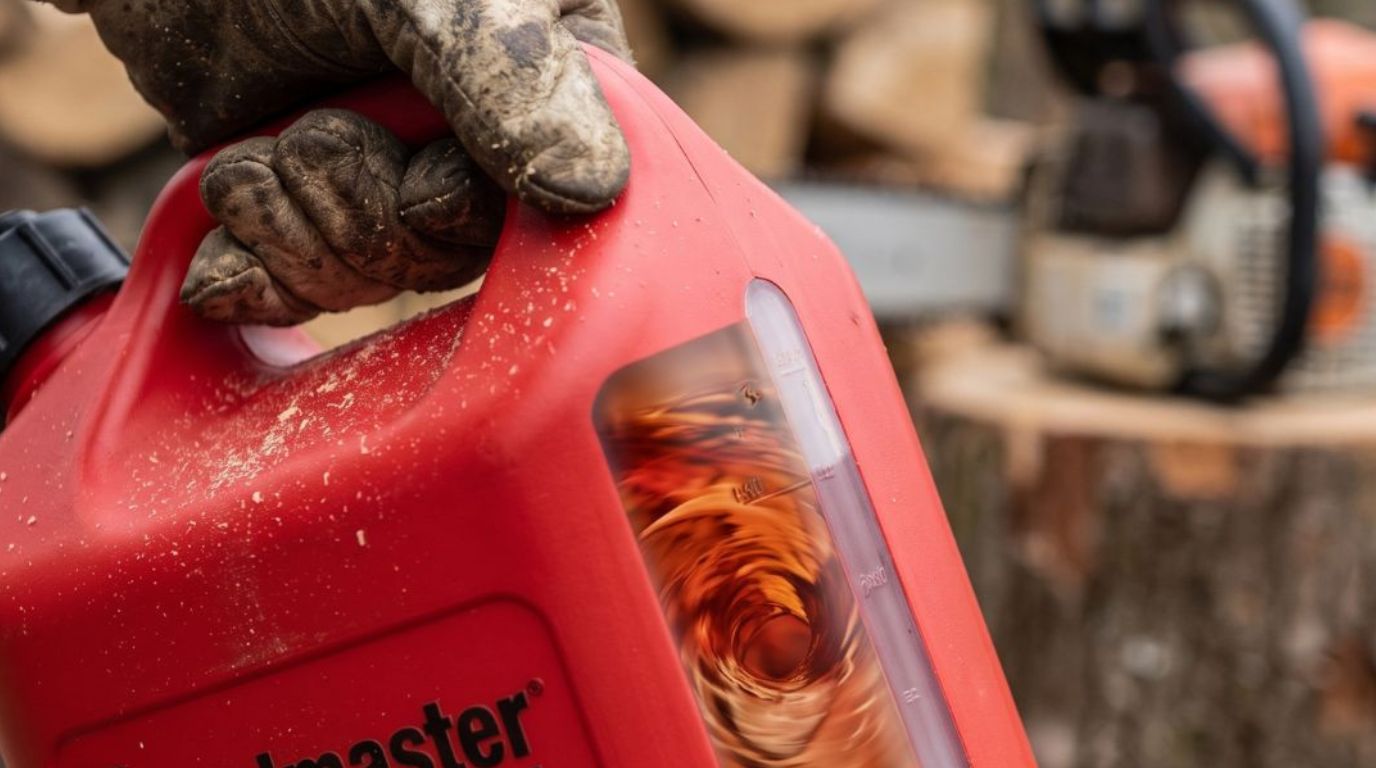
Put the cap securely on the gas can. Give it a gentle swirl to mix the oil into the first half of the petrol. Once it is mixed, open the can and pour in the remaining half of the petrol. Put the cap back on and gently rock the can back and forth for about ten seconds. You are now ready to fuel your chainsaw.
| Common Mistake | The Better Approach |
| Pouring oil into an empty can | Add half the petrol first |
| Shaking the can violently | Gently swirl to avoid air bubbles |
| Guessing the oil amount | Use a proper measuring syringe or cup |
| Mixing a massive batch of fuel | Mix only what you need for the month |
Dealing with Old Fuel and Ethanol Problems
One of my biggest early frustrations was dealing with fuel going bad. I used to mix a huge five-gallon batch at the start of the year. By autumn, my chainsaw would barely start.
Mixed fuel goes bad surprisingly fast. The petrol evaporates, leaving behind a heavier concentration of oil. The ethanol absorbs water from the air. Within a few weeks, that perfect mixture you made turns into a cloudy, useless mess.
How Long Does Mixed Fuel Last?
I have a strict thirty-day rule in my garage. If the mixed fuel is more than a month old, it does not go into my chainsaw.
If you use a fuel stabilizer when you mix the gas, you can push this to a few months. However, fresh fuel is always the cheapest insurance for your expensive saw.
| Fuel Myth | The Reality |
| Mixed gas lasts for a whole year | It degrades heavily after 30 to 45 days |
| Shaking old gas makes it good again | Once water separates, shaking will not fix it |
| More oil makes the engine run safer | Too much oil clogs the exhaust and ruins plugs |
| Any gas can will work for storage | Use an airtight can to prevent evaporation |
What Happens If You Mess Up the Ratio?
Everybody makes a mistake eventually. Sometimes you forget if you already added the oil to the can. I have done this myself. If you are ever in doubt, just dispose of the fuel safely in a car or truck gas tank and start over.
Running the wrong mixture will show obvious signs very quickly. You need to know what to look out for so you can stop the engine before permanent damage occurs.
Running a Lean Mixture (Too Little Oil)
This is the deadliest mistake for your saw. If you do not add enough oil, the engine runs incredibly hot. You will notice a high-pitched whining sound. The saw might feel unusually powerful for a brief moment because it is revving higher than normal. Then, the piston will expand from the intense heat, scrape against the cylinder wall, and seize completely. This is a fatal engine failure.
More info How to Measure Chainsaw Chain Length
Running a Rich Mixture (Too Much Oil)
This is annoying, but usually not fatal. I once mixed a batch way too rich. The saw blew massive clouds of blue and white smoke. It would not idle properly. Oil actually dripped out of the exhaust muffler. Eventually, the excess oil covered the spark plug, preventing it from sparking at all. The saw died, but it was easily fixed by draining the fuel, cleaning the plug, and mixing a fresh, correct batch.
| Mix Issue | Engine Symptom | What to Do Immediately |
| Too Lean | Screeching noise, extreme heat | Stop the saw immediately. Drain fuel. |
| Too Rich | Heavy smoke, oil dripping | Drain fuel. Clean or replace spark plug. |
| Water in Fuel | Sputtering, dying when revved | Dump fuel. Clean fuel filter and tank. |
Simple Habits for Better Chainsaw Maintenance
Once you understand how to mix petrol with 2 stroke oil for chainsaw engines, the rest just comes down to building good habits.
I always mix my fuel on a flat workbench, never on the tailgate of my truck where things can spill. I always wipe away dirt and sawdust from the chainsaw’s fuel cap before I open it. You do not want dirt falling into your clean fuel mix.
Storing Your Saw for the Season
When winter comes and you are done cutting firewood, never leave mixed fuel in the chainsaw.
I always drain the fuel tank completely. Then, I start the saw and let it run on idle until it dies. This burns away the tiny amount of fuel left inside the carburetor. If you leave fuel sitting in the tiny lines of the carburetor for months, it will turn into a sticky varnish. You will spend your first spring weekend taking the saw apart instead of cutting wood.
Recognizing When to Start Fresh
If your saw is acting weird, always blame the fuel first.
Before you adjust carburetor screws or buy a new ignition coil, dump the old gas. Mix a fresh batch of 50:1 with high-quality ethanol-free petrol and good synthetic oil. Nine times out of ten, a fresh batch of perfect fuel solves the problem entirely.
Figuring out how to mix petrol with 2 stroke oil for chainsaw use can feel intimidating the first time you do it. You are terrified of breaking an expensive tool. But once you get the routine down, it becomes second nature. Buy good petrol, use a measuring cup for your synthetic oil, and never let it sit around for months.
If you follow these simple steps, your chainsaw will reward you with easy starts and reliable power. I ruined my first saw by guessing, but you do not have to make that same mistake. Take your time, measure carefully, and stay safe out there cutting wood.